
Every warehouse manager in Latvia eventually arrives at the same conclusion — goods no longer fit where they’re meant to be. Pallets start piling up in the driving aisles, incoming stock sits on the loading ramp longer than it should, and staff spend more and more time looking for free space rather than picking orders. Once this becomes the daily norm, the first instinct is usually the logical one: you need a bigger warehouse.
But before you sign a new lease or start planning an extension, it’s worth asking a different question: is your existing space really being used as efficiently as it could be? In practice, most warehouses in Latvia and the Baltics use only part of their real potential — they make use of floor area but not height, and keep a fixed aisle width that never changes, even though a given pallet may only need to be accessed once a month.
The cost structure of the warehousing and logistics sector has changed faster in recent years than ever before — the price per square metre keeps rising, e-commerce volumes across the Baltic states keep growing, and competition for suitable industrial premises in major cities keeps intensifying. In this environment, companies that know how to squeeze the maximum out of their existing space gain a real competitive advantage — in terms of both cost and operational flexibility.
This challenge isn’t abstract. Anyone working in logistics or retail sees online order volumes continuing to grow, delivery times becoming ever tighter, and customers expecting stock to be available immediately. That means warehouses need to hold a wider range of products and a larger safety stock than they did ten years ago — while free, well-located industrial premises in major cities become harder to find, and where they do exist, rents tend to be considerably higher than they were just a few years back. For this reason, vertical and smart storage solutions are no longer the exclusive privilege of large international groups — they’re becoming an accessible, even necessary, tool for any company that wants to stay competitive without increasing its overheads.
VVN (Everything for Shops and Warehouses) offers three distinct pallet racking product lines, each solving a specific space challenge — from a classic tall warehouse to a shop with an integrated stock zone, right through to a warehouse where free space is so expensive that even a single extra aisle is a luxury. In this article we’ll look at all three systems — HX pallet racking, the integrated NX/NR series, and mobile pallet racking systems — to help you work out which one fits your situation.
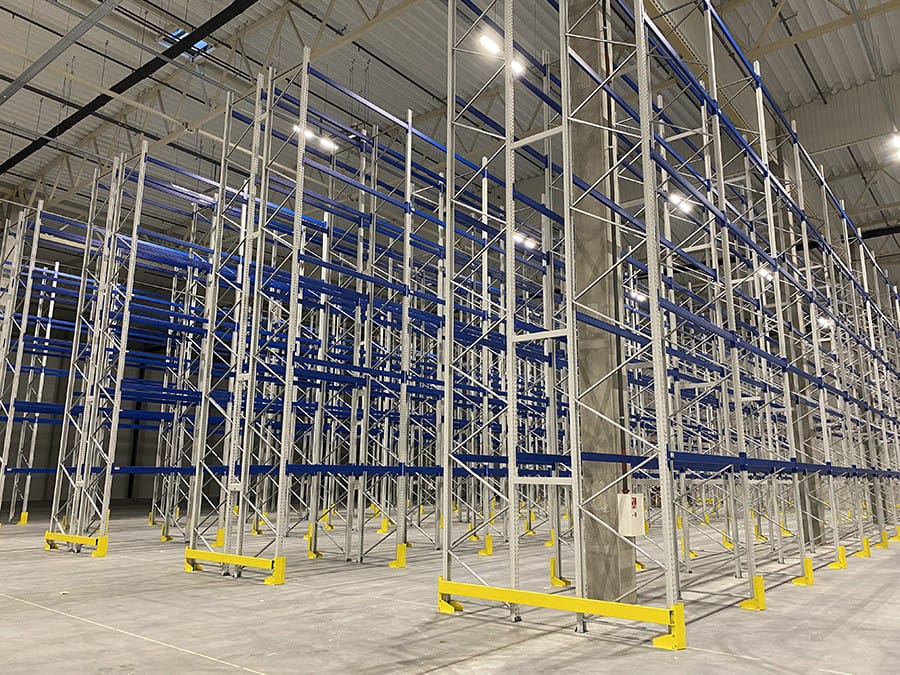
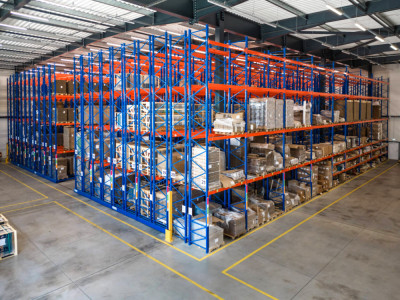
If you picture a typical pallet racking system — tall metal uprights with horizontal beams, where pallets are stacked one above another — you’re most likely picturing an HX-type solution. It’s the most widely used pallet storage approach in the world, and for good reason: it’s simple, durable, relatively inexpensive, and can be configured to fit almost any warehouse size.
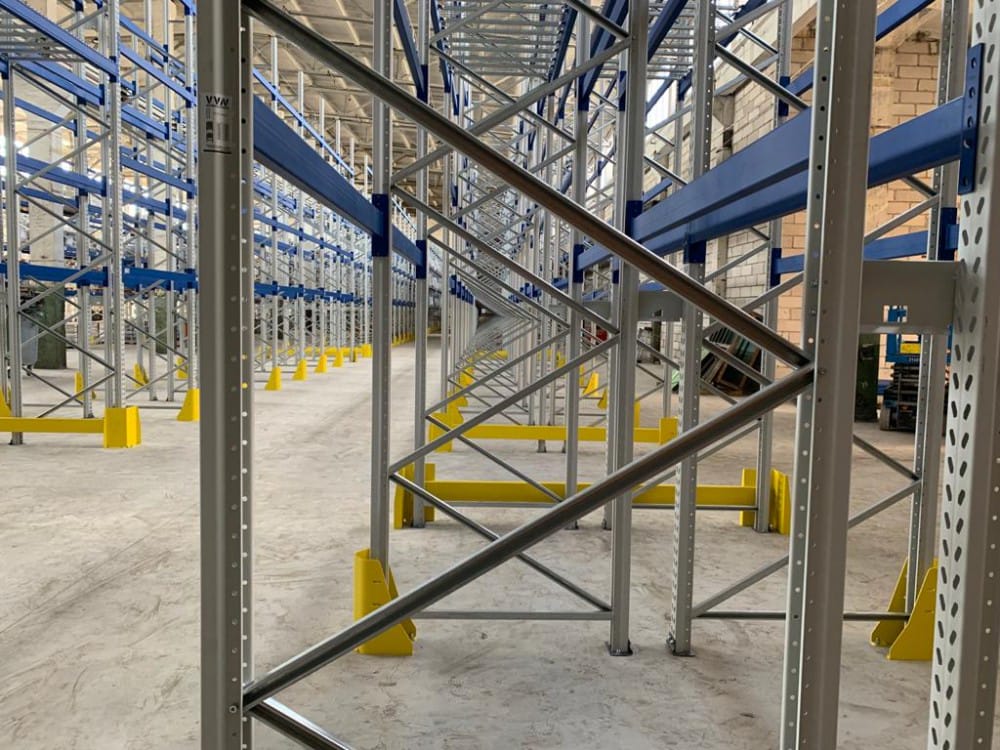
The HX system is built around uprights made from perforated steel profile in three widths — 82×70 mm, 102×70 mm and 122×70 mm. The perforation isn’t just a structural detail — it lets you adjust beam height in increments of just a few centimetres, so the racking configuration can be matched precisely to your pallet height instead of settling for a universal but inefficient layout. Bracing is available in two types — S and ZZS — which provide structural stability depending on load and upright height.
Crucially, the HX system isn’t tied to a single pallet standard. Dimensions are adapted for EPAL-EUR pallets (the most common standard in Europe), FINPAL pallets (common in Finnish and Scandinavian supply chains), and industrial pallets of various sizes. That means companies working with multiple suppliers or exporting to different markets don’t need to worry about incompatibility — the system accommodates whatever pallets you actually have in your warehouse.
The practical benefit the HX system delivers comes down to one simple fact — most warehouse spaces in Latvia only use part of their real height. If you have a warehouse with 6–8 metre ceilings, but goods are only stored on the floor or stacked manually two levels high, you’re effectively paying rent for, or maintaining, space you’re not using. HX racking systems can be installed up to 12 metres high, which in some cases allows storage capacity to increase by as much as 200% without extending the building’s footprint by a single square metre.
To make that figure more concrete — picture a 1,000 m² warehouse where pallets have so far been stored two levels high, using around 4 metres of the available height. Switching to a properly designed HX system that uses the full 10–12 metres of height can fit two or even three times as many pallet positions into the same floor area. In practice, this often means a company that was planning to look for a second warehouse simply doesn’t need to — investing in a racking system turns out to be cheaper and faster than renting or building new premises.
On cost — one pallet position in an HX system typically costs between €8 and €15, depending on configuration, height, and load requirements. Compared against the monthly rent for additional square metres, year after year, the maths usually comes down firmly in favour of this solution — the system typically pays for itself within a few months to a few years, and then continues working for decades.
Safety isn’t a secondary consideration here — the higher a system reaches, the more its structural quality matters. The HX system holds TÜV Rheinland GS certification, confirming compliance with international safety standards, and it also meets the Latvian and European technical standard LVS EN 15512:2020, which governs the design of static pallet racking systems. That means the system has been proven not just in theory but in practice — VVN has delivered this solution in more than 85 projects in Latvia, as well as carrying out installations in seven countries, so it has been tested across a range of climates, building types, and load conditions.
If you’re not sure how much capacity your particular warehouse could gain, VVN offers a free warehouse audit worth €500 on the open market. During the audit, specialists visit your premises, assess the available height, current layout, and goods flow, and prepare a concrete proposal — often with precise figures on how many additional pallet positions could be gained without any expansion of the space.
Another advantage that’s often appreciated too late — only after the first system has already been installed — is the modularity of the HX solution. Because the system is built on standardised uprights and beams, it can be expanded in stages: start with a single warehouse section and later, as the company grows, add extra rows or increase height, without removing or replacing what’s already installed. This is particularly valuable for companies whose volumes fluctuate seasonally, or who are planning a gradual expansion over several years rather than one large investment upfront.
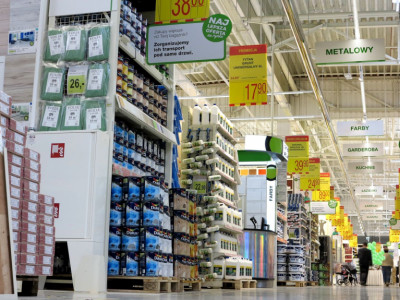
Not every business has a separate warehouse and a separate sales area. Building materials shops, DIY retail chains, and discount retail formats face a different reality — the customer walks the floor themselves, takes goods off the shelf, and reserve stock sits directly above that same shelf. Here, the logic of the HX system, designed for a pure warehouse, doesn’t work as well — what’s needed is a solution that serves simultaneously as a customer-friendly retail area and as an efficient stock store.
This is exactly what VVN’s integrated racking systems — the NX and NR series — are designed for. The underlying principle is simple but highly practical: the lower section is built as an accessible, customer-friendly retail area, while the upper section serves as a stock storage tier.
As a result, there’s no need to maintain a separate warehouse next to the shop — restocking from the upper level down to the lower shelf happens in the same location, saving both time and square metres.
The NX series is available in two versions depending on load requirements. NX Mini uses a 55×40 mm profile and is designed for light to medium-weight goods — it holds a load of up to 3,400 kg per bay, which is enough for most packaged building materials, household goods, or general retail stock. The NX HD version, with a 70×80 mm profile, is built for heavier loads — up to 10,300 kg — suitable, for example, for bags of cement, tiles, or other heavy materials on pallets.
The NR series goes further still in terms of load capacity. NR MV holds up to 7,000 kg, while the full NR version holds up to 14,000 kg per bay — making this system suitable even for the most demanding industrial retail environments, where heavy building materials or large-volume industrial goods are stored.
Structurally, integrated systems are typically designed up to 6 metres in height, with a depth of 600 to 1,500 mm — enough for a single bay to hold both the product on display and reserve pallets behind or above it. As with the HX series, NX and NR systems also hold TÜV Rheinland GS certification, confirming the structural safety — an essential factor given that these systems stand in spaces where customers move around every day, not just trained warehouse staff.
The practical benefit here is obvious for anyone operating in the DIY or discount retail segment: there’s no need to maintain and run two separate premises with two separate logistics processes. Goods arrive at one location, are unloaded straight into both display and reserve stock at once, and restocking happens vertically rather than by forklifting pallets from a distant warehouse to the sales floor. This reduces staff time, lowers the risk of damage during transport, and makes better use of rent paid per square metre — because every square metre is working in two modes at once.
There are situations where even the HX system’s 200% capacity increase isn’t enough — either because the space simply can’t be expanded further, or because the specifics of the industry (for example, cold-chain goods or pharmaceutical products) require a tightly controlled environment that’s expensive to maintain across a large area. In these cases, the solution is mobile pallet racking systems — an approach that changes the very logic of how space is used.
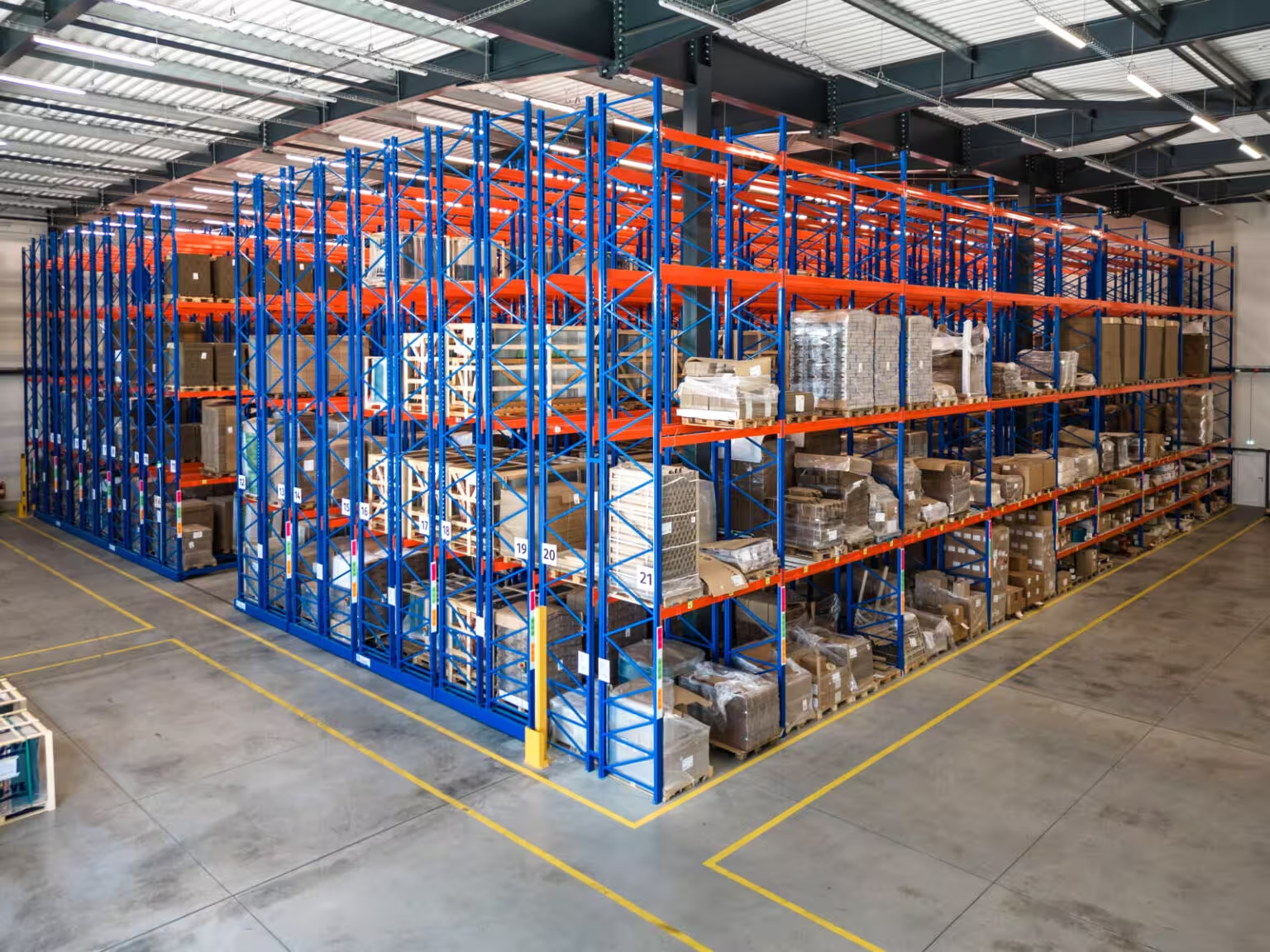
In a classic static racking system, every row of racking needs its own aisle alongside it, so a forklift or other equipment can access the pallets. That means a large share of the floor area — often as much as half — is “sacrificed” to aisles rather than used for actual storage. Mobile systems solve this problem radically: the racking is mounted on motorised mobile bases that move along rails set into the floor.
As a result, only one working aisle is ever needed at any given moment — it opens exactly where access is currently required, and the racks then close back together, leaving no “empty” aisle standing idle.
Because of this principle, the capacity gain is impressive — 60 to 100% compared with a traditional static system in the same floor area. Systems can be substantial in scale — up to 12,000 mm in height and 70,000 mm in length per row — which in practice means even very large warehouses can be fitted with a single, continuous mobile system without breaks. The structure is engineered to hold up to 600 tonnes of load per row — a figure that shows just how serious the engineering behind this system really is.
One of the factors that makes mobile systems especially attractive to certain industries is their operating temperature range — from -25°C to +30°C. That means the system performs fully in freezers and deep-freeze storage, where every square metre costs considerably more than in a standard heated or unheated warehouse — the cost of refrigeration equipment, insulation, and energy consumption makes the space savings even more valuable than under standard conditions. This is exactly why mobile systems are often chosen by food and pharmaceutical companies, as well as manufacturing and logistics centres where space is especially expensive, and by archives, where document or material density is critical.
Safety in mobile systems has been engineered with particular care, since these are moving, heavy structures that people may be present around. The system complies with the PN-EN 15095 standard, which specifically governs the safety of mobile storage systems. Movement speed is deliberately slow — 0.08 m/s — ensuring there’s always time to respond if a person or obstacle appears in the aisle. In addition, the systems are fitted with multiple layers of safety features — emergency stop buttons, proximity sensors that automatically halt movement if an object or person is detected nearby, and manual activation, meaning the system never starts moving on its own without a direct human command.
The practical benefit here is most direct where expanding the space simply isn’t an option — whether due to the building’s physical layout, or because the cost of additional space (especially under controlled-temperature conditions) would make the project economically unviable. A company currently using, say, 2,000 m² of freezer space with a traditional racking layout could, by switching to a mobile system, achieve the same or greater capacity in as little as 1,000–1,200 m² — freeing up the remainder for other needs, or simply reducing the volume of refrigerated space it has to maintain, along with the associated energy costs.
When VVN receives a first enquiry, clients often ask the same question — which of the three systems is “the best”? The honest answer is that there is no single best system — only the one that fits your building, your type of goods, and your budget at your particular stage of growth. That’s why, before making a decision, it’s worth assessing your situation against a few concrete criteria — the specifics of your industry, available ceiling height, temperature requirements, and whether customers are present in the space at the same time.
The three systems aren’t competing with each other — they solve different problems, and the right choice depends on your specific situation. Here’s roughly how they break down by business scenario:
A tall warehouse with standard storage needs. If you run, for example, a distribution centre, an e-commerce warehouse, or a finished-goods store at a production site, where the main constraint is that the existing height isn’t being fully used, the HX system is usually the optimal starting point. It offers the best ratio between cost (€8–15 per pallet position) and capacity increase (up to 200%), and installation is relatively quick and straightforward.
A shop where retail and storage happen in the same space. Building materials retail, a DIY shop, a discount retail chain — here, the integrated NX or NR systems are the logical choice. They let you avoid the cost of maintaining a separate warehouse, while providing convenient access to stock for both customers and the staff restocking it.
Strictly limited floor space that can’t be expanded. Whether due to the building’s size or cost constraints — if you need to make maximum use of every available square metre, mobile systems deliver the greatest return (60–100% capacity increase), though with a higher initial investment than the HX system.
Temperature-sensitive goods. Food, pharmaceutical products, or other materials requiring a controlled environment from -25°C to +30°C — mobile systems are the only one of the three solutions that meets this requirement directly, while also reducing the overall footprint of expensive cold storage space.
A fast-growing company with a limited budget. The HX system is usually the most accessible starting point, since it’s a modular solution that can be expanded in stages, adding extra sections as your storage needs grow, rather than investing in full capacity all at once.
In many cases, the right answer isn’t “either/or” — larger warehouses often combine several solutions at once, for example using the HX system for fast-moving goods and a mobile system for less frequently requested or seasonal stock. This is exactly why a professional audit before making a decision is so valuable — it shows which combination will deliver the greatest return in your specific circumstances.
A pallet racking system isn’t a product you choose from a catalogue photo — it’s an engineering solution that needs to be designed around the specific parameters of your building, your load requirements, and your company’s working processes. Mistakes in this area can be costly — either the system turns out not to be sturdy enough, or it fails to use the space as efficiently as it could.
VVN’s solutions — HX, NX/NR, and mobile systems alike — are certified to the TÜV Rheinland GS mark, one of the most recognised independent safety certifications in Europe. The systems also comply with the relevant technical standards — static systems meet LVS EN 15512:2020, while mobile systems meet the PN-EN 15095 standard, which specifically governs the safety of moving storage structures. That means choosing a VVN solution gets you not just a functional system, but documented compliance with internationally recognised safety criteria — particularly important if your industry involves regular workplace safety inspections or insurance audits.
Experience is the second factor that sets a trusted partner apart from a simple supplier. VVN has delivered more than 85 pallet racking projects in Latvia, as well as carrying out installation work in seven countries — meaning the team has worked with a wide range of building types, load requirements, and climate conditions, and knows what practical nuances arise during the actual installation process, not just at the theoretical design stage.
The process VVN offers begins with a free warehouse audit — a service worth €500 on the open market, provided to clients at no charge. During the audit, specialists visit your premises, assess the available height, current layout, goods flow, and load requirements, and prepare a concrete recommendation — often with precise figures on the potential capacity increase and the payback period for the investment. From there, the process continues with system design tailored specifically to your building’s parameters and pallet types, then manufacturing or delivery, and finally, professional on-site installation carried out by an experienced team that has already been through this process dozens of times.
A shortage of warehouse space rarely resolves itself — it tends only to get worse, especially if the company keeps growing. Every month that goods are stored inefficiently is a month in which you’re effectively paying for space you’re not using to its full extent, or losing time to staff movement and searching.
The good news is that the solution doesn’t always mean a new address, a lengthy construction process, or a large upfront investment. Often, the answer is already within your existing walls — it simply needs to be used more intelligently. Whatever best suits your situation — the HX system with its proven 200% capacity increase, an integrated NX or NR system that combines shop and warehouse, or a mobile system that squeezes the maximum out of every square metre — the first step is the same in every case.
Request a free VVN warehouse audit today. It costs you nothing, commits you to nothing, and delivers a concrete proposal based on your own space — with real figures on how much more room you could gain without moving to a new address. Sometimes the difference between a chaotic warehouse and one that works for you is just a phone call away.
| Cookie name | Active |
|---|
Uzraksti mums.