
When a warehouse is nearly full but expansion is not an option or is not economically justified, a mobile pallet racking system can significantly increase storage capacity within the same floor area – without new premises, without relocation, and without prolonged operational downtime. VVN offers comprehensive mobile warehouse racking solutions – from project design through to installation and long-term maintenance.
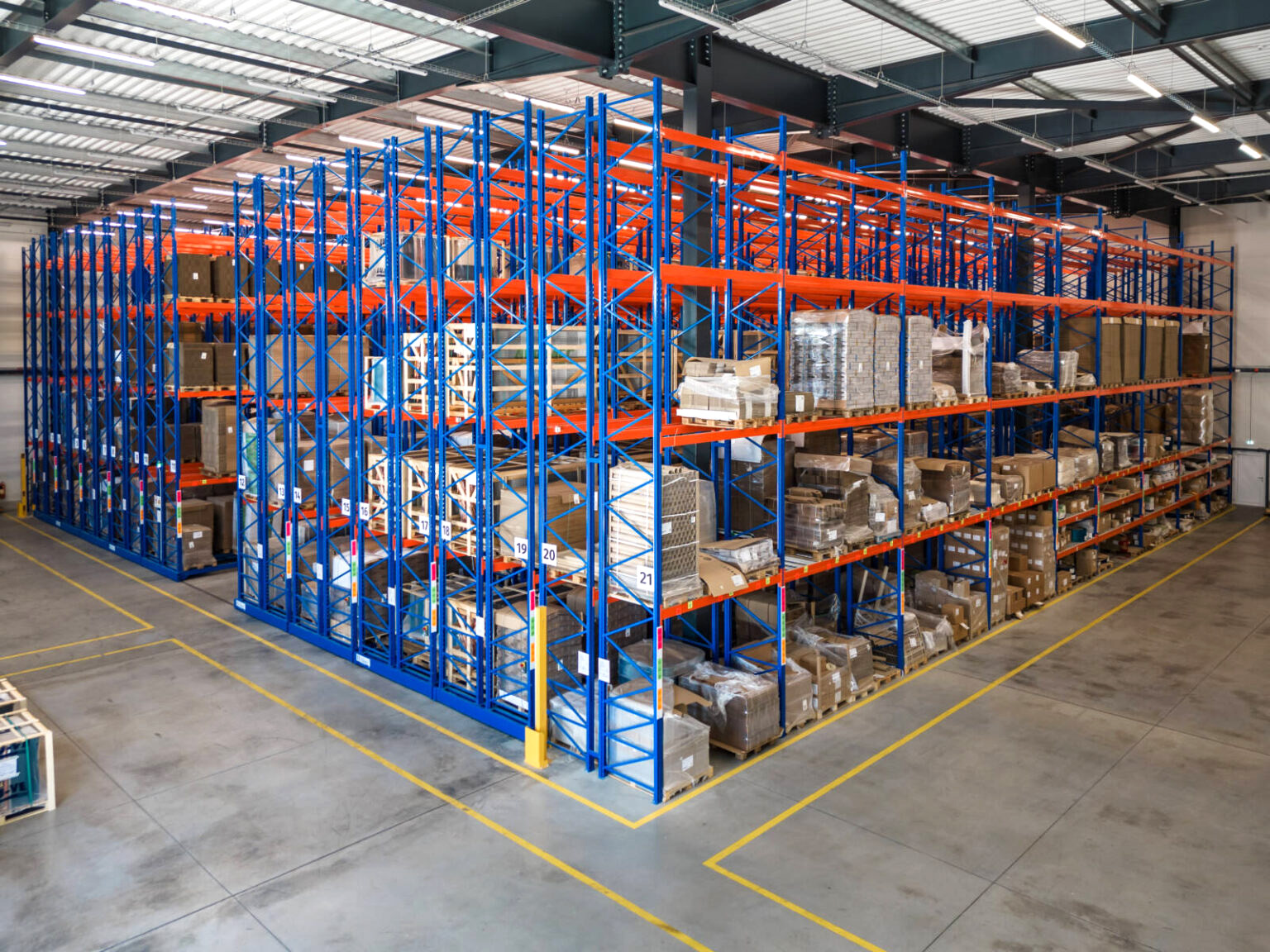
Mobile pallet racks are a high-density storage system based on conventional pallet racking – but with one key difference: each rack block is mounted on a motorized, electric mobile base that travels along steel rails embedded in the floor. As a result, all rack rows can be pushed tightly together, with only one working aisle open between them – exactly where it is needed at any given moment.

You get a better offer?
Mobile pallet racks are a high-density storage system based on conventional pallet racking – but with one key difference: each rack block is mounted on a motorized, electric mobile base that travels along steel rails embedded in the floor. As a result, all rack rows can be pushed tightly together, with only one working aisle open between them – exactly where it is needed at any given moment.
The operator moves the racks using a remote control, a wall panel, or through the warehouse management system (WMS), sliding the selected row aside to open the required aisle. The remaining rows stay compactly closed, freeing up floor space that would otherwise be wasted on empty aisles. It is important to note that – unlike drive-in or push-back systems – mobile pallet racks retain direct, individual access to every pallet, which is placed or retrieved by a forklift.
Consider a typical scenario: a warehouse with conventional pallet racking has used up all available floor space, yet aisles alone account for 35–50% of the total area, and the height above four meters remains underutilized. A mobile pallet racking system resolves both of these challenges simultaneously – it increases storage density and enables full use of the available cubic volume.
Companies in Latvia and across the Baltics choose mobile pallet racking when warehouse expansion is not an option or is economically unjustifiable, yet a significant increase in storage capacity is required. This system is a rare combination in the world of warehouse equipment – it unites high-density storage with direct access to every pallet.
Compared to conventional pallet racking, a mobile warehouse racking system allows significantly more pallets to be stored within the same floor area. The indicative figures – a capacity increase of approximately 80–120% – have been realistically achieved across many projects. The precise figure in each project varies depending on the warehouse layout, forklift type, and rack configuration.
The principle is straightforward: in a conventional system, if the racking requires five working aisles, those aisles consume a large portion of the total floor space. In a mobile system, only one aisle is open at any time – the remainder of the space is available for storage. As comparative calculations demonstrate, a mobile racking system can store approximately twice as many pallets within the same floor area as a conventional layout.
In cold stores and deep-freeze warehouses, every square meter used for storage is considerably more expensive than in a standard warehouse – both in construction and in daily operation. A smaller refrigerated space means lower electricity consumption, reduced maintenance costs, and the possibility to defer or eliminate the construction of any additional premises.
This system is designed for operation in extreme temperature conditions – both in cold stores and in deep-freeze facilities where operating temperatures can reach −30 °C and below. Specific components, lubrication, and electronic solutions are selected in accordance with the operating temperature, which is why it is essential that such a system is designed by specialists with experience in these environments.
The movement of mobile racks requires appropriate safety provisions, and modern systems are carefully equipped with them. Typical safety features include:
These features effectively protect both employees and stored goods. Additionally, the system reduces the risk of accidental collisions between forklifts, since only one aisle is open at a time.
Every mobile pallet racking project is built individually. The system is available in various height, width, and load-capacity variants depending on the specific requirements of the facility:
This system is widely used in the food industry with high pallet turnover, in pharmaceutical warehouses with strict temperature requirements, in logistics hubs with high pallet rotation, and in manufacturing companies storing large volumes of one or similar products.
| Shelf height | up to 12,000 mm |
| Maximum permissible weight of stored goods in one row | up to 600 t |
| Maximum shelf length | up to 70,000 mm |
| Permissible operating temperature | from -25 °C to +30 °C |
| Compliance standard | PN-EN 15095 |
| Shelf movement speed | 0.08 m/s |
| Additional equipment | emergency shutdown, distance detection sensors, manual activation system |
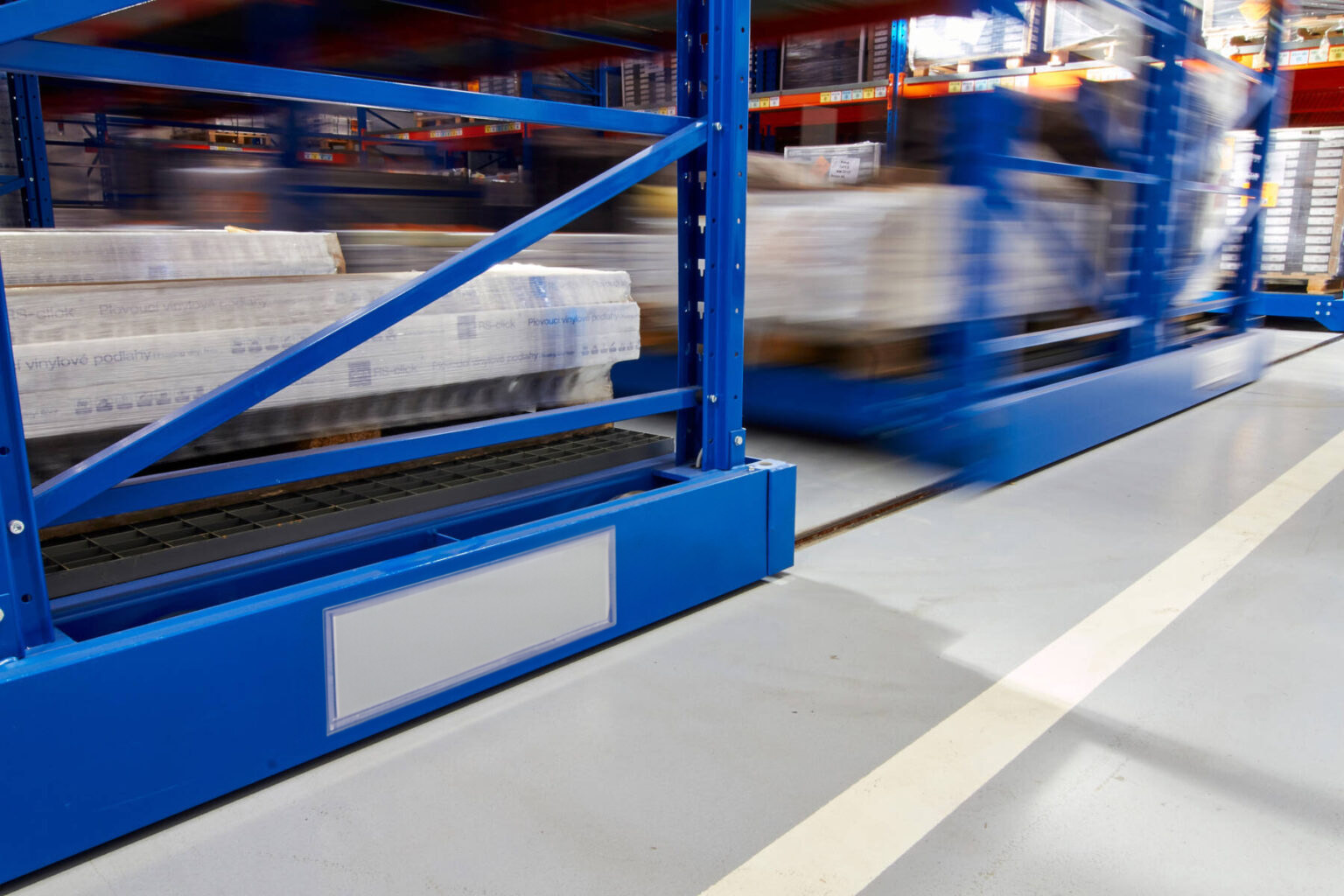
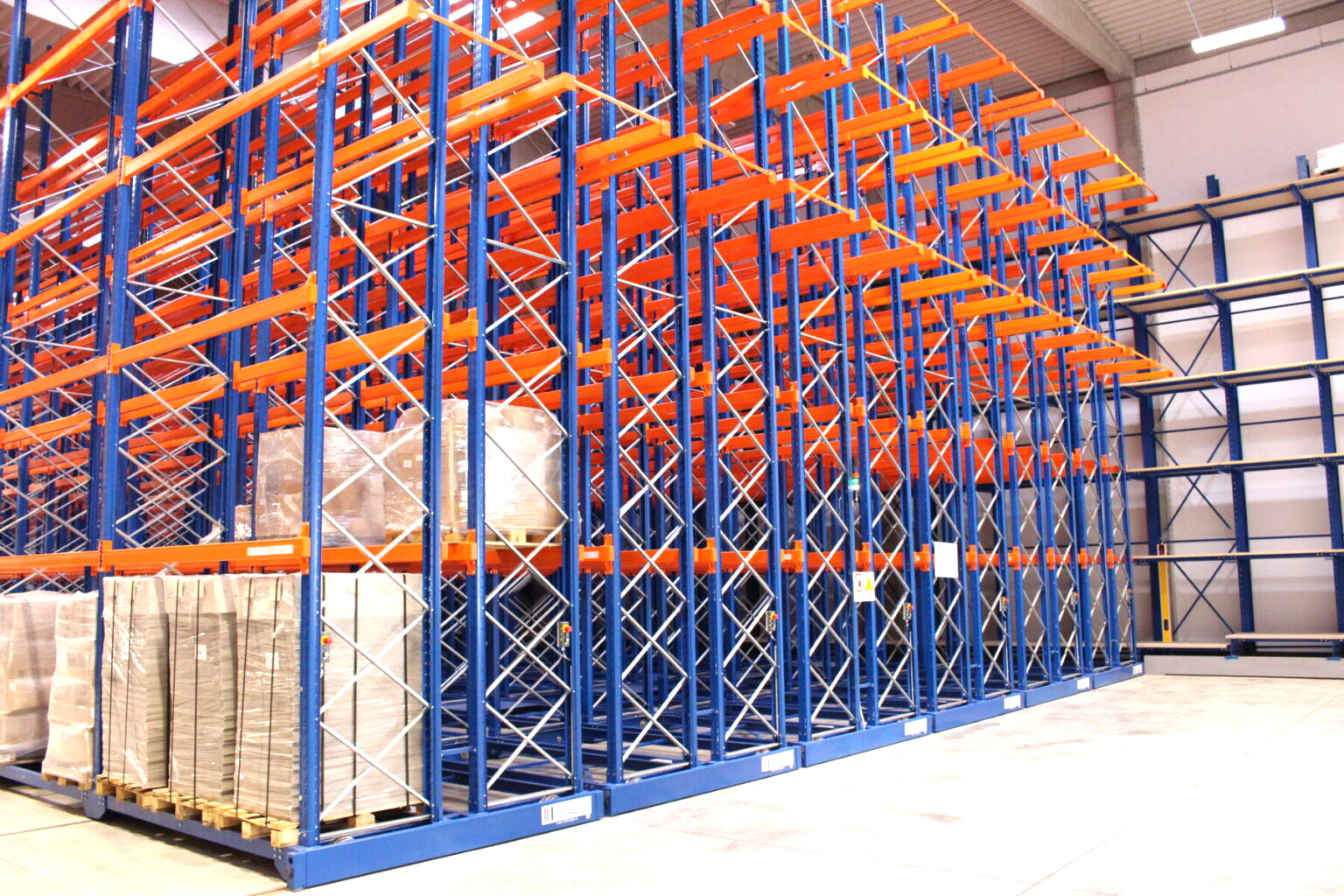
Mobile warehouse racking systems are adaptable to a wide range of operating conditions. Typical rack heights reach 10–12 meters, enabling full use of the cubic volume of large buildings with high ceilings. Load capacity per section can range from a few hundred to several thousand kilograms depending on the structural solution, and mobile bases can move entire rack blocks with a combined weight of hundreds of tones.
Floor-embedded rails are a fundamental element of every project – this requires careful planning both in new warehouses (where rails are cast into the concrete floor during construction) and in existing facilities (where precise floor milling is carried out). In both cases, the floor’s load-bearing capacity must meet the loads imposed by the mobile system – this aspect is verified by VVN specialists during the project planning stage.
A typical configuration includes:
Is this system right for your warehouse? The answer largely depends on three factors: the intensity of warehouse operations, the nature of SKU rotation, and the significance of storage costs within the specific business.
Cold stores and deep-freeze facilities represent one of the best applications for mobile pallet racking. Maintaining cooling infrastructure is costly – every “wasted” cubic metre literally costs money, both in temperature maintenance and in insurance and depreciation. If the SKU portfolio is relatively stable and product rotation is not erratic, the mobile system pays for itself quickly.
Large logistics hubs and distribution warehouses with moderate SKU rotation and regular pallet turnover benefit from high capacity while retaining direct access to any pallet. Here, the mobile system outperforms drive-in racking because there is no need to organize product flow according to LIFO/FIFO principles – any pallet can be accessed at any time.
Manufacturing companies with large volumes of identical or similar products – for example, producers of food, beverages, chemicals, or packaging materials – often store large quantities of one or a few SKUs with a high total pallet count. This SKU profile is ideal for a mobile racking system.
Companies for which warehouse space is at a premium – urban logistics centers, leased premises with a fixed cost per square meter, or buildings where physical expansion is not possible – can gain additional storage capacity without relocating or leasing a new facility.
An honest consultation also includes a clear answer as to when this system is not the best choice:
In such cases, better solutions may include conventional pallet racking with an optimized layout, push-back or pallet flow systems, or shuttle solutions – depending on the specific storage profile.
VVN offers a complete service – from the initial concept to a fully operational system and long-term maintenance. The collaboration process typically follows this sequence:
VVN’s strength lies not only in equipment supply – it is full-cycle responsibility for the warehouse racking project, from the first sketch to a fully operational, certified system. Every project is designed individually, taking into account the specific characteristics of the client’s warehouse, workflow, and long-term development plans.
Conventional pallet racking is fixed - there is a permanent aisle between each row. Mobile pallet racks are mounted on motorized bases that travel along floor-embedded rails. The rack rows are pushed together with only one working aisle open at a time, allowing significantly more pallets to be stored within the same floor area.
Yes, but this requires a thorough preliminary assessment. The main prerequisites are sufficient floor load-bearing capacity and the ability to mill rail channels into the existing concrete floor. VVN specialists assess the floor and other parameters at the initial project stage to determine suitability.
Modern mobile systems are equipped with multiple layers of protection: light curtains or sensors at each aisle that immediately stop movement if a person or equipment is detected; mechanical locks; emergency stop buttons on every rack row; and audible and visual warning signals before movement begins. The systems comply with European safety standards and carry CE marking.
Most commonly, the operator uses a fixed control panel at the system or a handheld remote. Modern systems can be integrated with a warehouse management system (WMS), enabling semi-automatic or fully automatic aisle opening according to the task at hand. The specific control solution is selected during the project phase in accordance with the client's workflow.
Yes - cold stores and deep-freeze facilities are one of the primary applications for mobile racking. The system is designed for operation at low or extremely low temperatures (down to −30 °C and below), using appropriate materials, lubrication solutions, and cold-resistant electronics. An additional benefit is a reduction in cooling costs due to the smaller volume that needs to be refrigerated.
The payback period depends on specific circumstances - warehouse space costs, energy prices, the number of pallets stored, and efficiency gains. In facilities with high space or energy costs - such as cold stores or leased urban premises - the investment can be recouped relatively quickly. Overall, industry practice considers mobile racking projects profitable in the medium term, with cold store installations often achieving payback even sooner.
| Cookie name | Active |
|---|
Uzraksti mums.