
The products we offer have all the necessary CE marking certification marks, which ensure compliance of the products in the European Economic Area.

Latvian businesses lose time and money every day when material handling equipment fails at the worst possible moment. Poorly chosen or outdated forklifts slow down logistics processes, create safety hazards, and ultimately cost far more than initially planned. The solution is equipment you can rely on — regardless of season, workload, or environmental conditions.
The LG40/45/50DTIV series diesel forklifts were built precisely for these challenges. A powerful diesel engine ensures stable operation even in low temperatures and outdoor environments, while a load capacity of 4-5 tonnes makes these models an ideal choice for both heavy industrial loads and standard warehouse operations. LONKING’s proven technology, combined with CE certification, guarantees that you receive not only performance, but also a legally compliant solution meeting the highest European standards. If you’re looking for a forklift that works as hard as you do, you’ve come to the right place.
You get a better offer?
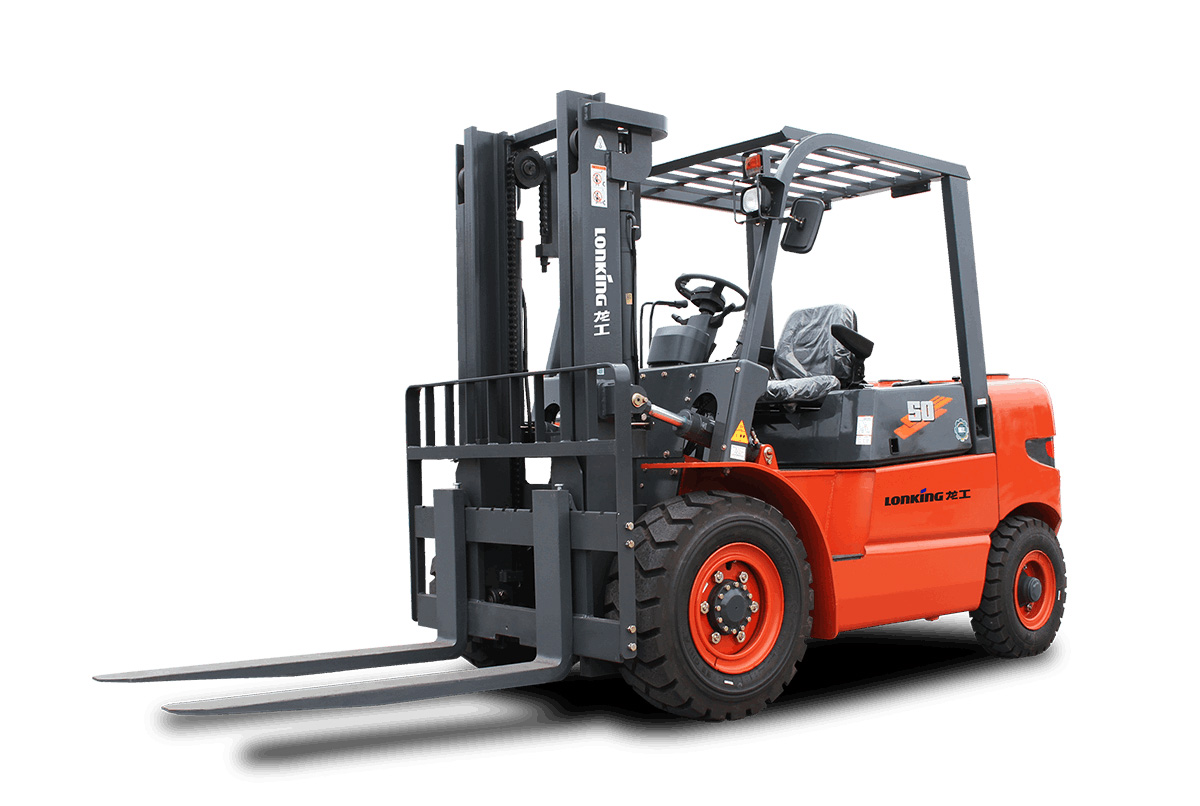
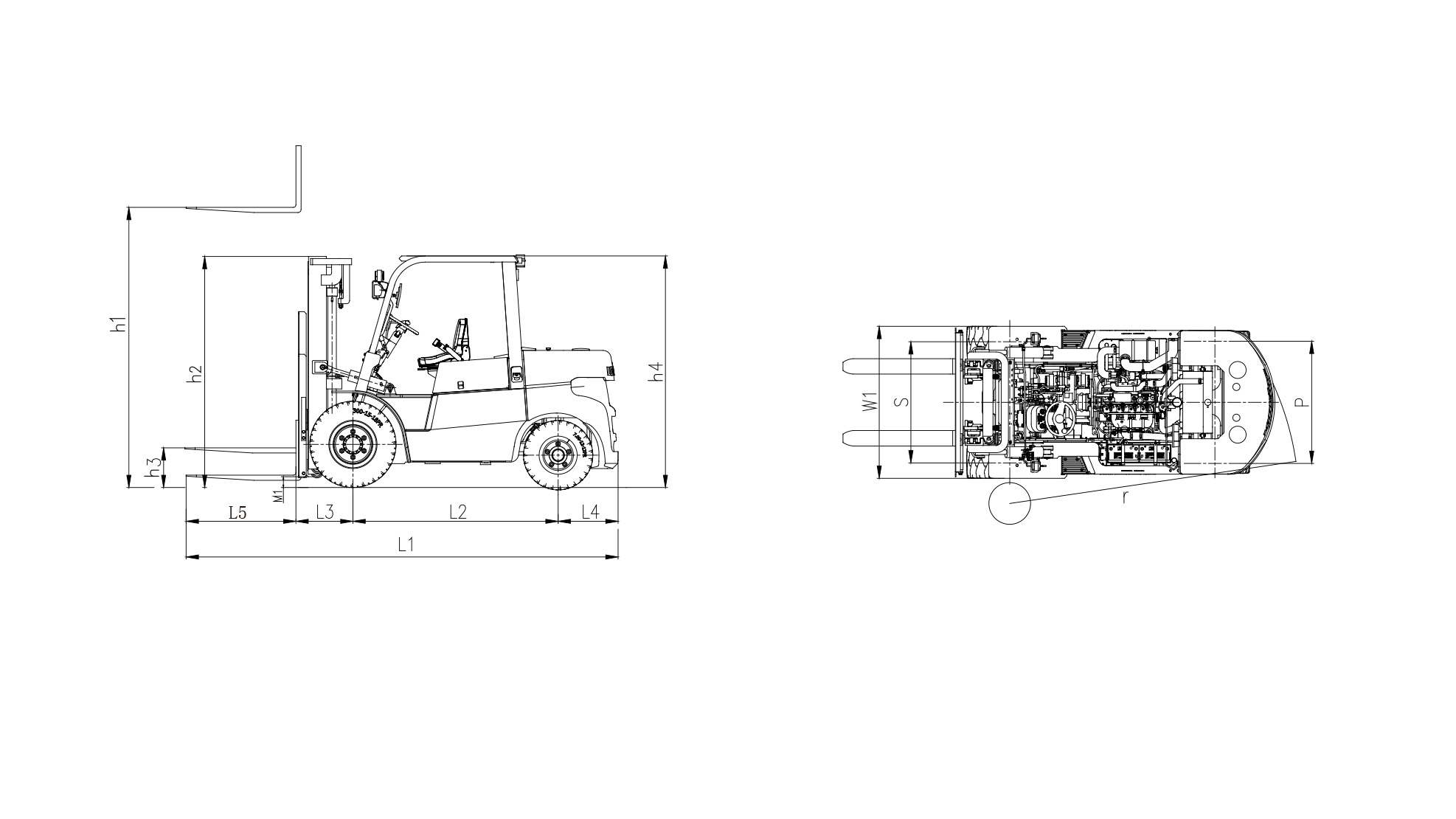
When deciding between the three models, it is important to understand how each differs and which tasks it is suited for. The LG40, LG45, and LG50 share the same robust platform — they use the same diesel engine, the same chassis, and the same safety systems. The difference lies in load capacity and weight, which directly affects the types of loads each model can handle efficiently. The table below summarises the key technical specifications — use them as the basis for selecting your equipment.
Parameter | LG40DTIV | LG45DTIV | LG50DTIV |
Rated load capacity | 4,000 kg | 4,500 kg | 5,000 kg |
Load centre | 500 mm | 500 mm | 500 mm |
Lift height (STD/MAX) | 2,300-6,000 mm | 2,300-6,000 mm | 2,300-6,000 mm |
Max. travel speed (laden / unladen) | 21 / 24 km/h | 21 / 24 km/h | 21 / 24 km/h |
Lift speed (laden / unladen) | 460 / 500 mm/s | 460 / 500 mm/s | 460 / 500 mm/s |
Max. gradeability (laden) | 20% | 20% | 20% |
Service weight | 6,530 kg | 6,760 kg | 7,100 kg |
Fuel tank capacity | 90 L | 90 L | 90 L |
Engine type | Diesel | Diesel | Diesel |
Tyre type | Pneumatic | Pneumatic | Pneumatic |
Turning radius | 2,830 mm | 2,860 mm | 2,900 mm |
Manufacturer | LONKING | LONKING | LONKING |
CE compliance | MD 2006/42/EC, NO 2000/14/EC | ✅ | ✅ |
Which model should you choose? If the majority of your loads do not exceed 4 tonnes, the LG40 is the most economical and optimal choice. For businesses that frequently handle loads in the 4-4.5-tonne range and want a margin for non-standard situations, the LG45 is the “golden middle ground.” The LG50, in turn, is the right choice when loads of 5 tonnes appear regularly in your operations — its capacity ensures safe working without the risk of overloading.
The LG40/45/50DTIV series is more than just technical data on paper. Every engineering decision has been made with a single purpose — to make work faster, safer, and more cost-effective. Here’s what that means in practice:
🔥 Save fuel during every shift — the load-sensing hydraulic system automatically adjusts hydraulic pressure to match the actual load. The result: significantly lower fuel consumption compared to previous-generation forklifts, meaning reduced operating costs every month.
❄️ The engine won’t overheat even during intensive use — the optimised cooling system maintains a stable engine temperature even at high workload intensity or in hot weather. This reduces the risk of overheating and extends engine service life.
💺 The operator works comfortably throughout the entire shift — the thoughtfully designed ergonomic layout reduces the physical strain that accumulates over an 8-10-hour shift. A more comfortable operator makes fewer mistakes and delivers greater productivity.
👁️ Visibility is maintained even with a raised load — the wide-view mast allows the driver to survey the working environment even when the forks are elevated. This is essential in warehouses with narrow aisles and high racking systems.
⚡ Rapid direction changes without jerking — the electro-hydraulic reverse system provides smooth and precise direction changes. This technology reduces shock loads on the cargo and extends the service life of the transmission.
🔧 Maintenance — fast and simple — the bonnet opening angle has been increased to 80°, giving mechanics comfortable access to all major components. Less time on maintenance means more time on the job.
🛡️ These forklifts last longer — the construction and structural integrity of the mast’s main components have been significantly reinforced. This means you are investing in equipment that will pay for itself for years to come.
🚀 Improved transmission — fewer repairs — the new intelligent shift system reduces transmission wear. Statistically, the transmission is one of the most frequently repaired components of a forklift — the engineers have addressed this proactively.
📦 Cab designed for larger operators — a more spacious cab interior with a more intuitive control layout reduces fatigue and allows people of taller stature to work comfortably throughout the entire shift.
⚙️ Automatic transmission — ready to work immediately — the fully automatic gearbox (2 forward speeds / 1 reverse) requires minimal operator training. A new operator can start working productively much faster than with a manual transmission.
Directive:
2006/42/EC – Machinery Directive (MD)
2000/14/EC – Noise Directive (NO)

There are dozens of models and manufacturers on the market, and this can be overwhelming for an inexperienced buyer. This guide will help you make an informed decision that will serve you for years to come.
Load capacity is the specification to examine first. A standard EUR pallet with goods weighs an average of 800-1,200 kg, but industrial loads — machine components, structural metalwork, or concrete blocks — often reach 3-5 tonnes. It is important to remember: a forklift should not be operated at the limit of its maximum load capacity on a regular basis — doing so accelerates wear and creates safety hazards. Experts recommend selecting a model with a 15-20% capacity margin above the average daily load. Therefore, if your typical load is 3.5 tonnes, the LG45 with a 4.5-tonne capacity is a safe and sustainable choice.
This is a question almost every buyer asks. Both types have their advantages, and the right choice largely depends on the working environment.
Diesel forklifts excel where the ground surface is less than ideal. Pneumatic tires and a high ground clearance (215 mm) allow LG series models to operate safely on gravel roads, uneven concrete surfaces, and even light outdoor terrain. Construction sites, timber industry yards, scrap metal facilities, and port terminals — anywhere that would see an electric forklift’s battery or wheels give up within the first week, the LG40/45/50DTIV will continue operating without issue.
In the European market, a manufacturer’s assurances about safety are not sufficient – documentary evidence is required. The CE mark, compliance with the Machinery Directive 2006/42/EC and the Noise Directive 2000/14/EC are not mere formalities – they confirm that the equipment has been tested by independent bodies. Before putting any equipment into service, ensure that operators have received appropriate training and certification. Carry out daily visual checks – oil levels, braking efficiency, and fork condition. Many insurers apply lower premiums to certified equipment – yet another financial argument in favor of CE-marked forklifts.
The LG40/45/50DTIV series has an almost unlimited range of applications — it is versatile equipment that adapts to the requirements of manufacturing, logistics, and commerce.
🏭 Manufacturing Facilities — in production environments, forklifts are indispensable operational assets. They ensure a continuous flow of materials — from the raw material warehouse to the production line and on to the finished goods store. The LG50 with its 5-tonne capacity is particularly well suited to metal fabrication, timber processing, and heavy industry businesses where individual components or material coils can easily reach 4+ tonnes.
📦 Logistics and Warehousing — in logistics centres, forklifts operate 24/7 — loading and unloading vehicles, moving pallets, and building and sorting loads. In this environment, the LG45 is the optimal choice — powerful enough to handle heavy loads, yet compact and manoeuvrable in warehouse aisles. The 90-litre fuel tank enables two full shifts of operation without refuelling.
🏗️ Construction and Materials Supply — on construction sites, forklifts handle building materials — concrete blocks, brick pallets, structural steelwork, and sanitary equipment. Pneumatic tyres and high ground clearance provide stable operation even on uneven or moisture-affected surfaces. The LG40 is also frequently used in building operations and renovation projects.
🛒 Shopping Centres and Retail — supermarkets and wholesale warehouses regularly require the unloading of delivery vehicles and the restocking of shelf reserves. Forklifts reduce labour costs and accelerate stock turnover. Retail outlets with an external storage yard or delivery dock are an ideal environment for diesel models.
The CE mark on a forklift means far more than a symbol on a metal plate. It confirms that the manufacturer has fulfilled all European Union requirements — conducted a risk assessment, performed structural tests, and provided the necessary documentation.
The LG40/45/50DTIV complies with two key directives. The Machinery Directive 2006/42/EC sets out safety requirements for all industrial machinery — covering mechanical, electrical, and ergonomic safety standards. The Noise Directive 2000/14/EC regulates the permissible sound pressure levels for outdoor power equipment, which is relevant both to worker health and environmental protection.
From a legal perspective, a company operating uncertified equipment assumes both civil and criminal liability in the event of an accident. Insurance companies take this into account — certified equipment is often subject to more favourable terms. VVN supplies only fully certified forklifts, and every delivery includes the complete documentation package.
The rated load capacity is the maximum weight in kilograms that the forklift may lift at the specified load centre (typically 500 mm from the face of the forks). Importantly: if the load is longer and its centre of gravity lies beyond 500 mm, the actual permissible capacity decreases. The LG40 with a rated capacity of 4,000 kg can safely handle the majority of standard industrial loads without the risk of overloading.
Diesel forklifts are more powerful, can operate longer without refuelling stops, and are suited for outdoor use. Electric models are quieter, produce no exhaust emissions, and are suitable for enclosed environments with high hygiene requirements. The LG40/45/50DTIV diesel version is the optimal choice for businesses with outdoor yards, construction sites, or well-ventilated production facilities where high performance over long shifts is required.
Yes, all three models comply with CE requirements under the Machinery Directive 2006/42/EC and the Noise Directive 2000/14/EC. VVN's delivery package includes the complete certification documentation. This means the equipment is ready for lawful operation in Latvia and throughout the European Economic Area without additional registration or compliance checks.
The standard service interval for diesel forklifts is every 250 operating hours or every 3 months - whichever comes first. Servicing includes: oil change, filter inspection, brake adjustment, and hydraulic system check. With intensive (two-shift) use, intervals may be shortened. Regular servicing is the primary factor determining a forklift's service life and reducing the cost of unplanned repair work.
The answer depends on the average load weight and the safety margin required. The LG40 (4 t) is suited to businesses whose loads do not exceed 3.5 tonnes. The LG45 (4.5 t) is the most versatile model - a good all-round choice with an adequate safety margin. Choose the LG50 (5 t) if you regularly handle loads in the 4-5-tonne range or require the maximum safety margin in a high-intensity production environment.
Yes, the LG40/45/50DTIV diesel engine is designed for use in low temperatures — diesel engines using the correct winter-grade fuel start reliably even at −25°C. Pneumatic tyres provide good traction on hard, gritted surfaces. It is recommended to use the engine pre-heating function in extremely cold conditions and to monitor hydraulic oil viscosity to ensure optimal performance throughout the winter.
A well-built and regularly serviced diesel forklift can provide 10,000-20,000 operating hours, which, with single-shift operation, corresponds to 10-15 years of service. The LG40/45/50DTIV models are engineered with reinforced structural components and a rigorously tested engine, which increases their potential service life compared with cheaper alternatives. Service life is most significantly influenced by two factors: regular maintenance and the operator's skill level.
| Cookie name | Active |
|---|
Uzraksti mums.