
Electric pallet trucks (power pallet jacks) are motorised loading equipment with electric drive and a hydraulic lifting mechanism, designed for the horizontal transport of palletised loads and lifting to a small height in warehouses, production facilities and retail premises. VVN offers the EPT4 electric pallet truck – a model available in three load-capacity variants (2,000 kg, 2,500 kg and 3,000 kg), allowing you to choose a solution suited to your specific load flow. These electric pallet trucks combine a compact footprint with a powerful electric drive, reducing the operator’s physical strain and speeding up load handling.

You get a better offer?
The table below summarises the EPT4’s key technical parameters across all three load-capacity variants. It is useful for an initial comparison of models, while a detailed explanation of each category is provided in the following sections.
Parameter | EPT4 2000 kg | EPT4 2500 kg | EPT4 3000 kg |
Load capacity | 2,000 kg | 2,500 kg | 3,000 kg |
Fork length | 1,150 mm | 1,150 mm | 1,150 mm |
Fork width (overall) | 550 mm | 550 / 680 mm | 680 mm |
Single fork width | 185 mm | 185 mm | 185 mm |
Lift height | 85–200 mm | 85–200 mm | 85–200 mm |
Battery | 24V / 210 Ah | 24V / 280 Ah | 24V / 340 Ah |
Charger | Built-in | Built-in | Built-in |
Motor power | 1.5 kW | 1.5 / 2.2 kW | 2.2 kW |
Warranty period | 24 months | 24 months | 24 months |
The EPT4 range offers three load-capacity categories, allowing precise matching to the workload of a given warehouse or production facility. The 2,000 kg model suits lighter and medium-weight loads – typically retail warehouses and smaller logistics centres. The 2,500 kg variant provides extra headroom for handling mixed loads, while the 3,000 kg model is intended for heavy industrial loads where maximum capacity is required without bringing in additional equipment.
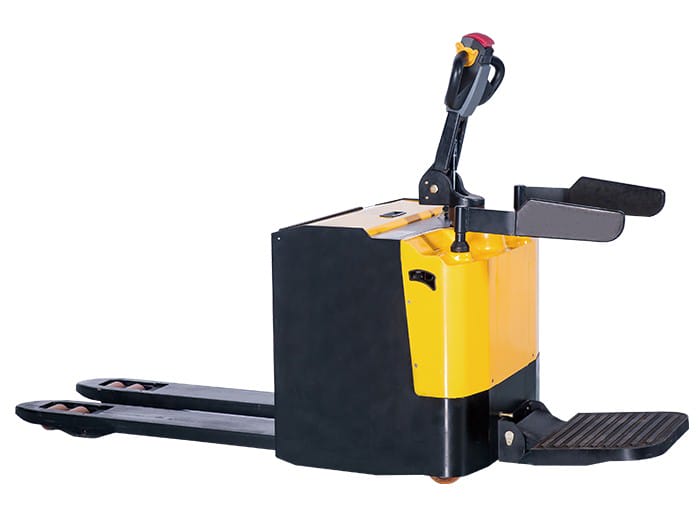
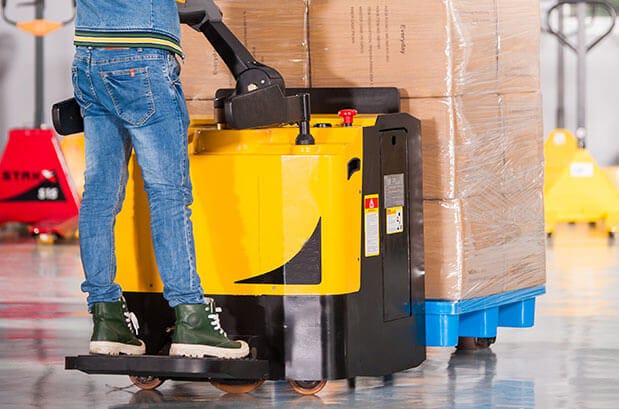
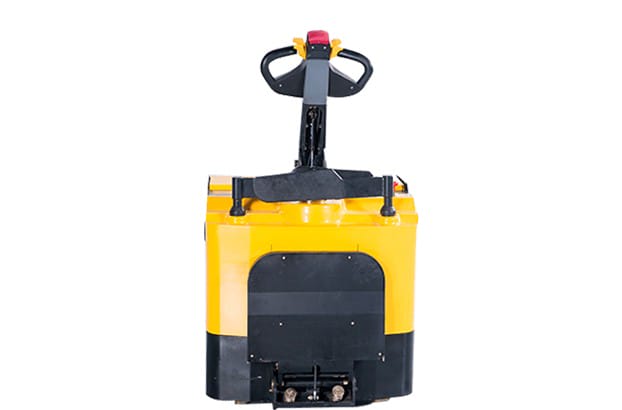
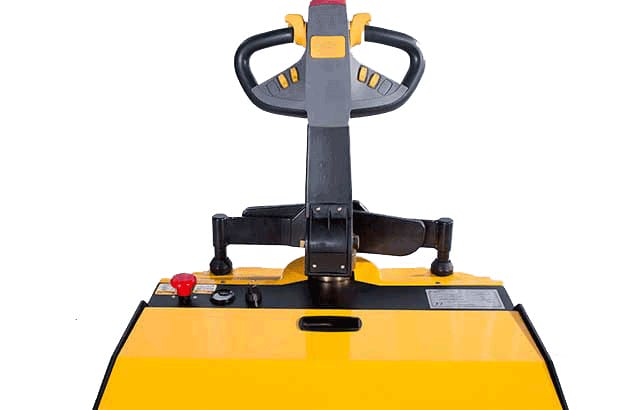
The forks are 1,150 mm long across all variants, matching standard Euro-pallet dimensions. Fork width varies by model: the 550 mm configuration suits narrower pallets and aisles with limited width, while the 680 mm variant provides greater stability when handling heavier or wider loads. The width of each individual fork (185 mm) is the same across all configurations, ensuring even load distribution beneath the pallet.
The lift range of 85–200 mm is sufficient to raise a pallet clear of the floor for transport, but is not intended for lifting loads to shelf level – the EPT4 is a horizontal transport unit, not height-lifting equipment.
Choosing a configuration is not just a matter of load capacity – it directly affects how smoothly the equipment fits into an existing warehouse workflow. The narrower fork configuration (550 mm) allows freer manoeuvring between racking aisles, while the wider one (680 mm) provides a larger contact surface beneath the pallet and therefore a more stable ride for heavier loads. When choosing between the 1.5 kW and 2.2 kW motor variants, consider not only load capacity but also how often the equipment will be used continuously – for frequent, intensive use, the more powerful motor delivers smoother performance without the risk of overheating.
The EPT4 runs on a 24V electrical system, the standard solution for this class of pallet truck, providing safe, low-voltage operation indoors. Battery capacity varies according to the chosen load-capacity variant – 210 Ah, 280 Ah or 340 Ah – and should be matched to the planned shift length and load flow. Higher capacity provides longer continuous operation without recharging, which is particularly important for two- or three-shift operations.
The built-in charger is a practical solution, as it allows the battery to be charged directly from a standard mains supply without a separate external charging station. This simplifies equipment placement in the warehouse and reduces the need for additional infrastructure.
Motor power – 1.5 kW or 2.2 kW depending on the model – determines the truck’s ability to move loads across different floor surface conditions. The more powerful 2.2 kW motor is better suited to situations where the floor surface is not perfectly level or where maximum-capacity loads need to be moved more frequently.
In practice, the choice of battery capacity involves a trade-off between operating time without recharging and the overall weight of the equipment – higher capacity generally means a heavier battery pack. Businesses running a single shift per day therefore usually find the lowest-capacity variant (210 Ah) sufficient, while continuous two- or three-shift operations should consider the 280 Ah or 340 Ah variant to avoid having to stop work for recharging mid-shift. The built-in charger also makes it possible to use short natural breaks (such as lunch) for partial charging, which in practice extends the real working time between full charges.
When choosing an electric pallet truck, it is worth considering the following factors:
EPT4 electric pallet trucks suit a wide range of industries requiring regular movement of palletised loads. In hypermarket and shopping-centre warehouses, they are used to unload goods from delivery vehicles and move them to the sales floor. In logistics centres and distribution warehouses, the EPT4 provides efficient load flow between storage areas and loading ramps.
In manufacturing facilities, electric pallet trucks are used to move raw materials and finished goods between production stages. In the food sector, where faster load handling under tighter time constraints is often required, the EPT4’s electric drive reduces operator fatigue during long shifts compared with manual equipment.
The equipment is suitable for use both indoors on smooth flooring and in areas with moderately uneven flooring, provided the appropriate motor power variant is chosen.
In wholesale warehouses with high stock turnover, the EPT4 is often used alongside order-picking workflows, where fast, safe movement of pallets between the picking area and the dispatch ramp directly affects order-fulfilment speed. In cold stores and food-processing facilities, the electric drive is an added advantage because it produces no exhaust fumes that could affect indoor air quality or product storage conditions.
Parameter | EPT4 (electric) | Manual pallet trucks |
Load capacity | 2,000 / 2,500 / 3,000 kg | Usually up to 2,500 kg |
Suitability | Frequent, intensive use, longer distances | Occasional use, short distances |
Initial investment | Higher than manual trucks | Lowest |
Operating costs | Electricity and battery maintenance costs, lower physical strain on the operator | No electricity costs, but higher physical strain and time spent |
Manual pallet trucks suit situations where loads are moved infrequently and over short distances, since their initial cost is lower and they require no charging or battery maintenance. However, as the frequency or distance of movement increases, the EPT4’s electric drive reduces the operator’s physical strain and allows a greater volume of load to be handled in a single shift.
When choosing between these solutions, a useful guide is to consider both current and planned workload – if load flow is growing or a warehouse expansion is planned, electric equipment generally offers better scalability than a manual solution, which beyond a certain threshold becomes limited by the number of operators rather than by the equipment itself.
Switching from manual to electric pallet trucks can significantly affect load-handling speed and the volume of loads moved in a single shift. In practice, using electric drive has been observed to increase the number of pallets handled by roughly 25–40% compared with manual equipment, since the operator expends no effort pushing the load and can instead focus on route planning and the sequencing of loading operations.
This productivity gain is especially significant in high-intensity environments – distribution centres with tight delivery deadlines, where the speed of each operation directly affects overall warehouse throughput. In addition, the built-in charger reduces downtime, since the equipment can be charged during breaks or between shifts without scheduling separate downtime for battery replacement.
In terms of workflow optimisation, it also matters that electric drive allows a single operator to cover a larger warehouse area, since the distance that can be efficiently covered without extra effort is considerably greater than with manual equipment. In practice, this can reduce the number of staff needed per shift or free up staff for other tasks without reducing the overall volume of loading operations.
Electric drive significantly reduces the physical strain an operator experiences when manually pushing or pulling a load with a pallet truck. Over the long term, this reduces the risk of musculoskeletal strain – a common problem among staff who regularly work with manual loading equipment.
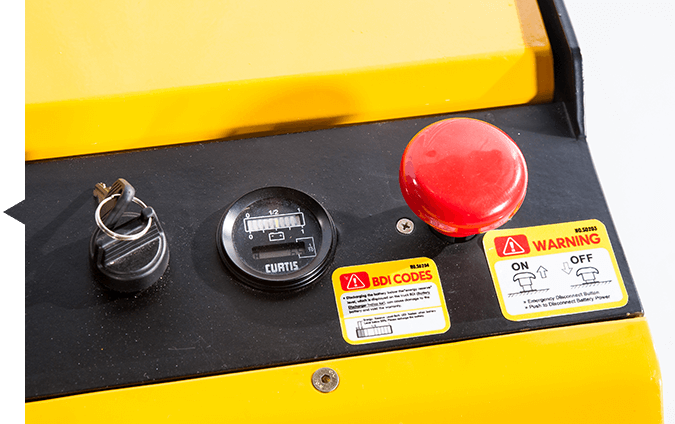
The EPT4’s controls are positioned so the operator can control movement and lifting without excessive strain on the arms or back. Electric drive allows a steady working pace to be maintained throughout the shift, rather than gradually slowing down due to fatigue, as often happens with manual equipment during long shifts.
An important ergonomic factor is that the operator does not need to apply extra force to start a load moving from a standstill – the moment when manual equipment places the greatest strain on the back and shoulder muscles. Regular use of electric drive at this stage can significantly reduce workplace risk factors linked in the long term to chronic musculoskeletal fatigue.
The EPT4’s design is intended for safe operation in warehouse conditions, in line with standard safety requirements for electric loading equipment. The low-voltage 24V system reduces electrical risks compared with high-voltage equipment, which matters in areas where several employees work simultaneously.
Regular maintenance and monitoring of battery condition are prerequisites for continuous, safe operation. Long-term reliability is directly linked to following proper charging cycles and replacing worn parts (such as wheels) in good time.
An additional safety factor is the operation of the hydraulic lifting system, which should be checked regularly to ensure smooth lifting and lowering without sudden load movements that could pose a risk to the operator or nearby staff. For businesses where several operators share the same unit across shifts, it is advisable to introduce a regular pre-use inspection routine (wheel condition, brake function, battery charge level).
EPT4 electric pallet trucks meet CE marking requirements, confirming compliance with European Union machinery safety and operating standards.
Although the initial investment in an electric pallet truck is higher than for manual equipment, it often pays off over the long term through reduced labour time per pallet handled and lower operator fatigue, which in turn can reduce work-related health issues and their associated costs.
The built-in charger and comparatively low energy consumption (24V system) mean that operating costs remain predictable and comparatively low compared with fuel-powered equipment. A well-matched combination of load capacity and battery capacity helps avoid situations where equipment is either overloaded or, conversely, purchased with excess, unused capability.
When assessing long-term value, indirect costs should also be considered – reduced risk of employee illness and overexertion, lower staff turnover in physically demanding roles, and faster order processing, which can free up resources for other warehouse processes. Individually, these factors are often difficult to measure directly, but together they form part of the economic case for electric equipment compared with a manual solution.
Because it runs on electric drive, the EPT4 produces no direct exhaust emissions during operation, making it suitable for indoor use without the additional ventilation requirements needed for internal-combustion equipment. This matters in areas with limited air exchange, such as warehouses with low ceilings or restricted ventilation systems.
Long-term battery use and its proper recycling at the end of its service life are part of responsible equipment use.
Compared with internal-combustion equipment, electric pallet trucks require no regular fuel or oil changes, reducing environmental risks associated with fluid leaks and disposal in warehouse spaces. For businesses pursuing sustainability targets or reporting on their carbon footprint, using electric loading equipment can be one of the documentable steps in that direction, particularly where electricity is sourced from renewable energy.
Regular EPT4 maintenance includes monitoring battery charging cycles, checking the condition of the hydraulic system, and controlling wheel wear. Timely maintenance reduces the risk of unexpected downtime and extends the equipment’s service life.
Recommended maintenance practice includes a daily visual inspection before starting work (wheel condition, checking the hydraulic system for leaks, battery charge level), together with periodic in-depth technical inspection by a qualified specialist. Timely replacement of worn wheels or other wearing parts prevents extra strain on the motor and extends the service life of the whole unit.
An electric pallet truck (power pallet jack) is motorised loading equipment with electric drive and a hydraulic lifting mechanism, designed for the horizontal transport of palletised loads and lifting to a small height (up to roughly 200 mm). It is widely used in warehouses, production facilities and retail premises to reduce operator physical strain compared with manual equipment.
Electric pallet trucks move loads using a motor, while manual trucks are pushed or pulled using the operator's physical strength. Electric drive reduces fatigue, allows loads to be moved over longer distances, and increases the number of pallets handled per shift, but requires a higher initial investment and regular battery maintenance.
The choice of load capacity depends on your typical load weight - the EPT4 is available in 2,000 kg, 2,500 kg and 3,000 kg variants. It is advisable to choose a model with a small margin above the maximum weight of your most frequently handled loads, to avoid overloading the equipment and to ensure a longer service life.
| Cookie name | Active |
|---|
Uzraksti mums.