
The Electric Pallet Truck EPT1 is an pallet truck with a lithium battery, delivering fast, convenient, and physically undemanding pallet handling in warehouses, supermarkets, and production facilities. With a 1,500 kg load capacity, a low-maintenance lithium battery, and CE certification, this electric pallet truck is an ideal solution for businesses seeking to improve logistics efficiency and reduce physical strain on operators. VVN offers the EPT1 electric pallet truck from €598 excluding VAT – a reliable, certified pallet jack for any warehouse or retail environment across Latvia.

You get a better offer?
| Rated capacity* | Sizes of forks (length x width)* | Battery* | Charger* | Drive motor* | Max./min. lifting height* | Price (excluding VAT) |
|---|---|---|---|---|---|---|
|
1500 kg |
1150/1220 mm x 550/685 mm; |
10 Ah, lithium |
External |
0,45 kW |
185/115 mm |
598.00 eur |
|
1500 kg |
1150/1220 mm x 550/685 mm; |
15 Ah, lithium |
External |
0,45 kW |
185/115 mm |
770.00 EUR |
*Available a wide range of sizes and parameters of pallet truck models to suit specific needs, functions and tasks.
A pallet truck, or pallet jack, is a hydraulic or electric device used for moving palletised goods in warehouses, retail outlets, and production facilities. It is one of the most widely used pieces of equipment in logistics and retail, where pallet loads must be moved and positioned on a daily basis.
Technically, there are two main types of pallet trucks: the manual pallet jack, which the operator drives using physical effort and a hydraulic system, and the electric pallet truck, which is equipped with an electric motor for both driving and lifting the forks. The EPT1 belongs to the electric pallet truck category and is designed for medium- to high-intensity work.
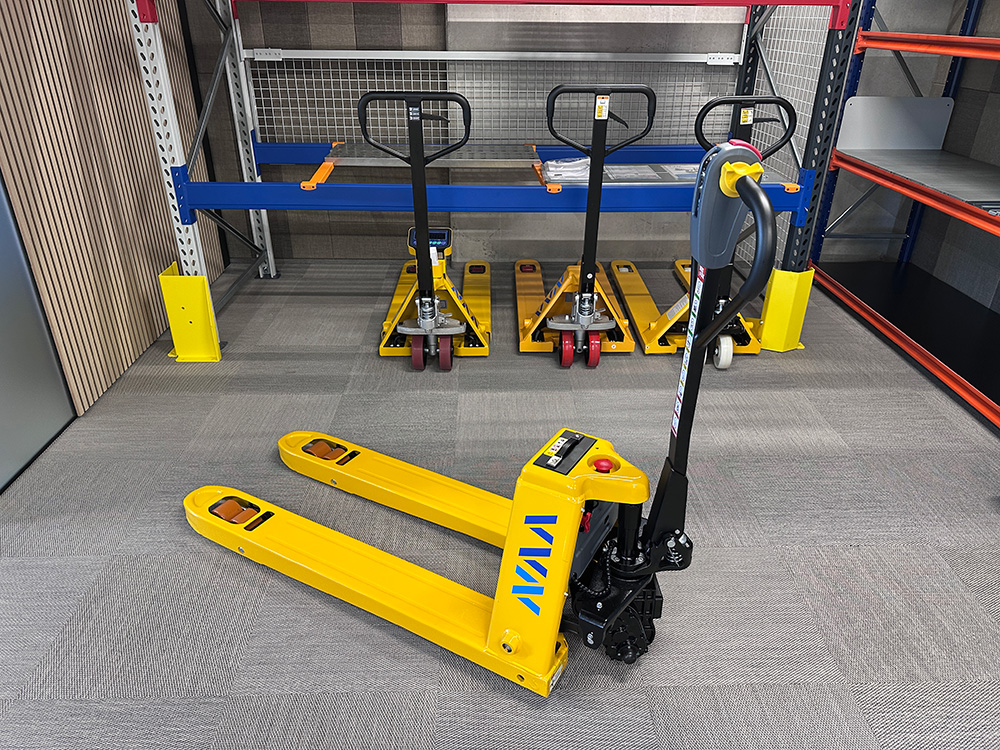
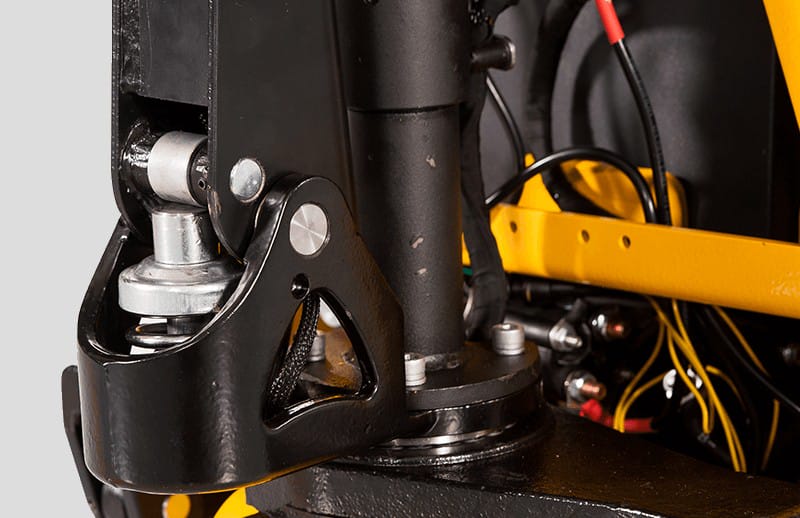
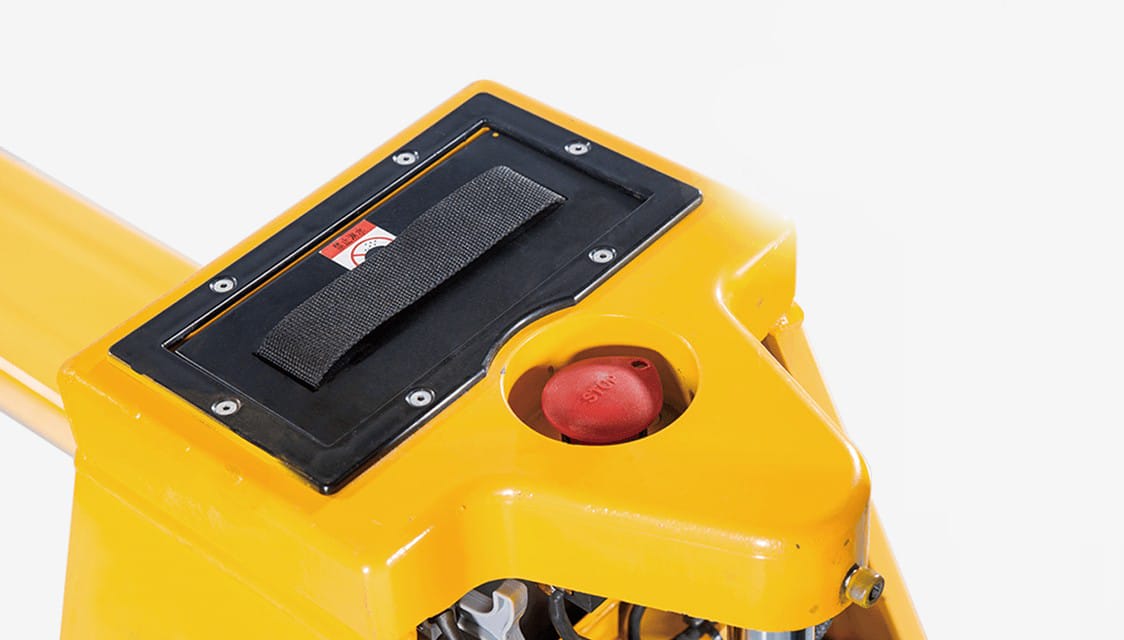
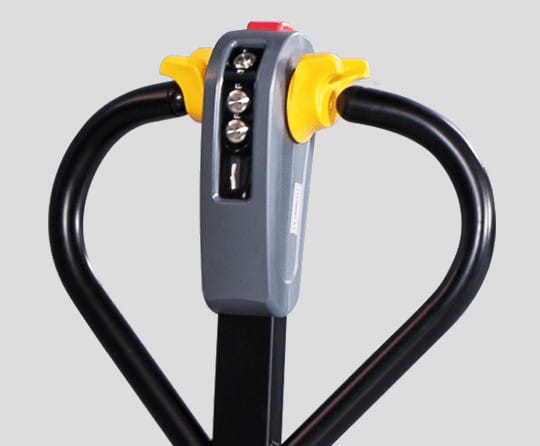
Both manual and electric pallet trucks are fundamental pieces of equipment in warehouse and retail infrastructure. Each addresses specific needs depending on work intensity, travel distance, and budget.
The manual pallet jack is an economical and reliable solution for businesses where pallet handling occurs infrequently or over short distances. It requires no power source, is mechanically simple, easy to repair, and can operate in any environment regardless of charging infrastructure. However, during intensive and prolonged use, the operator is subjected to considerable physical strain, leading to fatigue and increasing the risk of musculoskeletal injury.
The electric pallet truck, such as the Electric Pallet Truck EPT1, is designed for medium- and high-intensity conditions – longer travel distances, more frequent lifts, and extended shift-based operations. The electric drive relieves operators of physical effort, ensures a consistent working pace, and reduces the risk of errors caused by fatigue. With its 15 Ah lithium battery, the EPT1 provides a full working shift (8 hours or more) on a single charge.
For businesses with low pallet throughput or operations not exceeding 2 hours per day, a manual pallet jack is usually a sufficient and cost-effective solution. For multi-shift warehouses, food distribution centres, supermarkets, and production facilities, the EPT1 electric pallet truck offers higher productivity, better operator wellbeing, and lower long-term operating costs.
The EPT1’s lithium battery is fundamentally different from the traditional lead-acid batteries used in older-generation industrial equipment. The battery can be swapped in seconds with no tools required – a business can keep a spare battery on charge and maintain uninterrupted operation in shift-based working conditions. This is a significant practical advantage over equipment that requires a shutdown during charging.
An electric pallet truck with a lithium battery lasts more than 3 years under normal operating conditions. There is no need to top up the electrolyte, and there is no risk of acid leakage – this reduces maintenance workload and workplace safety risks. Compared with lead-acid battery equipment, the EPT1 means less technical staff time and a lower five-year total cost of ownership (TCO).
The EPT1 is available with two wheel options. Polyurethane wheels are optimal for smooth concrete and epoxy floors indoors – they create minimal friction and do not mark the floor surface. Nylon wheels provide greater durability on uneven surfaces, in threshold areas, and under more demanding load conditions. The choice of wheel type should match the flooring in the warehouse or retail space.
The choice of pallet truck is an investment that directly affects operator productivity, physical wellbeing, and the efficiency of day-to-day logistics.
Work intensity is the most important factor when choosing a pallet truck. If the equipment is used for up to 2 hours per day – for example, goods receiving or infrequent reorganisation in a small shop or warehouse – a manual pallet jack is typically a sufficient and cost-effective solution. For medium-intensity work of 2 to 5 hours per day, the EPT1 with a 10 Ah battery is the optimal choice. For a full working shift (8 hours per day) or multi-shift working, the EPT1 with a 15 Ah battery is recommended, providing uninterrupted operation throughout a single shift without recharging.
EPT1 forks are available in widths of 550 mm and 685 mm, accommodating both standard Euro pallets (800 × 1,200 mm) and other pallet sizes (1,000 × 1,200 mm). If working aisles are narrower than 2 m, it is advisable to verify the overall width of the loaded unit and the minimum turning radius before purchase, in order to ensure safe operation and compliance with fire safety requirements.
The EPT1’s load capacity of 1,500 kg meets the requirements of the majority of standard pallet loads in light logistics, food retail, and production warehouses. If loads exceeding 2,000 kg are handled on a regular basis, we recommend consulting the VVN catalogue for models with a higher load capacity.
The floor material directly affects the choice of wheels and the longevity of the equipment. Polyurethane wheels are optimal for smooth concrete or epoxy floors – they create minimal friction, do not mark the surface, and provide quieter operation. Nylon wheels are more durable and handle uneven surfaces, cracks in concrete, thresholds, and heavier mechanical loads more effectively.
When making an investment decision, it is important to consider not only the purchase price but also the total cost of ownership over five years. A manual pallet truck with a hydraulic system requires regular maintenance – hydraulic fluid checks and changes, and mechanical component inspections. The EPT1’s lithium battery is maintenance-free: there is no regular service cycle and no electrolyte top-up required. Operator productivity gains should also be factored in: for shops and warehouses with high pallet throughput, an electric pallet truck typically offsets its higher purchase price through saved labor time and a reduced risk of injury.
All pallet trucks and electric pallet jacks sold on the European Union market must comply with CE marking requirements. The CE mark confirms compliance with EU Machinery Directive 2006/42/EC – the legislation that establishes safety, construction, and documentation requirements for mechanical and electrical equipment in the EU market. The manufacturer is required to prepare a Declaration of Conformity confirming that the equipment meets all directive requirements. VVN provides this documentation with every EPT1 delivery.
In Latvia, workplace equipment safety is governed by Cabinet Regulation No. 526 on Safety Requirements for Work Equipment and the Procedure for Supervising Its Use. This regulation sets out employers’ obligations regarding the safe use of equipment, regular inspection, and employee training. Compliance is overseen by the State Labour Inspectorate (VDI), which has the right to conduct inspections at any workplace.
Driving an electric pallet truck in Latvia does not require a separate licence or certificate – unlike electric forklift trucks and other lifting equipment. However, the employer is required to provide operator training prior to first use and to familiarise the operator with the equipment’s instruction manual. The EPT1 is fully CE certified in accordance with the requirements of 2006/42/EC, and the Declaration of Conformity is provided with every unit.
The Electric Pallet Truck EPT1 from VVN is available from €598 excluding VAT in Latvia - the 10 Ah lithium battery variant. The 15 Ah lithium battery variant costs €770 excluding VAT. Manual pallet trucks in Latvia start from approximately €270 excluding VAT. The exact price may vary depending on configuration, fork size, wheel material, and delivery terms. Please contact VVN representatives for a personalised quotation.
Load capacity depends on the model. Standard manual pallet trucks typically lift between 2,000 and 2,500 kg. The Electric Pallet Truck EPT1 has a load capacity of 1,500 kg - sufficient for the vast majority of standard pallet loads in warehouse logistics and retail. If higher capacity is required on a regular basis, other electric pallet truck models with greater maximum loads are available in the VVN catalogue.
All electric pallet trucks sold on the EU market must carry CE marking confirming compliance with EU Machinery Directive 2006/42/EC. In Latvia, work equipment is also subject to Cabinet Regulation No. 526, compliance with which is monitored by the State Labour Inspectorate (VDI). The EPT1 is fully CE certified, and the Declaration of Conformity is included with delivery. No separate operator licence is required; however, the employer must provide training and familiarise the operator with the instruction manual prior to first use.
The EPT1 lithium battery service life exceeds 3 years under normal operating conditions without daily maintenance. Unlike lead-acid batteries, lithium technology requires no electrolyte top-up, balancing, or other regular servicing. The battery can be replaced in seconds with no tools required - ensuring uninterrupted operation in shift-based businesses. When the battery reaches end of life, it is replaced with a new one, whilst the unit body and electric drive continue to operate.
Outdoor use depends largely on the wheel type. The EPT1 with polyurethane wheels is designed for smooth indoor floors - concrete, epoxy, or tiled surfaces. The EPT1 with nylon wheels handles uneven surfaces better and is more suitable for outdoor use on firm, reasonably smooth surfaces. Operating the EPT1 in wet conditions, on gravel, or over irregular terrain without additional protection is not recommended.
The primary difference is the type of drive. A manual pallet truck moves and lifts using the operator's physical effort and a hydraulic system. The EPT1 electric pallet truck uses a 0.45 kW electric motor - this significantly reduces physical strain and increases the working pace. Manual pallet trucks start from approximately €270 excluding VAT; the EPT1 in Latvia starts from €598 excluding VAT. The manual truck requires periodic hydraulic servicing, whilst the EPT1 lithium battery is maintenance-free with a service life of over 3 years.
| Cookie name | Active |
|---|
Uzraksti mums.