
In recent years, Baltic and Scandinavian companies have been paying increasing attention not only to the efficiency of indoor warehousing, but also to how their outdoor area is used. Material and raw material prices continue to rise, the cost of space is becoming ever more significant, and competition in logistics, manufacturing and construction is forcing businesses to look for every opportunity to work smarter and faster. In this context, outdoor warehouse solutions are no longer just a nice-to-have – they have become a strategic necessity.
Many companies working in metalworking, woodworking, construction or logistics face the same problem on a daily basis: long, bulky materials – metal bars, pipes, boards, profiles, structural elements – end up stored haphazardly, directly on the ground or wherever space happens to be available. This creates a number of practical challenges: materials are damaged by moisture and precipitation, staff waste time searching for the item they need, the risk to both personnel and the materials themselves increases, and the warehouse area looks untidy, creating a poor first impression on partners and clients.
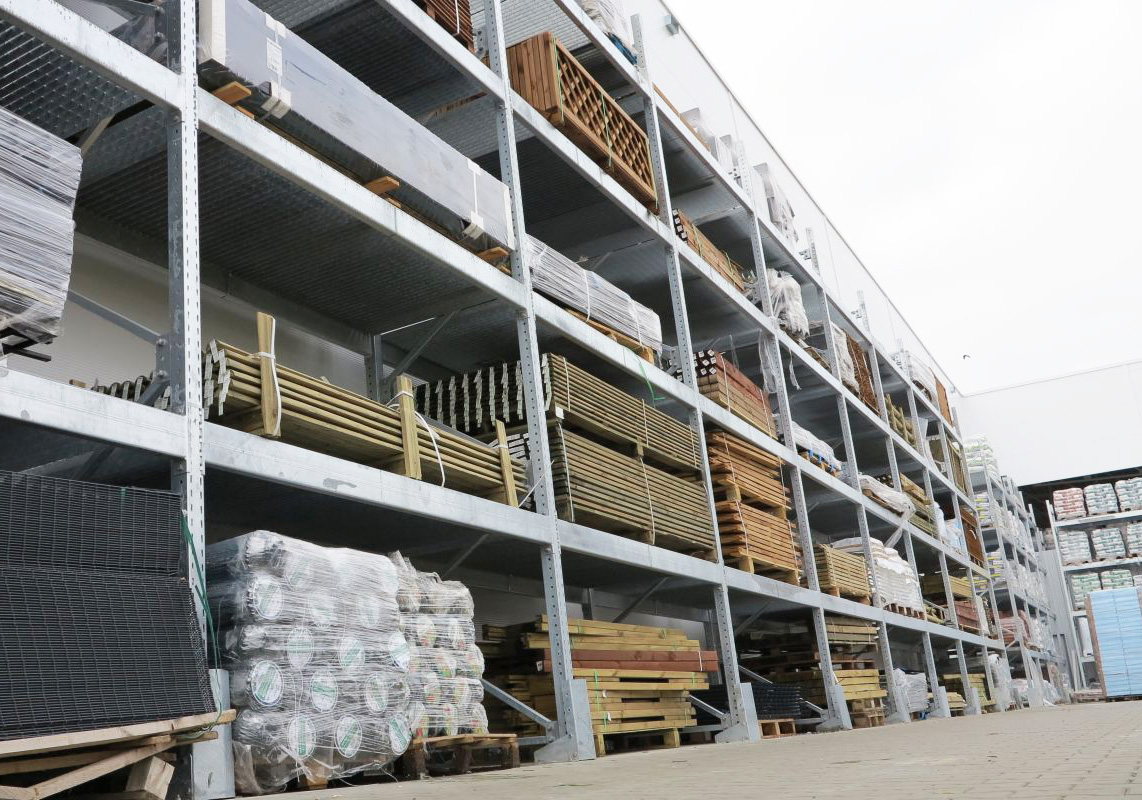
The solution lies in well-thought-out outdoor warehouse infrastructure – quality outdoor shelving, cantilever racking and appropriate handling equipment, which together form a functional, safe and durable system for storing long and heavy materials. In this article, we take a closer look at why modern outdoor warehouse solutions have become an essential part of company infrastructure, what advantages UX shelving and cantilever racking offer, and why diesel forklifts – including the powerful D3000 model – are the ideal addition to any outdoor warehouse.
VVN is a company with more than 10 years of experience selling and installing retail and warehouse equipment, and over that time it has become one of the most recognised partners in the Baltic and Scandinavian region. This experience allows VVN not only to offer a wide range of warehouse equipment, but also to give clients professional advice on which solution will be most effective for their specific situation – taking into account the company’s industry, the nature of its materials, the available space and its budget.
VVN’s client base includes both large manufacturing and logistics companies and smaller and medium-sized businesses from the construction, woodworking, metalworking and retail sectors. This breadth of experience allows the VVN team to understand the specific needs of each industry – from lightweight retail shelving systems to heavy-duty industrial warehouse infrastructure capable of withstanding years of intensive use in outdoor conditions.
What sets VVN apart from other market players is its comprehensive approach – the company does not simply offer individual products, but a complete warehouse equipment ecosystem: from outdoor and cantilever shelving systems to manual and mechanical pallet trucks, scissor lifts and diesel forklifts. This means a client can get a comprehensive solution from a single trusted supplier, saving the time that would otherwise be spent liaising with multiple suppliers and reconciling different technical standards.
Equally important is VVN’s ability to provide equipment installation and technical support – this is especially significant in the case of outdoor shelving systems, since correctly securing the structure and calculating the load are critical to ensuring the system performs safely and reliably over the long term in changing weather conditions.
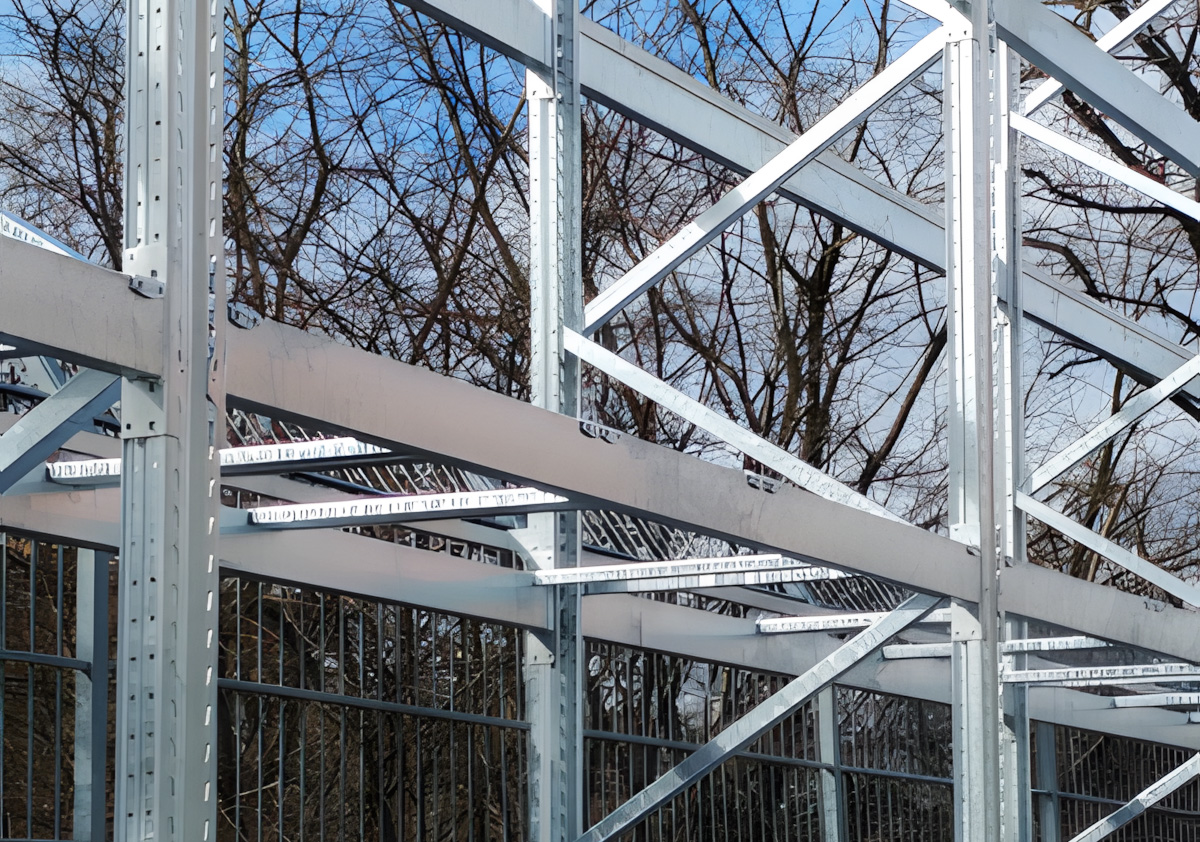
UX shelving is one of the most versatile solutions in the warehouse equipment category, and it is equally well suited to indoor and outdoor conditions. This shelving system is designed to provide maximum flexibility – the height, depth and number of sections can be adapted to a specific company’s needs, making UX shelving an excellent choice for both small warehouse corners and extensive outdoor storage areas.
In many manufacturing and logistics facilities, materials and goods are often stored directly on the ground or on pallets without any system at all.
This creates a number of practical problems: difficult access to goods, inefficient use of space, an increased risk of damage, and a complicated stocktaking process. UX outdoor shelving solves these problems by creating a clear, structured system in which every group of goods has its own place.
This is especially relevant for companies storing medium- and heavy-weight goods – pallets of product, packaging materials, spare parts or raw materials that need to be readily accessible but should not take up valuable indoor space.
Firstly, UX shelving makes far more efficient use of the available area – goods are stored vertically rather than scattered across the whole site, freeing up space for other operational needs, such as vehicle movement or additional storage zones. Secondly, a structured shelving system significantly speeds up locating and picking goods – staff no longer need to search for the material they need among other items, but can go straight to the specific shelf section.
Thirdly, UX shelving made from durable, corrosion-resistant material provides long-term protection against the effects of weather, which is essential specifically in outdoor operating conditions. Finally, a well-organised warehouse area creates a professional impression on clients and partners visiting the company’s premises, while also making it easier to meet workplace safety requirements.
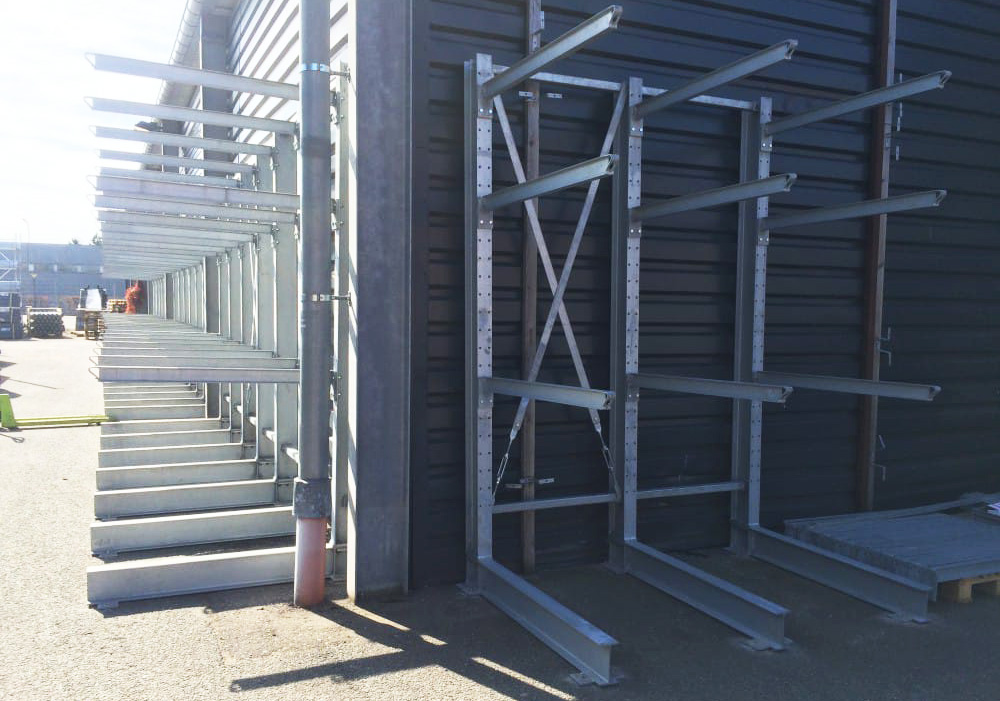
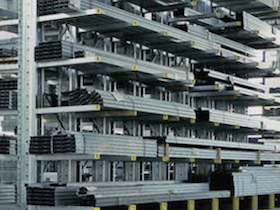
If UX shelving is a versatile solution for storing a variety of goods, cantilever racking is a specialised solution designed specifically for companies that work daily with materials of non-standard length – metal bars, pipes, profiles, timber boards, laminate sheets or structural elements. Storing such materials on standard shelving is simply not possible given their length and shape, which is why cantilever racking is designed specifically for this purpose.
The construction of cantilever racking is based on a central upright, from which horizontal arms extend on both sides – this allows long materials to be placed without being constrained from the sides, as would happen with a standard shelving system. This design not only solves the problem of storing long materials, but also provides easy access to each type of material individually, without the need to rearrange other items to reach the one required.
Cantilever racking systems can be loaded with materials of varying weight – from lightweight timber to heavy metal profiles – making this solution versatile for both woodworking and metalworking businesses. In addition, the length and load capacity of the arms can be adapted individually, depending on the specific materials a given company stores.
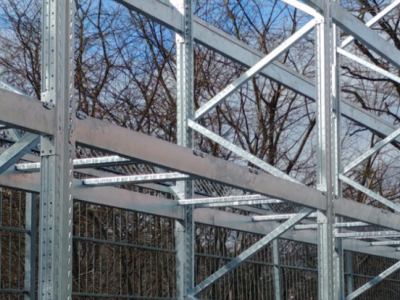
One of the most important factors when choosing a shelving system for outdoor use is the structure’s resistance to weather – rain, snow, moisture and temperature fluctuations, which is a particularly relevant issue in the Baltic climate. This is precisely why outdoor cantilever racking is built from galvanised steel, which provides significantly greater corrosion resistance than ordinary painted metal.
The galvanising process forms a protective layer that shields the metal from rust even under prolonged exposure to moisture, meaning cantilever racking retains its structural strength and appearance for many years without requiring frequent maintenance or repainting. This is especially important for companies whose outdoor area is exposed to the weather all year round – from summer heat and heavy rain to winter frost and snow.
Investing in a galvanised cantilever racking system pays off in the long run, as it reduces the need for replacement or repair and helps ensure that stored materials remain protected and fit for use for longer.
A properly designed outdoor warehouse shelving system affects a company’s operations far more broadly than simply tidying up materials. It has a direct impact on workplace safety, operational efficiency, and even the company’s overall image.
Materials stored haphazardly, simply piled on the ground or in unstable stacks, create serious safety risks – they can topple over, create trip hazards, or obstruct evacuation routes in an emergency. A structured shelving system that is correctly secured and loaded in accordance with the manufacturer’s guidelines significantly reduces these risks. Every material has its own designated, safe place, reducing the chance of an item falling unexpectedly and injuring a member of staff.
A well-organised outdoor warehouse means every employee knows exactly where to find the material they need, significantly cutting the time spent searching. This is particularly important for companies with a high turnover of materials, where day-to-day efficiency directly affects the company’s ability to fulfil orders on time. In addition, a clearly structured system also makes stocktaking easier – material records become more accurate, and the risk of materials being lost or overlooked decreases.
When staff no longer need to spend time searching for or rearranging materials to reach the item they need, the overall workflow becomes considerably faster. This directly affects a company’s ability to handle more orders within the same time period without requiring additional labour resources. In the long run, this translates into higher productivity and better use of resources – two factors that directly influence a company’s competitiveness in the market.
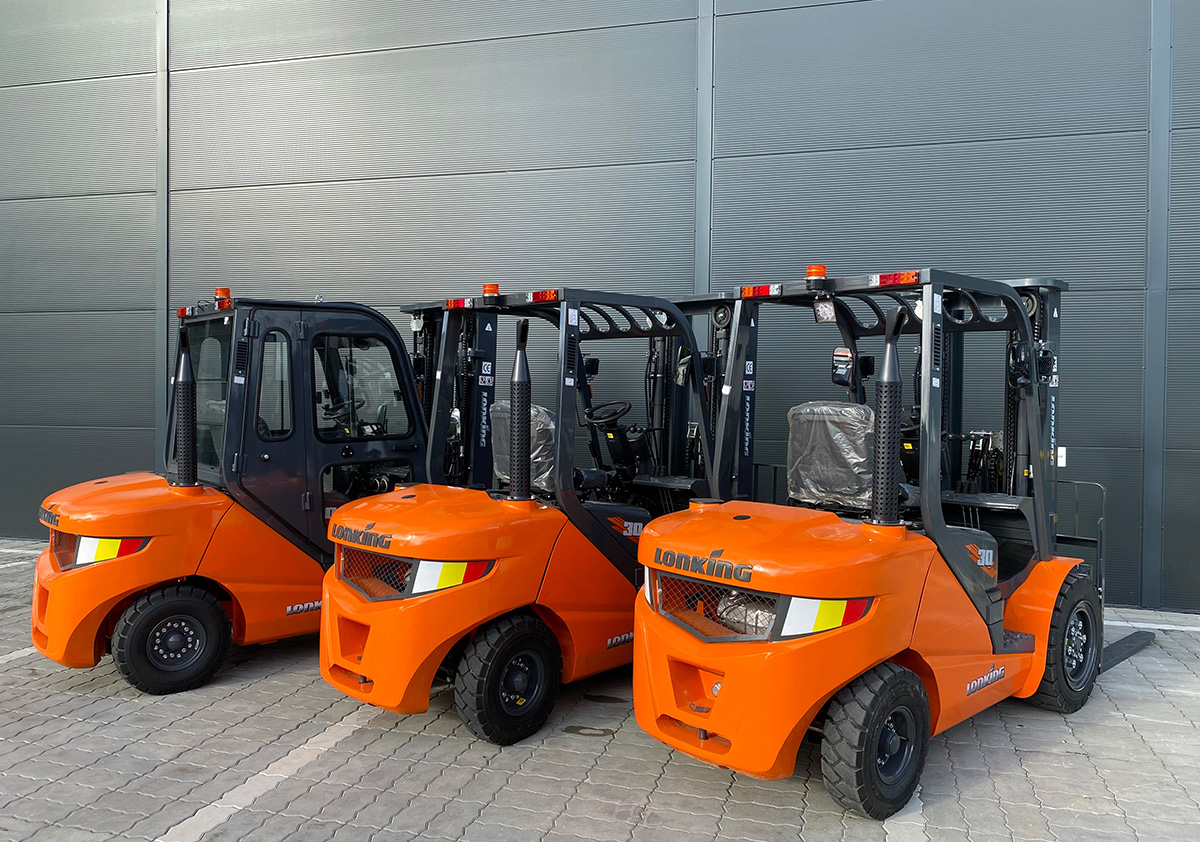
For an outdoor warehouse system to work as efficiently as possible, the shelving infrastructure needs to be complemented by appropriate handling equipment capable of moving materials between different zones safely and quickly. This is where diesel forklifts come in – equipment that is particularly well suited to outdoor working conditions.
Unlike electric forklifts, whose operating time is limited by battery capacity and which require regular recharging, diesel forklifts provide long, uninterrupted operation without the need to stop work to recharge.
This makes them the optimal choice for sites with a high, continuous volume of work, as well as for areas where the power supply is limited or unavailable altogether – which is often the case with outdoor warehouses and construction sites.
Diesel forklifts with a lifting capacity of 2,000 to 3,500 kilograms are ideally suited to tasks of varying scale – from moving standard pallets around a warehouse to lifting heavy construction materials and steel structures on a building site. This range of lifting capacity makes diesel forklifts a versatile solution across different sectors, including warehouse management, construction and manufacturing.
Cantilever and UX shelving systems installed outdoors require an efficient and safe process for loading and unloading materials. A diesel forklift makes it possible to place heavy materials on the upper levels of the shelving quickly and accurately – something that would be practically impossible manually or with lighter equipment, or would require a disproportionate amount of time and labour. Together, the equipment and the shelving infrastructure form a complete, functional system in which each component complements the other – the shelving provides organised storage, while the forklift provides fast, safe access to that storage system.
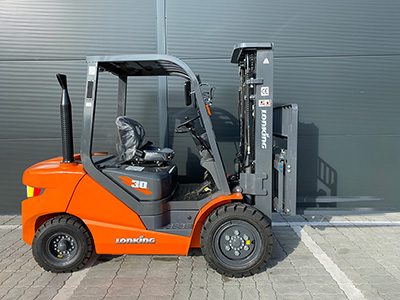
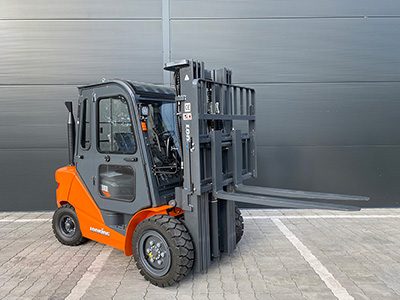
Among VVN’s full range of warehouse equipment, the D3000 diesel forklift with an enclosed, heated cabin particularly stands out – a model designed specifically for intensive, long-term work in the changeable climatic conditions typical of Latvia and the wider Baltic region.
One of the D3000’s standout benefits is its enclosed, heated cabin, which protects the operator from cold, wind, rain and snow. This aspect is often underestimated, yet it has a direct impact on both the operator’s health and comfort and on work efficiency – an operator working in a warm, dry environment can work for longer and with greater precision than one exposed directly to the elements. During the winter months, when temperatures in the Baltic region can drop well below freezing, a heated cabin becomes not just a matter of comfort, but a practical necessity.
The D3000 offers a lifting capacity of up to 3,000 kilograms, allowing it to safely handle heavy pallets, construction materials and industrial loads. A lift height of up to 4,700 millimetres provides access to the highest shelving levels, which is especially important when working with multi-tier outdoor shelving systems, where making the most of vertical space is critical.
An engine output of 42–50 kW guarantees sufficient power to handle heavy loads even in the most challenging conditions – on uneven surfaces, slopes or other difficult terrain often found on outdoor sites and construction yards. Fuel consumption of 4–6 litres per hour is reasonable given the machine’s power and performance, making the D3000 a cost-effective solution for long-term operation.
The D3000 is fitted with pneumatic tyres, which provide better grip and stability on uneven, gravel or even muddy ground, commonly found on outdoor warehouse and construction sites. Unlike solid tyres, pneumatic tyres absorb shocks and unevenness, providing both greater operator comfort and gentler handling of the load being carried.
The combination of all these technical specifications makes the D3000 the optimal choice for companies that need equipment for intensive, day-to-day outdoor work – regardless of season or weather. It is a solution designed to withstand the demands of the Latvian and Baltic climate while delivering high performance and keeping the operator safe.
To better understand how outdoor shelving systems and diesel forklifts work in practice in real business settings, let’s look at several specific application examples.
Companies working with metal bars, pipes and profiles regularly face the challenge of storing materials of varying lengths and diameters safely and clearly. Cantilever racking is a direct solution here – it allows materials to be sorted by type, diameter or length, providing quick access to the material needed during the production process. A diesel forklift, in turn, allows heavy metal loads to be moved quickly from delivery vehicles to the shelving system.
Storing boards, beams and other timber products calls for a solution that protects the material from moisture while still providing convenient access to a range of lengths. Galvanised cantilever racking, installed outdoors with a suitable canopy, allows timber storage to be organised efficiently, while UX shelving is well suited to storing smaller, packaged materials and accessories.
Construction sites and building material warehouses often store a range of different materials – rebar, profiles, structural elements and packaged goods. A combination of UX and cantilever racking is particularly useful here, allowing both long and standard-sized materials to be organised, while a diesel forklift such as the D3000 makes it possible to work on uneven, unpaved ground where electric equipment is often unsuitable.
For companies engaged in distributing and storing goods in large volumes, making effective use of outdoor warehouse space is a way to expand storage capacity without investing in new building construction. A UX shelving system allows outdoor space to be used efficiently for storing pallets and packaged goods, while a diesel forklift provides fast movement of loads between different zones, including loading and unloading areas.
Manufacturing processes often create a need to store both raw materials and finished products outdoors, particularly where indoor space is limited. A combined shelving system, together with suitable handling equipment, allows manufacturers to make effective use of the available space while ensuring materials remain secure and accessible for uninterrupted production.
In every one of these cases, the common factor is the need for a well-thought-out, individually tailored solution that takes into account a company’s specific materials, volumes and pace of work – which is exactly what the VVN team offers every client when designing the most suitable warehouse equipment configuration.
Before investing in a new shelving system or warehouse equipment, it is worth weighing up several key factors that will directly affect the efficiency and long-term return of the chosen solution. The VVN team recommends that every client begin this process with a thorough assessment of their situation rather than a hasty decision.
Firstly, you need to determine what type of materials will be stored – their length, weight and shape have a major bearing on whether UX shelving, cantilever racking or a combination of both systems will be the better fit. Secondly, you should assess the available space and its layout – whether a multi-tier system can be built, or whether the shape and size of the area call for a different approach. Thirdly, you need to take into account how quickly materials turn over – companies with a high turnover of goods will need not only a well-thought-out shelving layout, but also suitable handling equipment capable of moving materials quickly and continuously.
It is equally important to assess the existing power supply infrastructure on site – if a stable electricity connection is not available in the outdoor area, or work is carried out at remote sites, a diesel forklift will be a more practical and efficient choice than electric equipment. Finally, seasonal and climatic conditions should be taken into account – for Baltic companies operating year-round regardless of the weather, both the shelving structure’s resistance to corrosion and the equipment’s suitability for working in low temperatures are especially important, as is the case with the D3000’s heated cabin.
VVN’s specialists can help you assess all of these factors, offering individual consultation and designing the most suitable solution configuration to match your company’s specific needs, budget and operations.
In today’s competitive market, making effective use of warehouse equipment is no longer just a matter of convenience – it is a direct investment in a company’s productivity, workplace safety and long-term cost efficiency. Outdoor shelving, cantilever racking systems and appropriate handling equipment, such as diesel forklifts, together form the foundation of a functional, safe and durable outdoor warehouse infrastructure capable of serving a company for years, even in the demanding Baltic climate.
With more than 10 years of experience selling and installing warehouse and retail equipment, VVN is ready to become your company’s trusted partner in this process. Our team understands that every company – whether it operates in metalworking, woodworking, construction, manufacturing or logistics – has its own specific needs, which is why we offer individually tailored solutions rather than one-size-fits-all products.
If your company is facing challenges organising its outdoor area, storing long or heavy materials, or you are looking for an effective handling equipment solution for outdoor work, get in touch with the VVN team today. We will help assess your specific situation, recommend the most suitable shelving system and equipment, and provide professional installation and technical support throughout our partnership.
Contact VVN today to find out how modern outdoor shelving, cantilever racking and diesel forklifts – including the powerful D3000 model with its heated cabin – can help your company work more efficiently, safely and cost-effectively, whatever the season or weather.
| Cookie name | Active |
|---|
Uzraksti mums.