
A forklift is one of the most indispensable working machines in today’s logistics, manufacturing, and construction sectors. A diesel forklift with a load capacity of 2,000–3,500 kg combines power, durability, and flexibility – it is the ideal solution for both outdoor work and well-ventilated production facilities. Compared with electric models, the diesel version provides uninterrupted operation without downtime for recharging, making it the preferred choice for businesses where stopping costs money. Our warehouse forklifts are equipped with modern safety systems, ergonomic cabs, and energy-efficient engines that comply with the latest emission standards.
A diesel forklift stands out for its high load-bearing capability and is widely used in timber processing, metalworking, and agriculture. Its robust construction allows it to operate on uneven surfaces, in poor weather conditions, and on rough terrain. Compact dimensions and excellent manoeuvrability make this forklift a productive tool even in confined warehouse spaces – with the right mast configuration, it can lift loads to a height of 3, 5, or even 7 metres. The load capacity range of 2,000–3,500 kg covers the vast majority of standard manufacturing and logistics tasks.
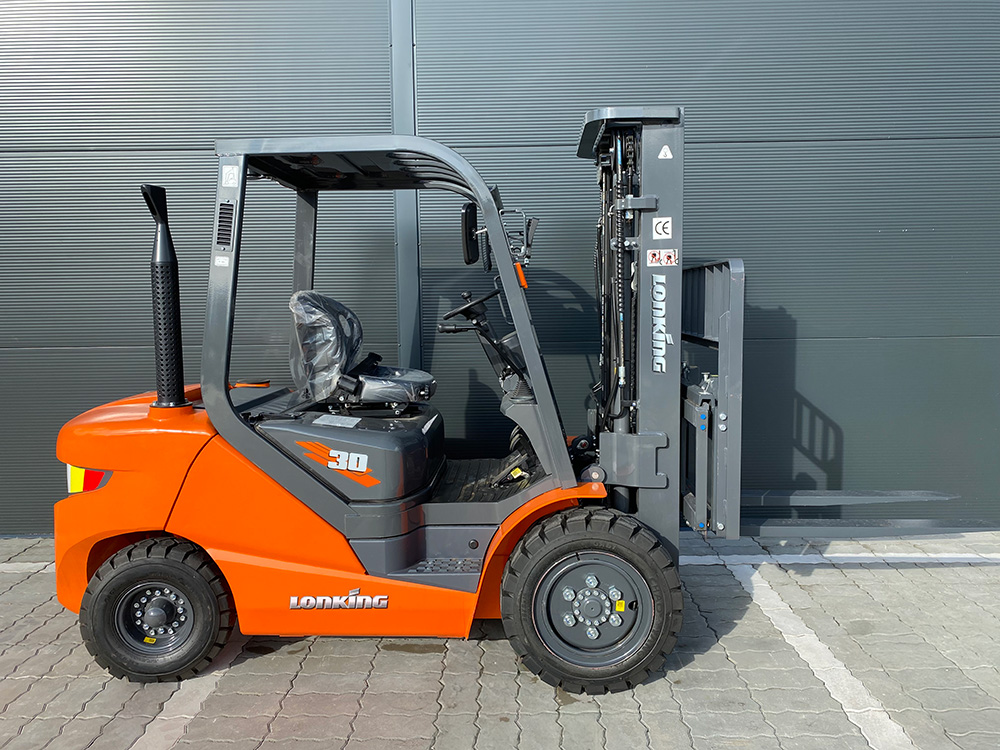
Price from 11’950 eur + VAT

You get a better offer?
This reach truck is suitable for both small and medium-sized enterprises carrying out daily deliveries and warehouse operations, and for large industrial companies with round-the-clock production loads. Whether your operations involve palletised goods, racking systems, or free-storage zone management, a forklift with a 2,000–3,500 kg capacity will complete the task quickly, safely, and economically. Below you will find everything you need to make an informed decision – from technical specifications to frequently asked questions.
| Parameter | Value |
| Load capacity | 2000 / 2500 / 3000 / 3500 kg |
| Load centre | 500 mm |
| Lifting height (standard) | 3000 mm (duplex/triplex optional) |
| Free lift | 150–160 mm |
| Overall height (mast lowered) | 2100–2300 mm |
| Length with forks | 3800–4300 mm |
| Width | 1200–1380 mm |
| Wheelbase | 1500–1700 mm |
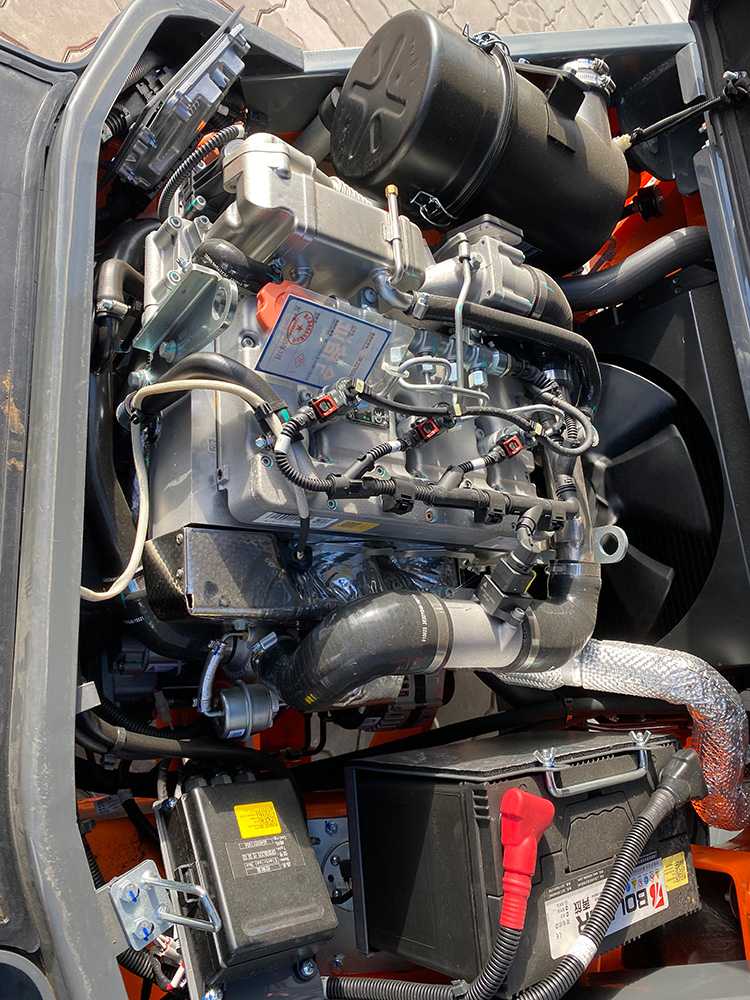
| Engine type and power | 4-cyl. diesel engine, 55–75 kW |
| Fuel tank | 60–80 L |
| Operating weight | 3800–5200 kg |
| Travel speed | 20–25 km/h |
| Lifting speed (with load) | 0.45–0.55 m/s |
| Gradeability (gradient) | 20–25% |
Before purchasing or renting a forklift, it is important to understand what the technical parameters indicate and how they affect day-to-day operations. Load capacity, lifting height, and engine power are the three factors that most directly determine whether a particular model will meet your needs. The table below summarises the standard technical data for a diesel forklift with a load capacity of 2,000–3,500 kg.
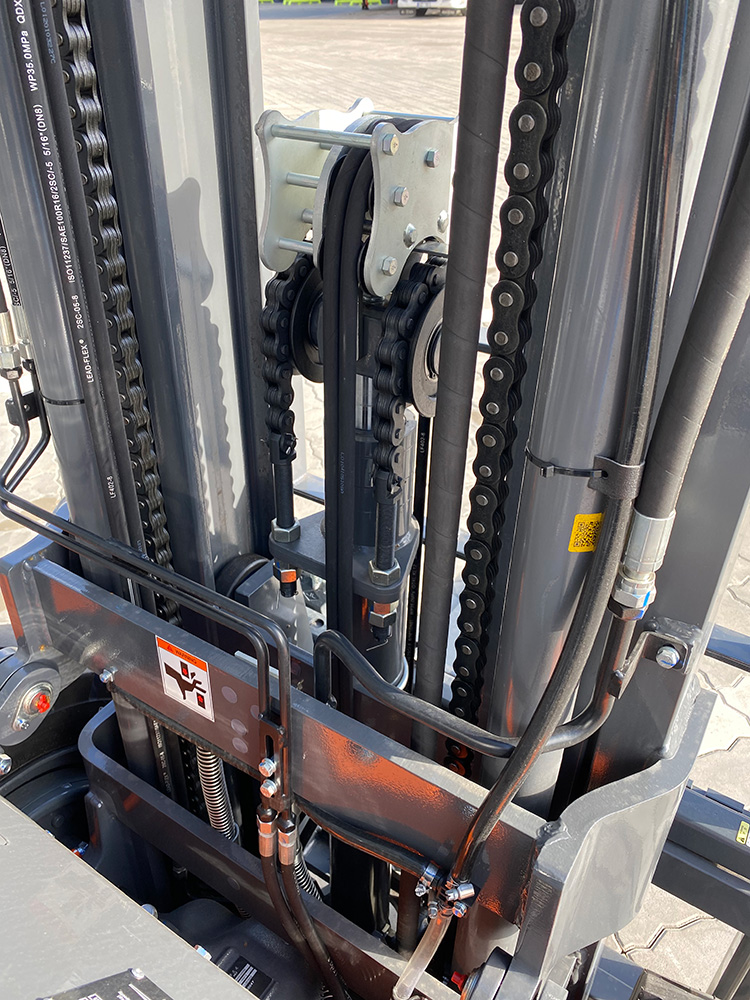
Load capacity is measured at a specified load centre (typically 500 mm from the fork face). If the load is less stable or longer, the actual safe load capacity decreases – this must always be taken into account during planning. Lifting height is configurable depending on the mast type: a simplex mast (duplex) provides lifting up to 4.5–5 m, while a triplex mast reaches up to 6–7 m. Free lift is particularly important in warehouses with low ceilings – it indicates how high the forks can be raised before the mast itself begins to extend upward.
Engine power directly affects machine performance on ramps and under heavy loads – 55–75 kW four-cylinder diesel engines deliver consistent torque even at full load. A fuel tank capacity of approximately 60–80 litres allows continuous operation for 8–10 hours under normal conditions without interruptions for refuelling.
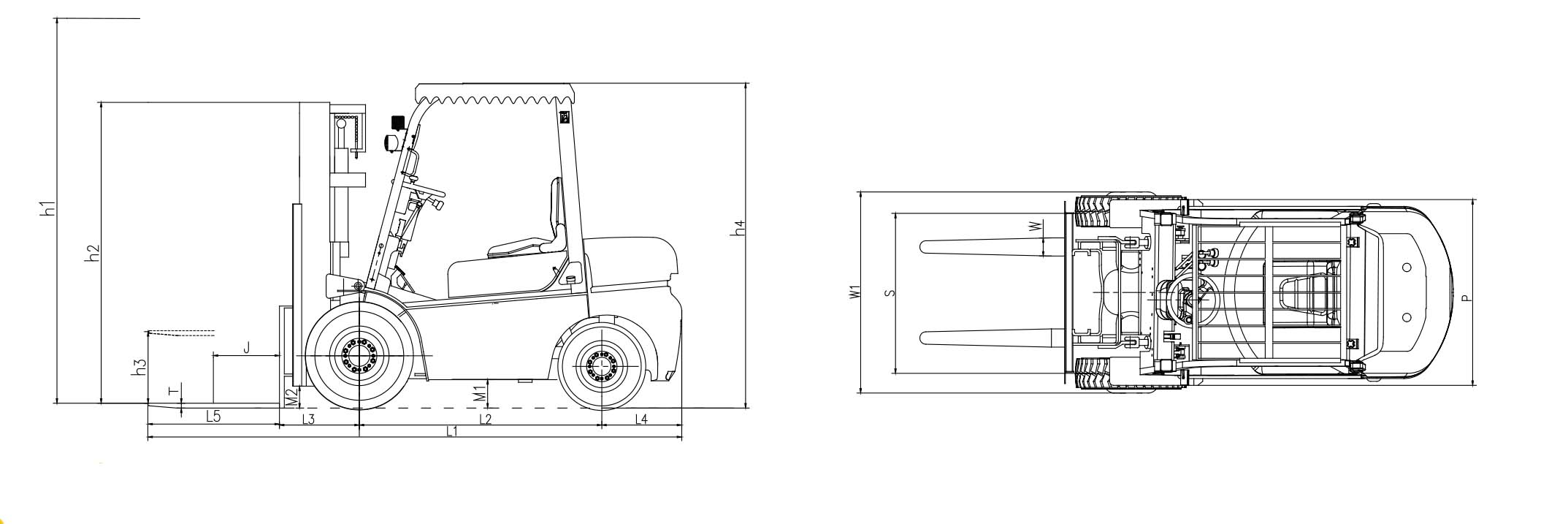
These parameters are indicative for standard-class models – actual figures may vary depending on the manufacturer and the chosen configuration. By contacting our sales representative, you will receive a printed specification sheet that can be submitted to any procurement or accounting process.
A diesel forklift with a load capacity of 2,000–3,500 kg is a versatile working machine – its range of applications is virtually unlimited across all industries where heavy loads need to be moved. The primary benefit is flexibility: with standard forks, rotators, clamps, or specialist attachments, a single machine can perform dozens of different tasks. Below we examine the five most common application scenarios.
Warehouses and Logistics Centres
The majority of warehouse operations – unloading pallets from trucks, placing goods on racking systems, and preparing orders – fall well within the capability range of a forklift with a 2,000–3,500 kg load capacity.
In modern logistics centres operating two or three shifts, the diesel version is more cost-effective than an electric model, as it requires no charging – with a full fuel tank the machine operates throughout the entire shift without stopping.
A warehouse forklift with a triplex mast and a 6 m lifting height makes it possible to make efficient use of vertical warehouse space and increase storage capacity without expanding the warehouse floor area.
For example, in a food distribution centre where 500–800 pallets of food products (averaging 1,000–2,200 kg each) are handled every day, a diesel forklift ensures uninterrupted product flow with minimal downtime.
Manufacturing Plants and Industrial Facilities
In metalworking, woodworking, plastics, and food production companies, a forklift is an everyday necessity – bringing raw materials to production lines, moving finished products to the warehouse, and rotating materials between work zones. Manufacturing facilities frequently have irregular floor surfaces and narrow corridors – the diesel forklift with reinforced frames and a wide wheelbase was designed precisely for such environments, ensuring stability even under heavy loads.
In the timber industry, a diesel forklift with a 3,500 kg load capacity successfully handles material flows in conditions where an electric model would not withstand the cold or damp.
Construction Sites and Outdoor Operations
The greatest advantage of a diesel engine for outdoor work is independence from the electricity grid. On construction sites where infrastructure is still being developed, a diesel forklift works precisely where it is needed – transporting concrete blocks, building materials, metal structures, and palletised goods. Machines in this class are equipped with pneumatic tyres, which allow movement on gravel, soil, or uneven asphalt without loss of stability.
Example: on a house-building project where 2,400 kg brick pallets need to be transported across multiple floors and 3–4 different work zones must be serviced simultaneously, a forklift with a 3,000 kg load capacity and a 5 m duplex mast completes all the work with a single operator and a full fuel tank lasting 8–10 hours.
Ports, Terminals, and Transshipment Points
At port terminals and cargo transshipment points, diesel forklifts operate almost continuously – loading, unloading, container handling, and cargo sorting are everyday tasks. This environment imposes special requirements: the machine must withstand intensive use and operate in humidity, wind, and varying temperatures. A diesel forklift with reinforced hydraulic components and anti-corrosion protection is purpose-built for precisely such demanding conditions.
At international terminals, a forklift with a 3,500 kg load capacity and specialist container forks can unload a 20-foot container two to three times faster than manual labour, significantly reducing labour costs.
Agriculture and Food Production
On farms and in food production facilities, forklifts are used for seasonal work – transporting grain, peat, fertilisers, and pallets. In these environments, the diesel version is preferred because it can operate on earthen surfaces with moisture, and does not require charging infrastructure. The 2,000–2,500 kg class is optimal for egg, dairy, or canning facilities, where a pallet weighs 800–1,600 kg and loading takes place both indoors and at outdoor loading docks.
A modern diesel forklift is not merely a working tool – it is also a guarantor of a safe working environment. European Union occupational safety standards (EN ISO 3691-1) specify the minimum requirements that manufacturers are committed to meeting, while the best models exceed these requirements. The key safety and ergonomic features to look for are described below.
ROPS/FOPS cab (Roll-Over Protection Structure / Falling Object Protection Structure) – a certified metal structure that protects the operator both in the event of a rollover and from falling objects. For all modern forklifts, this is a standard requirement – verify that the certification complies with EN 15011 or an equivalent standard.
Instability warning system – sensors continuously monitor the machine’s centre of gravity and alert the operator with an audible and visual signal if the load threatens stability. This feature is especially important when working on ramps or with unevenly distributed loads.
Automatic speed reduction when turning – the system automatically reduces travel speed when the operator turns the steering wheel, preventing the risk of rollover on bends and in narrow corridors. In practice, this prevents 2–4 incidents per year in a warehouse with heavy traffic.
Rear-view camera and monitor display – a monitor mounted at the front of the cab shows a real-time video feed from the rear camera, eliminating blind spots and reducing the risk of undercarriage impacts. Particularly important in warehouses with pedestrian traffic.
LED work lighting – LED elements for the front and rear work lights provide a service life 5–10 times longer than traditional halogen lamps and consume 60% less energy, ensuring optimal visibility in any lighting conditions.
Ergonomic operator station – an adjustable steering wheel, a shock-absorbing seat with lumbar support, and ergonomically positioned control levers reduce operator fatigue by 30–40% during extended operation. Research shows that a comfortable operator makes better decisions and makes fewer errors.
Vibration damping – multilayer vibration damping between the frame and the cab reduces the level of vibration transmitted to the operator to below 0.5 m/s², which complies with EU Directive 2002/44/EC on physical agents. This is essential for preventing occupational musculoskeletal disorders of the spine and hands.
Noise level – modern diesel forklifts operate at a noise level of 72–78 dB(A) at the operator’s position – below the EU workplace limit of 85 dB(A). Acoustic insulation in the cab ensures that the operator can communicate with colleagues without the need for a loudspeaker.

Directive:
2006/42/EC – Machinery Directive (MD)
2000/14/EC – Noise Directive (NO)

The products we offer have all the necessary CE marking certification marks, which ensure compliance of the products in the European Economic Area.
Regular and timely maintenance is the only way to ensure that a diesel forklift delivers 15,000–20,000 working hours without unexpected major repairs. A properly maintained model typically remains in active service for 10–15 years – an investment that pays for itself. Below is the maintenance interval schedule and the key tasks at each stage.
250-hour service (every 3–4 months under standard load): Oil level check and top-up, coolant level check, hydraulic oil visual inspection, filter condition assessment, tyre pressure and wear check, mast chain lubrication, visual inspection of forks for cracks and deformation, battery check (electrical system), lights and alarm system check.
500-hour service (every six months): Engine oil change and oil filter replacement – this is the most important maintenance task, as degraded oil accelerates premature engine wear. Air filter cleaning or replacement, visual inspection of hydraulic hoses, steering mechanism check and lubrication, brake condition check, lubrication of mast and axle pivot points.
1,000-hour service (annually): Hydraulic oil change and system flush – the total hydraulic oil volume for a standard model is 35–45 litres. Fuel filter replacement, coolant renewal (every two years), full tyre inspection, transmission oil check and change, electrical connections and contacts check, full safety systems test in accordance with the manufacturer’s instructions.
Regular maintenance not only extends the forklift’s service life, but also significantly reduces unplanned downtime costs – every small issue left unaddressed will, over time, become a larger problem. According to industry statistics, a properly maintained diesel forklift incurs 60–70% fewer unplanned repair costs compared with a machine that has not received regular maintenance. Our company offers maintenance contract packages at a fixed annual fee – you know the costs in advance and need not worry about surprises.
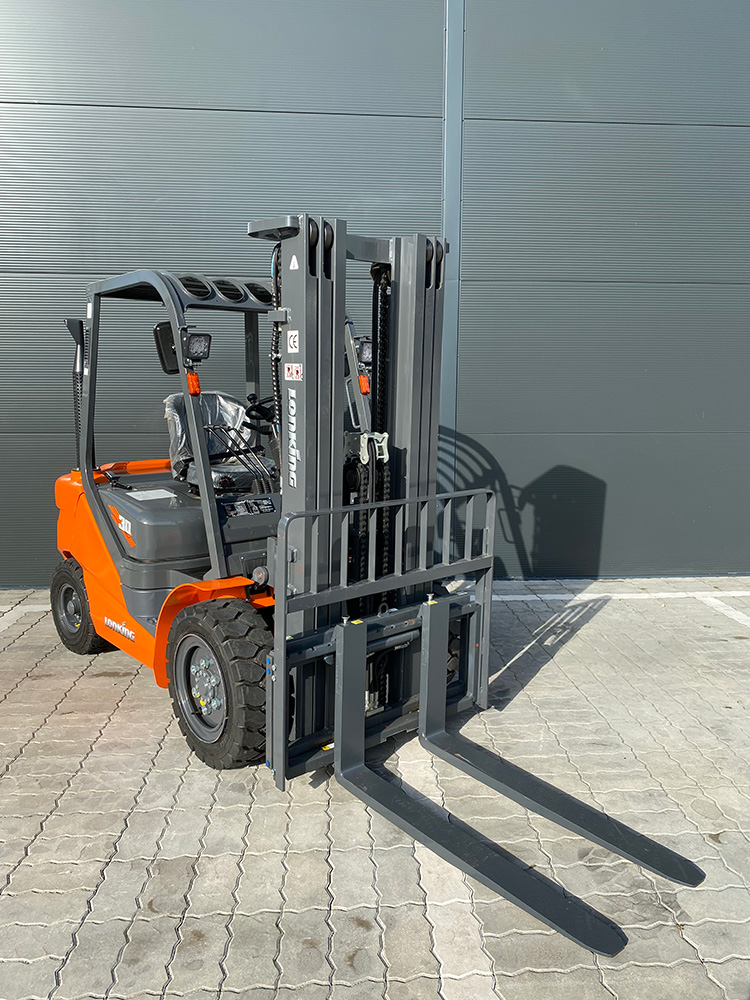
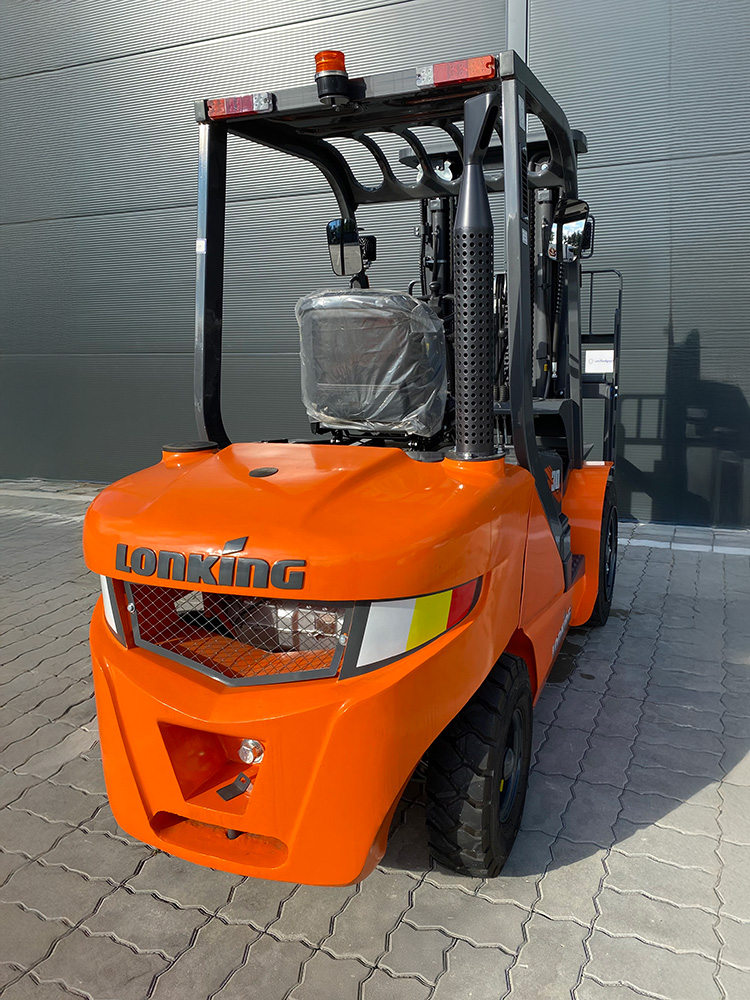
The price of a new diesel forklift with a load capacity of 2,000-3,500 kg in Latvia starts from approximately €12,000 for a base model and can reach €30,000-35,000 for a fully equipped premium-class machine. Used models with 3,000-6,000 operating hours are available for €8,000–18,000. Forklift price depends on the manufacturer (European brands are generally more expensive than Asian manufacturers), mast configuration, attachments, and additional equipment. Contact us for a precise price quotation for a specific configuration.
A properly maintained diesel forklift typically operates for 12,000-20,000 working hours, which corresponds to 10-15 years at a single-shift load. Under intensive two-shift operation, the service life is reduced to 7-10 years; however, regular maintenance and timely replacement of spare parts significantly extend this period.
Start with the heaviest load you will regularly transport and add a 20% safety margin. If the heaviest pallet weighs 2,000 kg, choose a 2,500 kg model. If you plan to expand your operations with heavier loads in the future, it is better to purchase a 3,000-3,500 kg model from the outset. Keep in mind that the forklift's actual load capacity decreases if the forks are extended, the load is raised above 1 m, or the load centre exceeds 500 mm - all of these factors are taken into account by our specialists during the consultation.
Yes, but subject to conditions. A diesel forklift may be operated indoors provided the space is sufficiently ventilated and the CO₂ concentration does not exceed 5,000 ppm (in Latvia - in accordance with LVS EN 45001 and Latvian occupational safety regulations). The latest Tier 4 Final engines emit significantly fewer harmful gases than older models - some are certified for indoor use even in moderately ventilated spaces. If the space is small or ventilation is restricted, an electric forklift or LPG version is recommended. In any case, consult our specialist before operating indoors.
In Latvia, a forklift operator must be trained and certified in accordance with the Labour Protection Law and Cabinet Regulation No. 526 "Occupational Safety Requirements When Working with Equipment". In practice, this means completing a specialist forklift operator training course with both a theoretical and a practical examination - offered by certified training centres throughout Latvia. Training typically takes 2-3 days, with a cost of approximately €100-200. Registration with the Road Traffic Safety Directorate (CSDD) is not required for a forklift that does not travel on public roads.
For standard models from stock - delivery within Latvia is possible within 3-10 working days. If a specific configuration is required (a particular mast height, specialist attachments, colour), the production lead time is 6-12 weeks depending on the manufacturer and their workload. Our company maintains a stock warehouse with the most frequently requested models, so delivery is often possible the next working day. Upon ordering a forklift on a rental or purchase basis, you will receive an exact delivery date following order confirmation.
| Cookie name | Active |
|---|---|
| PHPSESSID |
Uzraksti mums.
 Specification