HX pallet rack maintenance tips for warehouse owners – how to double the service life of your racking

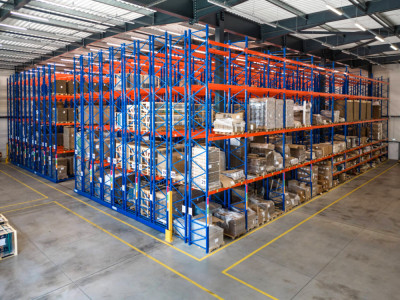
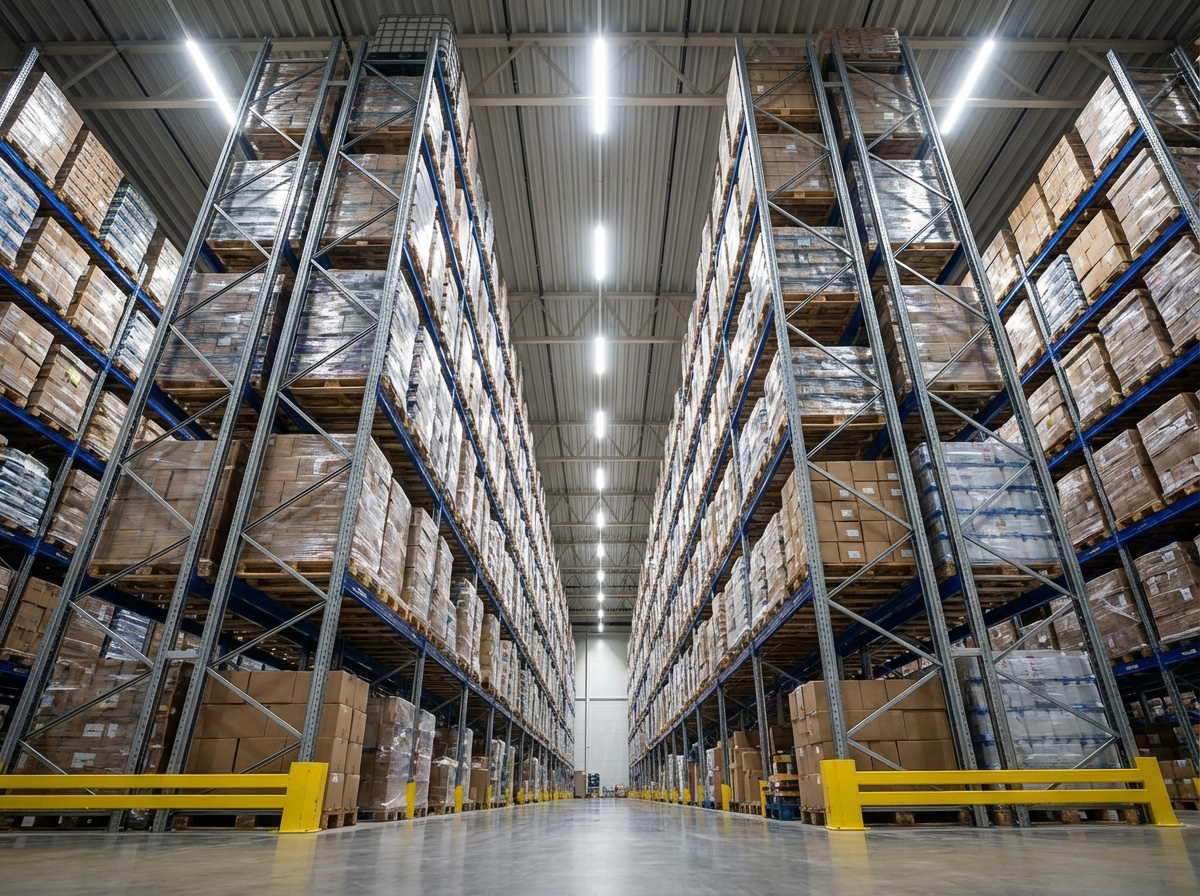
Warehouse racks are not merely a metal structure – they are the backbone of your warehouse. If the HX pallet racking system is not properly maintained, it can become a safety hazard for employees, cause damage to goods, and expose the company to costly legal consequences. However, well-maintained racks can last twice as long as the installer guarantees – and in this article, you will learn exactly how.
Content

HX SYSTEM STRUCTURE - WHAT YOU SHOULD KNOW BEFORE MAINTENANCE?

To carry out maintenance correctly, you need to understand how the HX racking system is constructed. The HX series offered by VVN is designed and manufactured in accordance with international construction standards and certified with the GS safety certificate issued by the German institute TÜV Rheinland – this confirms that the structure has been evaluated and tested according to strict German and European regulations.

The HX system consists of several core components, each with its own function and a different load profile in daily operation:

  • Upright (profile, base plate, bolts and nuts) – the vertical support element. Uprights are perforated, open steel profiles with external dimensions of 82×70, 102×70, or 122×70 mm. The main vertical load falls on the uprights.
  • Horizontal and diagonal bracing beams – together with the uprights, they form the frame (bay). Diagonal braces provide resistance against lateral forces – for example, accidental contact from a forklift.
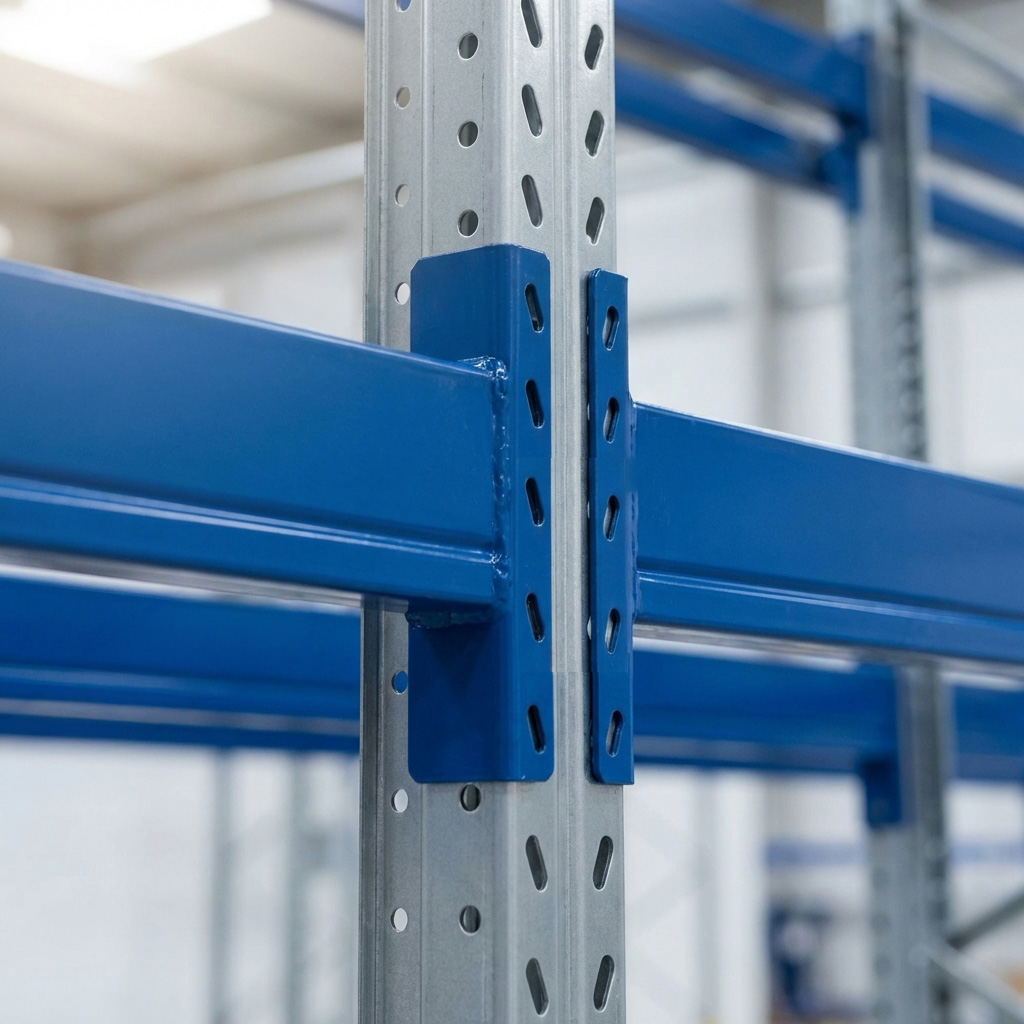
  • Beam (cross member) – the horizontal element on which pallets rest directly. Beams are bolted to the uprights and carry the main horizontal load.
  • Beam safety clip (beam lock) – prevents the beam from detaching from the upright as a result of accidental impact.
  • Corner and front rack protectors – additional elements that protect the lower part of the upright from sharp forklift impacts.
  • Anti-collision barrier (bumper) – a protective element along aisle edges.

Important

The HX system is assembled exclusively with bolt-and-clip connections - this means that each component can be independently inspected, removed, and replaced without dismantling the entire system. This is critically important in the context of maintenance: a damaged upright or beam does not need to be replaced together with the entire rack row.

The system is compatible with EPAL-EUR pallets (1200×800 mm), Finnish/FIN pallets (1200×1000 mm), and industrial pallets (1200×1200 mm). An HX rack row can be single-sided, double-sided, or multi-sided, and each row can have a different number of storage levels – meaning that load distribution can vary significantly across different zones within the same warehouse, and each zone must be inspected separately.
REGULAR VISUAL INSPECTION - THE FOUNDATION OF EVERYTHING

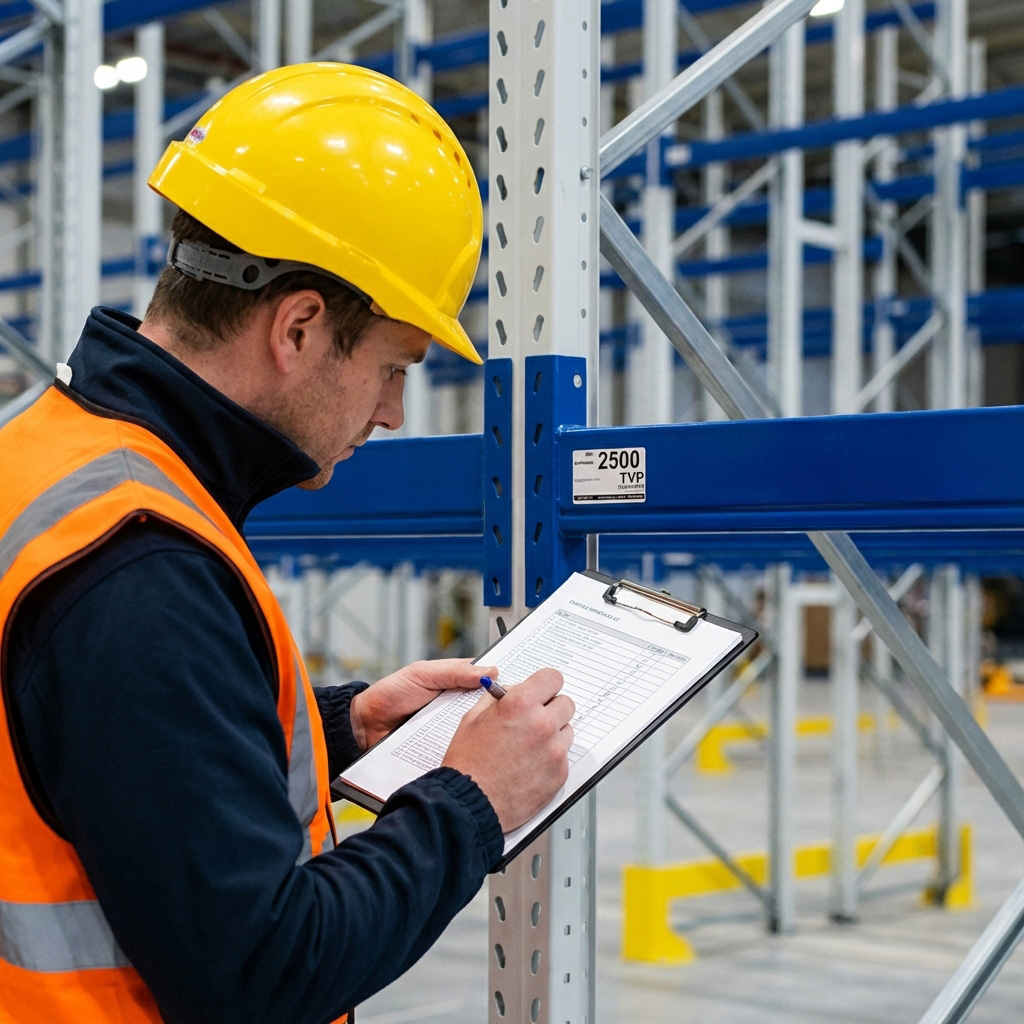
The most effective and, at the same time, simplest maintenance tool is systematic visual inspection. Research in warehouse safety shows that the majority of hazardous situations develop gradually – small dents, deformations, or loose bolts that go unnoticed for months eventually cause an accident.

Daily Quick Check (5 minutes)

Every day before starting work or during a work break, operators visually assess the condition of the racking in their work area. No specialist knowledge is required – the “eyes open” principle is sufficient:

  • Does any upright or beam visually appear “bent” or look different from yesterday?
  • Are there any fallen nuts, washers, or other metal parts on the floor?
  • Are there any new scratches, paint loss, or deformations visible on beams or frames?
  • Is any pallet overhanging beyond the beam edges?

Weekly Detailed Inspection (20–30 minutes)

Once a week, a trained employee or warehouse manager carries out a systematic walk along all rack rows. The following items are checked:

  • Uprights: whether any vertical or horizontal deflection is visible. European standard EN 15512 specifies that the deviation of an upright from vertical must not exceed H/350 (for example, for a 6 m upright – no more than 17 mm).
  • Beams: whether they are deflected from above or from the sides. Even a 3 mm deflection in a beam carrying 2 tonnes can reduce the load capacity by 30–40%.
  • Connections: whether bolts are tightened firmly. Bolts often loosen immediately after a forklift impact, even though the connection appears intact visually.
  • Pallet positioning: whether pallets have been shifted outside the permitted zone, or whether goods are protruding beyond the beam edge.
  • Protective elements: whether the corner and front rack guards are secured and undamaged. These are the “sacrificial” component layer – the guard absorbs the impact before the upright sustains damage.

Important

Any rack with visible deformation or a suspicious structural change must be immediately taken out of service - a clearly visible warning sign must be placed in the area and a specialist must be called for assessment, rather than continuing operation "on a wing and a prayer."

Annual Technical Inspection

Once a year – or twice a year in heavily loaded warehouses – it is recommended to invite a certified engineer from the racking system supplier (for example, VVN.lv specialists) for a full technical inspection. During this inspection, the following is carried out:
  • Torque check of all connections using a torque wrench
  • Comparison of current condition with documentation from the previous year’s inspection
  • Verification of load capacity calculations against the actual load
  • Anchor inspection at the floor level
  • Written report with findings and recommendations

LOAD MANAGEMENT AND COMPLIANCE WITH LOAD CAPACITIES

One of the most common causes of premature wear of HX racks is failure to observe load capacity limits. This occurs both when the load is deliberately exceeded (because “it’ll hold this time”), and when the weight of goods is not precisely known or has changed over time, but the load label has not been updated.

How to Read the Load Capacity Label

Each HX rack row must have a load capacity label (load plate) fixed at the first upright, indicating:

  • Maximum load per beam pair (e.g., 2,000 kg)
  • Maximum total frame load (e.g., 8,000 kg on a vertical bay with four levels)
  • Permitted beam pitch (mm)
  • Minimum pallet size

📐 Calculation Example

If a beam is certified for a 2,000 kg load but two pallets with a combined weight of 1,800 kg are placed on it - it still complies with the requirements. However, if the load profile changes and additional cargo is added, bringing the total weight to 2,200 kg, the limits are already exceeded, and the beam will gradually deform plastically over time, even if this cannot be seen with the naked eye.

Strengths and Weaknesses in Different Conditions

✅ Strengths

  • The HX system is modular – beams can be replaced with higher-capacity versions if loads change, without dismantling the frame
  • The TÜV certificate guarantees that the declared load capacities have been verified in real tests
  • Perforated uprights allow precise height adjustment, distributing the load optimally
  • Bolt-and-clip connections allow rapid response to load changes by reconfiguring the system

❌ Potential Risks

  • The load label often does not match the actual configuration if racks have been relocated or reconfigured without updating the documentation
  • Dynamic loads (forklift lifting with momentum) can significantly exceed the static load values
  • Irregularly shaped pallets (long or overhanging) can create point loads not accounted for in the design
  • In cold storage, metal becomes more brittle – the permitted load in practice may need to be reduced

Practical Tip: Create a visual load zone map for the warehouse, with colour-coded zones indicating different load capacities. Green zone – standard load, yellow zone – heightened monitoring, red zone – maximum limit that must never be exceeded.
PROTECTION AGAINST FORKLIFT DAMAGE

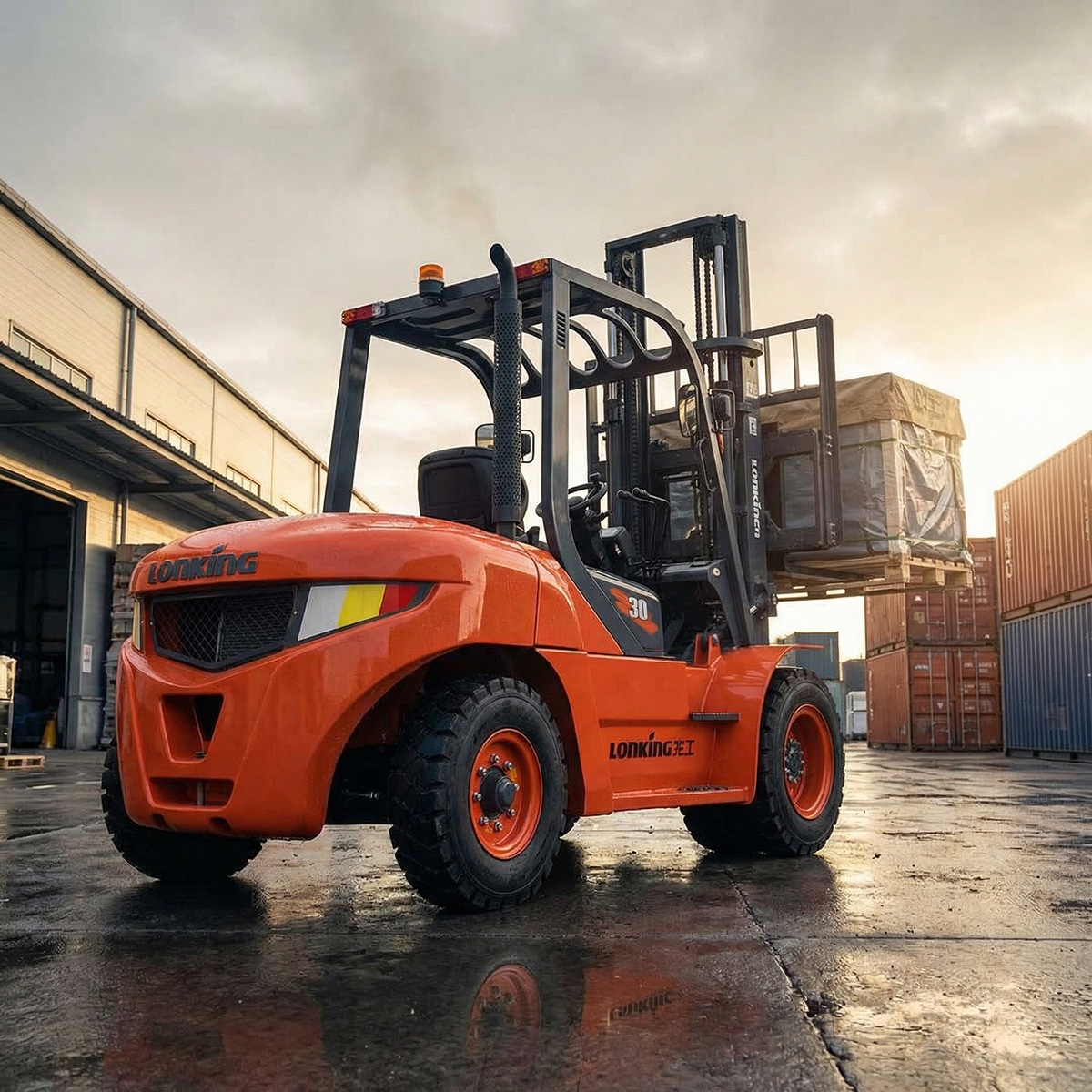
Statistically, approximately 85% of all rack damage in warehouses is caused by forklift forks, supports, or the forklift body. This occurs regardless of operator qualification – in narrow aisles, under time pressure, and with large cargo volumes, accidental impacts are inevitable. Therefore, the solution is not to stop using forklifts, but rather to create a protection system that absorbs impacts before they reach the structural elements.

💡 Professional Tip

Paint the floor around rack uprights in a contrasting colour (e.g., yellow) to visually warn forklift operators about approaching critical elements. This simple method can reduce the number of accidents by 40–60%.

CORROSION PREVENTION IN DIFFERENT ENVIRONMENTS

HX racks are manufactured from steel coated with powder paint – this provides good corrosion protection in standard warehouse conditions. However, different operating environments can significantly accelerate wear if preventive measures are not taken.

Cold Rooms and Freezers

In freezers and cold storage rooms, metal is subject to condensation cycles – moisture periodically forms on the surface, particularly during defrost cycles. In these conditions, corrosion can develop even on originally well-protected surfaces.

✅ What to Do

  • Choose galvanized or double powder-coated racks for freezer environments
  • Regularly inspect connection points – these are the first places where corrosion appears
  • After defrost cycles, wipe excess moisture from the base zones of uprights
  • Do not use aggressive cleaning agents that damage the powder coating

❌ What Not to Do

  • Do not use standard (non-freezer-rated) racks in permanent temperatures below −10°C without special preparation
  • Do not leave the onset of corrosion (“rust spots”) untreated – rust spreads exponentially
  • Do not wash with high-pressure water without ensuring proper drying

Practical advice: create a visual load zone map for the warehouse, where color-coded zones with different load capacities are marked. Green zone – standard load, yellow – increased monitoring, red – maximum limit, which should not be exceeded under any circumstances.

Outdoor or Semi-Open Warehouses

In logistics centres, there are often areas that are not fully enclosed – loading docks, canopies, semi-open transfer zones. Here, corrosion is most dangerous, as racks are exposed to both rain and wind, as well as elevated salt or industrial conditions.

  • In such zones, preference should be given to hot-dip galvanized racks, which provide 3–5 times greater corrosion resistance than powder coating
  • Once a year, the paint integrity of external racks must be checked – any new scratches must be treated with anti-corrosion paint within 2 weeks
  • Floor plates at the base of uprights must be checked – accumulated moisture beneath the base plate is the primary source of initial corrosion

Chemical Storage Warehouses

If the warehouse stores chemically active products (detergents, industrial acids, ammonia, etc.), even trace percentages of vapour in the air can accelerate initial damage to the powder coating. Here, an additional epoxy protective layer is recommended for the lower part of the upright and the inner side of the rack frame.

ANCHORING, FLOOR ASSESSMENT, AND STABILISATION

A frequently overlooked but critically important maintenance aspect is the rack fixings to the floor. HX system uprights are anchored to the concrete floor with special anchor bolts, and the quality of this connection directly affects the stability of the entire structure.

What to Check?

  • Whether anchor bolts have shifted or loosened – check by hand whether the upright base “plays”
  • Whether the concrete floor around the anchors has cracked – cracks around an anchor indicate load concentration
  • Whether the upright base plate fully contacts the floor – even a 2–3 mm gap can cause vibration and fatigue fracture over time
  • Whether there are rust marks around the anchor bolt head – this indicates infiltration of moisture

Floor Damage - An Unnoticed Hazard

If depressions or crack zones have formed in the warehouse floor along the regular travel path of forklifts, this affects not only the forklift itself but also rack stability – uneven load distribution can cause cumulative impacts on uprights that are not visually noticeable but gradually damage connections.

📏 Anchor Standard

In accordance with FEM 10.2.07, anchor fixing inspection must be carried out no less than once a year and mandatorily after any significant impact event in the warehouse. The tightening torque of anchor bolts must comply with the manufacturer's specification - typically 40–80 Nm depending on the anchor diameter.

TIMELY REPLACEMENT OF DAMAGED PARTS

One of the most common error scenarios is as follows: an operator notices a deformed beam or a dented upright base, reports it to the manager, the manager “makes a mental note” and plans to replace it “soon” – and weeks pass. During this time, the damaged element operates with reduced load capacity, other elements become overloaded, and the risk increases exponentially.

HX System Advantage - Modular Replacement

Since the HX system is assembled with bolt-and-clip connections, a damaged beam or upright can be replaced without relocating goods from adjacent levels (except for the affected cell itself). This significantly reduces the scope and time of replacement work, which in turn means that companies perform replacements immediately rather than postponing them.

Classification by Urgency:

Damage Type Visual Sign Action Time Limit
Critical Post deflection >10 mm, fracture, screw loss Immediately remove from service 0 days
High Crossbeam deformation >3 mm, guard stripping Replace within 24–72 hours 1–3 days
Medium Scratches with powder coating tear, minor dents Plan replacement in the near term 1–2 weeks
Low Surface scratches without metal damage Protective varnish, monitoring Next inspection

Additional Note: VVN.lv offers the option to order spare parts for the HX system – beams, upright profiles, and protective elements. It is recommended to keep a small stock of spare parts for the most frequently replaced items (corner protectors, beams for the relevant profile size) in the warehouse, so that replacement takes hours rather than weeks.

EMPLOYEE TRAINING - THE HUMAN FACTOR

All of the above technical measures will be effective only if every warehouse employee – not just the manager and technician – understands the importance of their role in rack safety. Research shows that in warehouses with regular staff training, the number of rack damage incidents is 50–65% lower than in those without.

Forklift Operators

The operator is the first and primary line of defense. Training must include:

  • Maximum speeds in aisle zones (typically 5–8 km/h in warehouses with racking)
  • Permissible approach angle to rack uprights during loading and unloading
  • Correct pallet centering habit – the center of the pallet must be equidistant from both beams
  • Reporting obligation – even a minor impact must be recorded

Warehouse Workers

Workers who move between racks and fulfil orders are often the first to notice changes in condition. They should be trained to:

  • Recognize visual signs of damage – engineering parameters need not be known, but “this upright looks different” can save lives
  • Never lean against racks or leave hand tools on beams
  • Never cover load labels or remove warning signs
  • Stacking rules – heavier goods at the bottom, unstable items no higher than eye level

MAINTENANCE IN DIFFERENT OPERATING CONDITIONS

The HX racking system is designed as a universal solution, but different operating conditions create very different maintenance requirements. Below are the most common scenarios.

Scenario A: High-Throughput Logistics Warehouse

In this environment, forklifts operate almost continuously, pallets change several times a day, and racks are subject to an intense risk of impacts.

✅ Recommended Strategy

  • Inspection – weekly, no less frequently
  • Full set of protective elements (corner guards + front guards + bumpers)
  • Stock of spare parts on site
  • Forklift speed restriction with floor markings

❌ Most Common Mistakes

  • Ignoring “minor” impacts because “the warehouse is busy”
  • Failing to update the load label after rack reconfiguration
  • Not treating guards as a priority “because they always get damaged”

Scenario B: Cold/Freezer Warehouse

Permanently low temperatures and condensation cycles create a corrosion risk and affect metal ductility.

✅ Recommended Strategy

  • Galvanized rack profiles or double-coated profiles
  • Connection inspection after each defrost cycle
  • Load capacity reduction of 10–15% compared to standard conditions
  • Special low-temperature anchor bolts

❌ Most Common Mistakes

  • Using standard racks in a freezer without adaptation
  • Failing to ensure drying after moisture exposure
  • Applying aggressive de-icing chemicals to racks

Scenario C: Production Warehouse with Heavy Pallets

In metallurgy, construction materials, or machine-building warehouses, pallets can weigh 2–4 tonnes. Here, the HX system operates at its limits.

✅ Recommended Strategy

  • Use HX profiles with the maximum size – 122×70 mm uprights
  • Inspect beams each time before placing a new heavy load
  • Anchoring with increased-torque bolts (double the number)
  • Annual engineering inspection – mandatory

❌ Most Common Mistakes

  • Placing pallets “by eye” without checking the weight
  • Not replacing horizontal bracing even after visible impacts
  • Exceeding load capacity limits “just slightly”

Scenario D: Small Warehouse or Workshop

In a small company, there is often no warehouse manager or dedicated maintenance staff. Racks are operated until “something happens.”

✅ Recommended Strategy

  • Create a simple weekly checklist with 5 points and post it on the wall
    • Designate one responsible person – so there is a specific individual, not “everyone and no one”
    • Save VVN.lv contact details in the emergency contact list
    • Keep at least 2 spare guards and 1 pair of beam safety clips in stock

❌ Most Common Mistakes

  • Thinking that a small company is not exposed to risks – an accident in a 3-row rack is equally dangerous
  • Ignoring damage “as long as it doesn’t cause problems”
  • Not knowing what load capacity the installed racks have

Our products

PALLET RACKING SYSTEM
MOBILE PALLET RACKING
INTEGRATED SHELVING SYSTEMS
PALLET RACKING SYSTEM - DRIVE IN
Šajā tīmekļa vietnē sīkdatnes tiek izmantotas, lai uzlabotu jūsu pieredzi. Noklikšķinot uz "Es piekrītu", Jūs piekrītat mūsu sīkdatņu politikai. View more
Cookies settings
Es piekrītu
Sīkdatņu politika
Privacy & Cookies policy
Cookie name Active

Kas mēs esam

Mūsu mājas lapas adrese ir: https://vvn.lv.

Komentāri

Kad apmeklētāji atstāj komentārus vietnē, mēs apkopojam komentāru veidlapā redzamos datus, kā arī apmeklētāja IP adresi un pārlūkprogrammas lietotāja aģenta virkni, lai palīdzētu atklāt surogātpastu. Anonimizēta virkne, kas izveidota no jūsu e-pasta adreses (saukta arī par hash), var tikt nodrošināta pakalpojumam Gravatar, lai redzētu, vai jūs to izmantojat. Gravatar pakalpojuma privātuma politika ir pieejama šeit: https://automattic.com/privacy/. Pēc jūsu komentāra apstiprināšanas jūsu profila attēls ir publiski redzams jūsu komentāra kontekstā.

Plašsaziņas līdzekļi

Ja augšupielādējat attēlus vietnē, jums nevajadzētu augšupielādēt attēlus ar iekļautiem atrašanās vietas datiem (EXIF GPS). Vietnes apmeklētāji var lejupielādēt un iegūt jebkādus atrašanās vietas datus no vietnē esošajiem attēliem.

Sīkdatnes

Ja atstājat komentāru mūsu vietnē, varat izvēlēties saglabāt savu vārdu, e-pasta adresi un vietni sīkfailos. Tie ir paredzēti jūsu ērtībām, lai jums nebūtu vēlreiz jāievada sava informācija, kad atstājat citu komentāru. Šīs sīkdatnes kalpos vienu gadu. Ja apmeklējat mūsu pieteikšanās lapu, mēs iestatīsim pagaidu sīkfailu, lai noteiktu, vai jūsu pārlūkprogramma pieņem sīkfailus. Šajā sīkdatnē nav personas datu, un tā tiek atmesta, kad aizverat pārlūkprogrammu. Kad jūs piesakāties, mēs arī iestatīsim vairākus sīkfailus, lai saglabātu jūsu pieteikšanās informāciju un ekrāna displeja izvēles. Pieteikšanās sīkfaili darbojas divas dienas, bet ekrāna opciju sīkfaili darbojas gadu. Ja atlasīsit "Atcerēties mani", jūsu pieteikšanās tiks saglabāta divas nedēļas. Ja jūs izrakstāties no sava konta, pieteikšanās sīkfaili tiks noņemti. Ja rediģējat vai publicējat rakstu, jūsu pārlūkprogrammā tiks saglabāts papildu sīkfails. Šajā sīkfailā nav ietverti personas dati, un tas vienkārši norāda tikko rediģētā raksta ziņas ID. Tas beidzas pēc 1 dienas.

Iegultais saturs no citām vietnēm

Šīs vietnes rakstos var būt iegults saturs (piemēram, videoklipi, attēli, raksti utt.). Iegultais saturs no citām vietnēm darbojas tieši tāpat kā tad, ja apmeklētājs būtu apmeklējis citu vietni. Šīs vietnes var vākt datus par jums, izmantot sīkfailus, iegult papildu trešās puses izsekošanu un pārraudzīt jūsu mijiedarbību ar šo iegulto saturu, tostarp izsekot jūsu mijiedarbībai ar iegulto saturu, ja jums ir konts un esat pieteicies šajā vietnē.

Ar ko mēs kopīgojam jūsu datus

Ja pieprasāt paroles atiestatīšanu, jūsu IP adrese tiks iekļauta atiestatīšanas e-pastā.

Cik ilgi mēs saglabājam jūsu datus

Ja atstājat komentāru, komentārs un tā metadati tiek saglabāti uz nenoteiktu laiku. Tas ir tāpēc, lai mēs varētu automātiski atpazīt un apstiprināt visus turpmākos komentārus, nevis turēt tos regulēšanas rindā. Lietotājiem, kas reģistrējas mūsu vietnē (ja tādi ir), mēs arī saglabājam viņu sniegto personisko informāciju savā lietotāja profilā. Visi lietotāji jebkurā laikā var redzēt, rediģēt vai dzēst savu personisko informāciju (izņemot to, ka viņi nevar mainīt savu lietotājvārdu). Vietņu administratori var arī redzēt un rediģēt šo informāciju.

Kādas tiesības jums ir uz saviem datiem

Ja jums ir konts šajā vietnē vai esat atstājis komentārus, varat pieprasīt eksportētu failu ar mūsu rīcībā esošajiem personas datiem par jums, tostarp visiem datiem, ko esat mums sniedzis. Varat arī pieprasīt, lai mēs dzēstu visus mūsu rīcībā esošos personas datus par jums. Tas neietver nekādus datus, kas mums ir jāuzglabā administratīvos, juridiskos vai drošības nolūkos.

Kur tiek nosūtīti jūsu dati

Apmeklētāju komentārus var pārbaudīt, izmantojot automatizētu surogātpasta noteikšanas pakalpojumu.
Save settings
Cookies settings

SEND US AN OFFER YOU GOT, WE WILL BEAT IT

CONTACT US

IESŪTIET PIEDĀVĀJUMU, MĒS PĀRSPĒSIM

SAZINĀTIES AR MUMS