
How to Choose a Diesel, Petrol/LPG or Electro Forklift for a Warehouse: The Complete Guide for 2026

Warehouse managers and business owners often face one of the most important decisions in material handling: which forklift should they buy? What seems like a simple question actually involves many complex variables, including the work environment, cost structure, environmental requirements, company strategy, and logistics intensity. The wrong choice can cost tens of thousands of euros in direct operating expenses and lost productivity.

This guide provides an in-depth, data-based analysis of the three main forklift types – electric battery-powered, diesel, and petrol/LPG – and helps you make an informed, strategically sound decision in 2026.

Why forklift choice is strategic?

A forklift is not just a tool. It is the backbone of a company’s logistics system and directly affects workplace safety, productivity, operating costs, environmental quality, and employee well-being. The right choice creates competitive advantages, while the wrong one creates ongoing problems.
In 2026, several major factors are shaping the logistics sector:

  • The EU Green Deal and ESG requirements are imposing stricter environmental standards on indoor industrial equipment use.
  • Lithium-ion battery technology costs have fallen by more than 40% over the last five years, making electric forklifts more economically accessible.
  • Fuel price volatility is making diesel, petrol, and gas operating costs harder to forecast.
  • Labor shortages are forcing companies to focus more on workplace quality and noise levels.
  • Warehouse automation is increasing demand for forklifts that can integrate with smart control systems.


Let us look at each forklift type in detail.
1. Electric forklifts: the modern warehouse standard

How do they work?

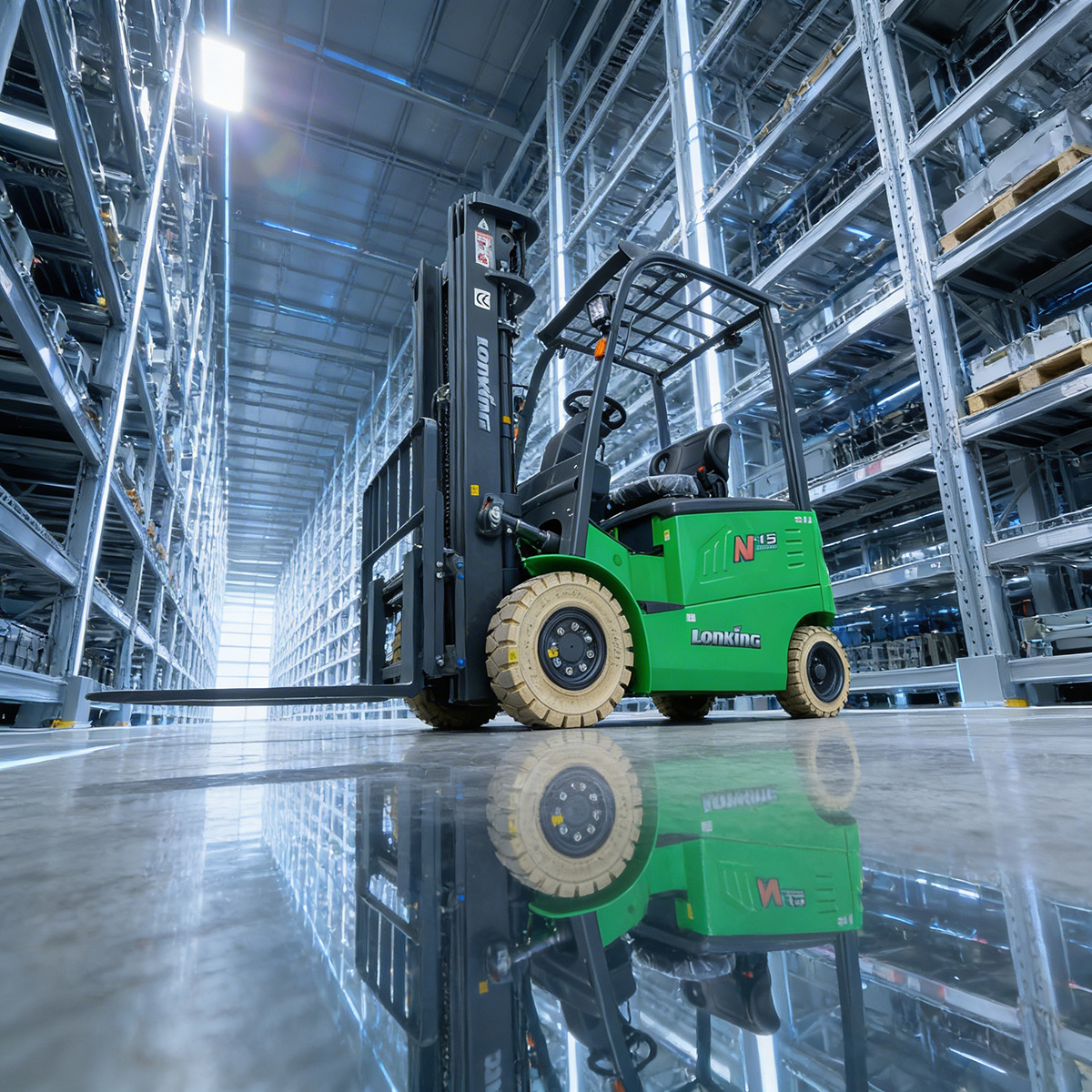
Electric forklifts are powered by an electric motor using a charged battery – traditionally lead-acid, but increasingly lithium-ion (Li-Ion) batteries today. The electric motor delivers instant torque, which means quick acceleration and precise control without the need for mechanical gear changes.

Technical specifications

In 2026, electric forklifts are available with load capacities from 1,500 to 3,500 kg, which covers most warehouse operations. Lithium-ion batteries provide 6–8 hours of continuous work on a single charge, while modern fast-charging solutions can restore them to 80% capacity in just 60–90 minutes.

Cost analysis

Electric forklifts are the clear leader in operating cost efficiency:

  • Energy cost: around EUR 1.20–50 per working hour, depending on electricity tariffs and charging times.
  • Diesel forklift energy cost: EUR 3.25–00 per hour.
  • Maintenance cost: roughly EUR 800 per year for an electric forklift versus EUR 3,500–4,000 per year for a diesel forklift.
  • Payback period for electric forklifts is often only 2–3 years.


One company that switched from 30 diesel forklifts to electric models in 2025 estimated future savings of EUR 735,000 over five years – a figure that speaks for itself.
 

Strength

  • Zero workplace emissions.
    Electric forklifts produce no exhaust fumes, which makes them ideal for indoor use in warehouses, food production plants, pharmaceutical businesses, freezer facilities, and any environment where air quality is critical. Electric forklifts are the preferred solution for indoor operations.
  • Low noise levels.
    Electric forklifts generate significantly less noise than diesel or petrol models. This improves communication, reduces fatigue, and supports a safer working environment.
  • Lower operating costs.
    Electricity is 30–50% cheaper than diesel fuel or LPG. Long-term savings are substantial, especially for companies operating across multiple shifts.
  • Minimal maintenance.
    Electric forklifts do not have an internal combustion engine, so they do not require oil changes, filter replacement, coolant checks, turbocharger inspection, or catalytic system maintenance. Maintenance schedules are less frequent and less expensive.
  • Precise handling.
    Electric drive systems provide smoother, more precise control, which is especially valuable in narrow warehouse aisles where every centimeter counts.
  • Smaller turning radius.
    Electric models are generally more compact, making them well suited for e-commerce warehouses and other space-constrained environments.
  • Integration with smart systems.
    Modern electric forklifts can include IoT sensors, telematics, and real-time tracking, allowing integration with warehouse management systems (WMS).
  • Longer service life.
    Electric forklifts typically last 10–12 years, while diesel models usually last 8–10 years.


⚠️ Weaknesses

  • Higher upfront purchase price.
    Lithium-ion forklifts cost more initially, although the difference is often offset by lower operating costs within the first few years.
  • Charging infrastructure requirement.
    A charging station must be installed in the warehouse, which requires an initial infrastructure investment.
  • Charging time.
    Although fast-charging technology has improved significantly, high-intensity multi-shift operations still require planned charging schedules or a battery-swap system.
  • Reduced performance in extreme conditions.
    In cold environments below -10°C, battery efficiency drops, so freezer warehouses should use special models with heated battery packs.

2. Diesel forklifts: the dependable heavyweight

How do they work?

Diesel forklifts use an internal combustion engine that transfers power through a mechanical or hydrostatic transmission to the drive axles and hydraulic lifting system. They are known for durability and strong performance under demanding conditions.

Technical specifications

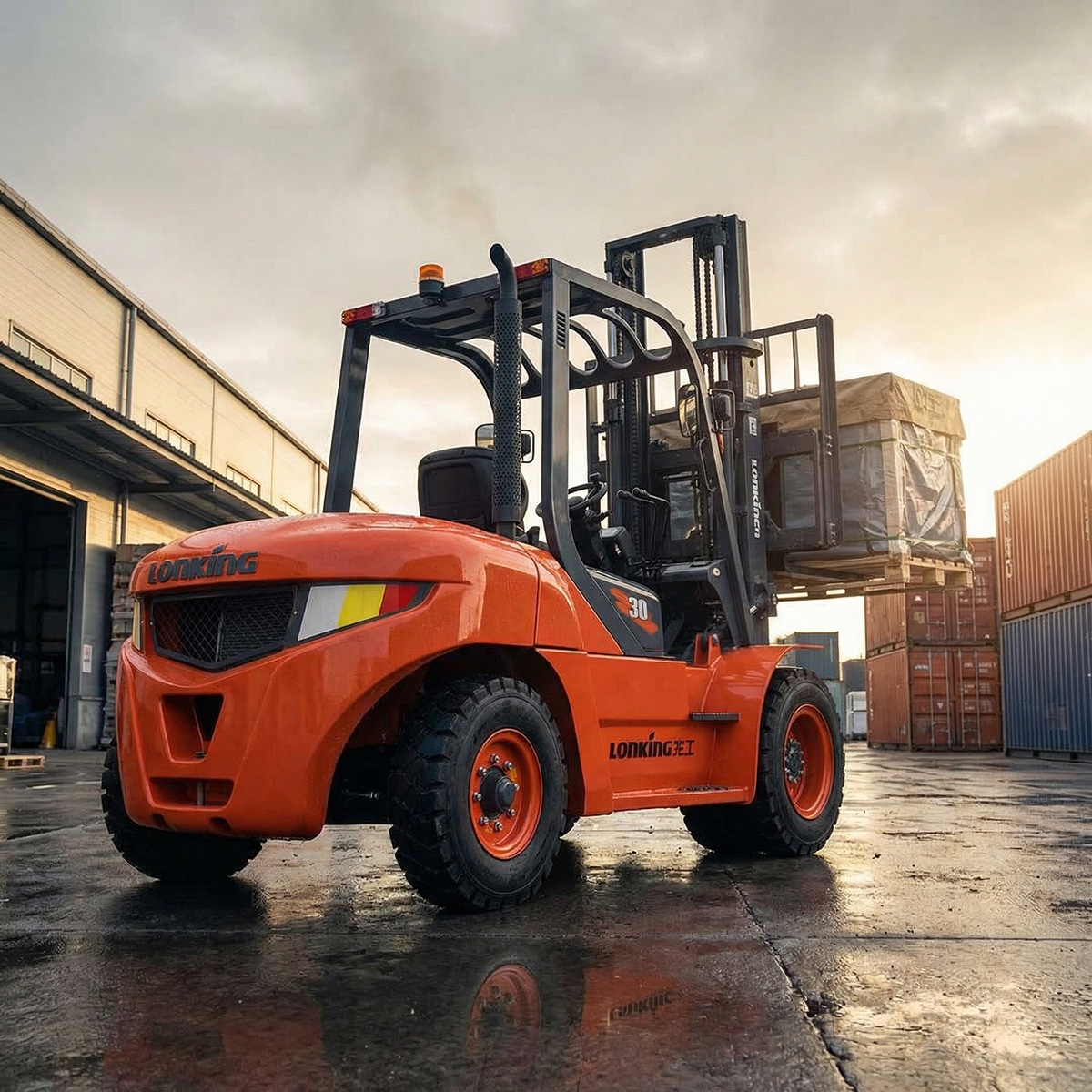
Diesel models in the VVN range are available with load capacities of 2,000–3,500 kg. They can operate on uneven surfaces, sand, or gravel, and their power does not decrease even during very long shifts because refueling takes only a few minutes.
Cost analysis

  • Energy cost: about EUR 3–4 per working hour, depending on diesel prices.
  • Maintenance cost: EUR 3,500–4,000 per year, including quarterly oil changes, filter replacement, injector cleaning, and coolant replacement.
  • Annual fuel cost for intensive 2,000-hour use is about EUR 15,000.
  • Initial purchase cost is lower than for electric models with lithium batteries.

Strengths

  • Continuous operation.
    The main advantage of diesel forklifts is a fully uninterrupted work cycle because refueling takes only 2–5 minutes. That makes them essential in three-shift operations or outdoor sites without sufficient electrical infrastructure.
  • High power in harsh environments.
    Diesel forklifts perform very well outdoors, on construction sites, in port terminals, in forestry operations, and in other environments with uneven ground, mud, sand, or elevation changes.
  • Stable power in varying temperatures.
    Unlike electric forklifts, diesel engines do not lose significant power in cold weather, which makes them suitable for winter outdoor work.
  • Greater mobility.
    They are not tied to charging station locations and can work anywhere diesel fuel is available.
  • High lifting capability.
    The strong torque of a diesel engine supports excellent performance with very heavy loads and often outperforms electric models in extreme lifting situations.
  • Proven reliability.
    Diesel technology has been tested over decades, and maintenance services are widely available.


⚠️ Weaknesses

  • Exhaust emissions.
    CO₂, NOx, and particulate emissions are the main limitation, which means diesel forklifts cannot be used in enclosed indoor spaces without very high-quality and expensive ventilation systems.
  • Higher operating costs.
    Combined fuel and maintenance costs are significantly higher than for electric alternatives.
  • More complex maintenance.
    Modern diesel engines include particulate filters and selective catalytic reduction systems, which add maintenance complexity and cost.
  • Noise pollution.
    Diesel engines produce much more noise, which affects workplace quality and can approach occupational safety noise limits.
  • Poorer ESG alignment.
    Companies with strict sustainability goals and ESG reporting increasingly avoid diesel equipment indoors.
  • Regulatory risk.
    Many EU cities are introducing low-emission restrictions for combustion-based equipment, which may limit diesel forklift use in the long run.

3. Petrol and LPG forklifts: the flexible middle-ground option

How do they work?

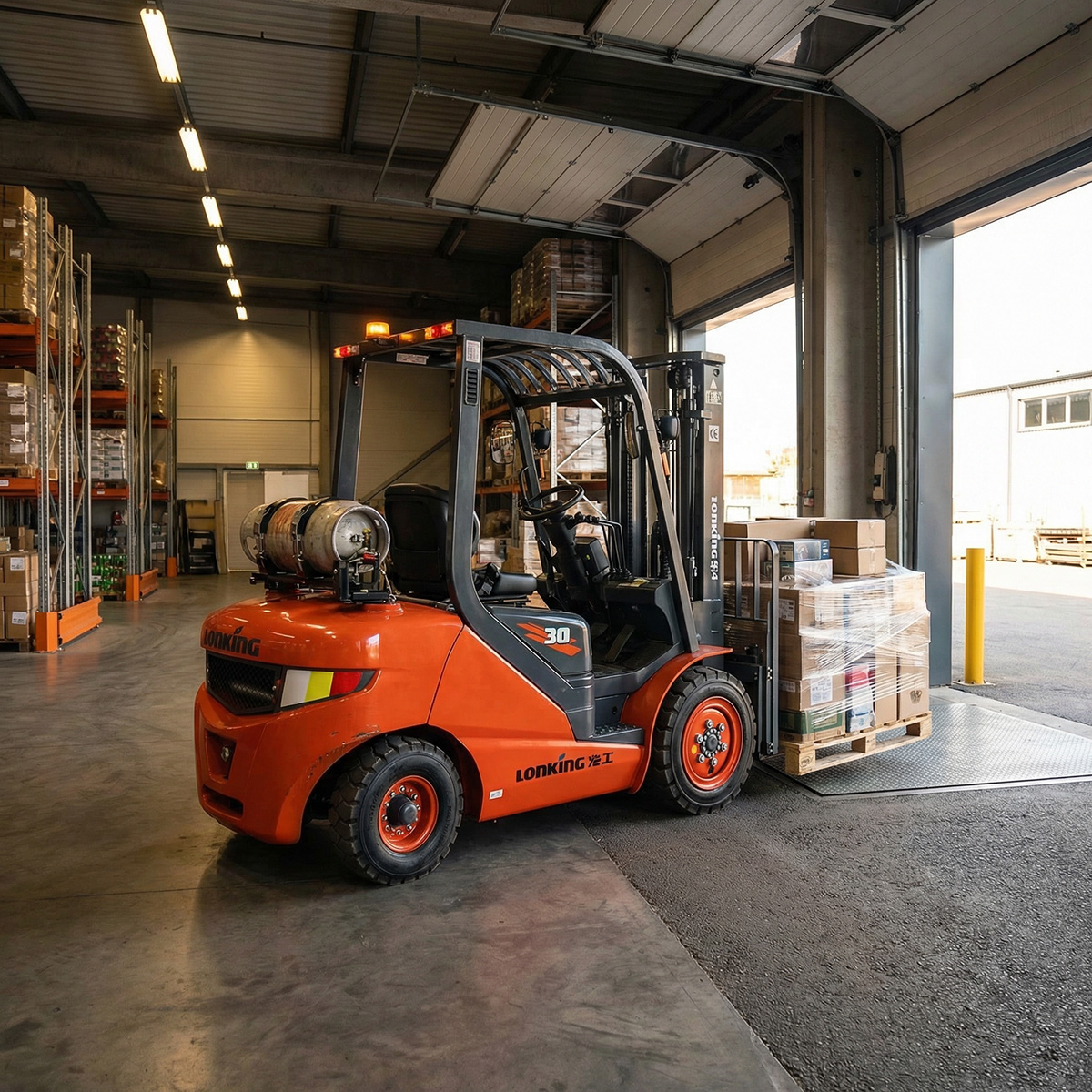
Petrol and LPG forklifts use a spark-ignition engine that drives a mechanical or hydrostatic transmission. The LPG tank is mounted at the rear of the forklift as a portable cylinder that can be replaced within minutes.

Technical specifications

LPG forklifts in the VVN range are available with capacities from 1,500 to 3,500 kg and can operate for a full shift on one gas cylinder. They provide stable power throughout the shift, unlike lead-acid electric models, which may gradually lose power as the battery discharges.

Cost analysis

  • Energy cost: approximately EUR 3.00–00 per working hour.
  • Fuel replacement: changing an LPG cylinder takes 2–5 minutes and can be more practical than diesel refueling in some situations.
  • Maintenance cost: moderate and lower than diesel because LPG burns cleaner and leaves fewer deposits in the engine.
  • Initial purchase price: comparable to electric models and often lower than lithium-ion electric forklifts.


Strengths

  • Versatile indoor and outdoor use.
    LPG forklifts are suitable for both indoor and outdoor operations, provided indoor areas have adequate ventilation. That makes them popular in supermarket logistics, agriculture, light industry, and other mixed-use environments.
  • Fast “refueling.”
    Replacing an LPG cylinder takes only a few minutes, similar to diesel refueling. This is a major advantage over lead-acid electric forklifts, which require hours to recharge.
  • Cleaner combustion than diesel.
    LPG burns much cleaner than diesel, producing fewer particulates, less soot buildup, and lower NOx levels.
  • Stable performance.
    Unlike lead-acid electric models, LPG forklifts do not lose power near the end of a shift and maintain the same intensity from the first hour to the last.
  • Lower maintenance cost than diesel.
    LPG engines are simpler to maintain and do not require particulate filter or SCR-system servicing.
  • Flexible application.
    They can be fitted with various fork attachments and load-handling equipment, just like diesel models.


⚠️ Weaknesses

  • LPG cylinder logistics and storage.
    LPG cylinders must be stored in specially equipped, ventilated spaces in compliance with fire safety and explosion protection rules. This requires additional infrastructure and creates logistical complexity.
  • Not a zero-emissions solution.
    Even though LPG burns cleaner, it still produces CO₂ and other gases, which limits its use in sealed indoor spaces without added ventilation.
  • Higher fuel cost than electricity.
    Over the long term, LPG is a more expensive energy source than electricity, especially when electricity tariffs are stable and predictable.
  • Weak ESG fit.
    For companies with strict emissions targets or green logistics commitments, LPG is not a sustainable long-term strategy.
  • Risk of technological displacement.
    Lithium-ion forklifts are increasingly overtaking LPG models even in areas where LPG previously dominated, and that gap is expected to grow.

Total Cost of Ownership (TCO)

Cost category Electric (Li-Ion) LPG Diesel
Initial purchase price Medium–high Medium Lower
Fuel/energy cost per hour 1,20–2,50 EUR 3,00–4,00 EUR 3,25–5,00 EUR
Maintenance cost per year ~800 EUR ~2000 EUR ~3500–4000 EUR
Annual fuel cost (2000 h) ~2500 EUR ~7000 EUR ~15 000 EUR
Service life 10–12 years 8–10 years 8–10 years
Indoor emissions Zero Moderate (ventilation required) High (not suitable for indoor use)
Noise level Very low Medium High
Charging/refueling time 60–120 min (fast charging) 2–5 min 2–5 min
ESG compliance ⭐⭐⭐⭐⭐ ⭐⭐⭐ ⭐⭐

Best fit by business type

🏭 Manufacturing companies with indoor warehouses

Recommendation: electric forklifts

These businesses benefit most from zero emissions, low noise, and lower operating costs. If production runs continuously, lithium-ion forklifts with fast charging are an ideal solution. For food manufacturing, electric forklifts are not just a preference but a requirement to maintain hygiene and air-quality standards.

📦 E-commerce warehouses and distribution centers

Recommendation: electric forklifts

These facilities are often large, densely packed, and built around narrow aisles. The compact size, precise control, and tight turning radius of electric forklifts make them ideal for this environment. Lower noise also improves working conditions and reduces fatigue and error risk.

🌾 Agriculture and agro-logistics

Recommendation: LPG forklifts or electric models built for outdoor use

These sites often require both indoor and outdoor operation. LPG forklifts offer a good compromise, while companies with strong electrical infrastructure may find modern electric forklifts with heated batteries to be the better long-term option.

🏗️ Construction, port terminals, and forestry

Recommendation: diesel forklifts

In these settings, diesel forklifts remain essential because of their toughness and uninterrupted performance in dust, mud, uneven terrain, and heavy-duty load handling.

❄️ Cold storage and freezer warehouses

Recommendation: specialized electric freezer models

In these facilities, electric forklifts are almost the only sensible choice because diesel and LPG models often fail to meet sanitation needs and are harder to maintain in freezing conditions. Special freezer-rated electric models include heated battery packs, condensation-resistant electrical systems, and heated operator cabins.

🛒 Retail logistics and supermarket warehouses

Recommendation: electric forklifts

These warehouses are often located near cities where emissions rules are stricter. Noise limits and air-quality standards make electric forklifts the logical option.

🔄 Companies transitioning from diesel to electric

Recommendation: LPG as a transition solution

For businesses that want lower emissions but are not yet financially or infrastructurally ready for full electrification, LPG can serve as a practical intermediate step.

Questions before purchase

Before making a final decision, consider these eight strategic questions:

  1. Where will the forklift be used? Indoors only, outdoors only, or in both environments? For indoor environments, electric forklifts are the standard.
  2. How many shifts per day? One shift suits electric models with overnight charging. Two or three shifts require Li-Ion with fast charging or LPG with quick cylinder replacement.
  3. What is the company’s ESG and environmental strategy? If the company reports CO₂ emissions or holds certifications, electric forklifts are the only logical choice.
  4. What are the floor conditions and aisle widths in the warehouse? Narrow aisles and smooth floors favor electric models. Rough outdoor terrain favors diesel.
  5. What is the company’s financial situation? If upfront capital is limited, diesel or LPG may seem more attractive, but TCO analysis will show that electric forklifts are cheaper long-term.
  6. Is electrical infrastructure available for charging stations? If not, additional investment in electrical capacity expansion will be needed.
  7. What is the average utilization level? Forklifts operating all day without breaks require a different approach than those used for a few hours.
  8. Are there industry-specific regulatory requirements? Food, pharmaceutical, or chemical industries often have strict emissions requirements that virtually rule out diesel and petrol options.

The future of electric forklifts: why the trend is clear

According to independent industry analysts, the global shift to electric forklifts will continue to accelerate. Key reasons include:

  • Falling lithium-ion battery costs.
    Over the last five years, lithium-ion battery production costs have dropped by more than 40%, making electric forklifts financially accessible even for small businesses.
  • Faster charging speeds.
    Next-generation lithium-ion batteries reach 80% charge in just 45–60 minutes, which removes the main objection to electric models.
  • EU regulatory pressure.
    The European Green Deal and subsequent national air quality laws are gradually restricting the use of combustion equipment indoors, creating legal pressure for the transition to electric forklifts.
  • IoT and automation integration.
    Electric forklifts are technically easier to integrate with smart warehouse systems, robotics, and automated guided vehicles (AGVs).
  • Employee expectations.
    A new generation of warehouse workers increasingly values clean and quiet working environments – companies using electric technology gain an advantage in attracting and retaining staff.

Conclusion: the choice to make today

In 2026, forklift selection is not a simple price-versus-quality calculation but a strategic business decision that affects cost structure, environmental compliance, employee well-being, and competitiveness for years ahead.

The electric battery forklift is the clear winner for most indoor and mixed warehouse operations: lower costs, zero emissions, reduced maintenance, and future readiness make it the smartest long-term investment.

The diesel forklift remains essential for heavy outdoor operations such as construction, ports, and rough-terrain work where electrification is still not technically or financially feasible.

The petrol/LPG forklift offers a good transition solution for companies that are not yet ready for full electrification but want a cleaner and more flexible alternative to diesel technology.

In any case, the right choice starts with the right advice. The VVN expert team is ready to help you assess your specific situation and recommend the best solution free of charge.

OUR PRODUCTS

4-WHEEL COUNTERBALANCED FORKLIFTS WITH CAPACITY UP TO 1500 / 1800 / 2000 / 2500 / 3000 / 3500 / 4000 / 5000 KG
DIESEL FORKLIFTS WITH A LIFTING CAPACITY OF 2000 / 2500 / 3000 / 3500 KG
GASOLINE / LPG FORKLIFTS WITH CAPACITY 1500 / 2000 / 2500 / 3000 / 3500 KG
DIESEL FORKLIFTS WITH CAB AND LIFTING CAPACITY 2000 / 2500 / 3000 / 3500 KG
Šajā tīmekļa vietnē sīkdatnes tiek izmantotas, lai uzlabotu jūsu pieredzi. Noklikšķinot uz "Es piekrītu", Jūs piekrītat mūsu sīkdatņu politikai. View more
Cookies settings
Es piekrītu
Sīkdatņu politika
Privacy & Cookies policy
Cookie name Active

Kas mēs esam

Mūsu mājas lapas adrese ir: https://vvn.lv.

Komentāri

Kad apmeklētāji atstāj komentārus vietnē, mēs apkopojam komentāru veidlapā redzamos datus, kā arī apmeklētāja IP adresi un pārlūkprogrammas lietotāja aģenta virkni, lai palīdzētu atklāt surogātpastu. Anonimizēta virkne, kas izveidota no jūsu e-pasta adreses (saukta arī par hash), var tikt nodrošināta pakalpojumam Gravatar, lai redzētu, vai jūs to izmantojat. Gravatar pakalpojuma privātuma politika ir pieejama šeit: https://automattic.com/privacy/. Pēc jūsu komentāra apstiprināšanas jūsu profila attēls ir publiski redzams jūsu komentāra kontekstā.

Plašsaziņas līdzekļi

Ja augšupielādējat attēlus vietnē, jums nevajadzētu augšupielādēt attēlus ar iekļautiem atrašanās vietas datiem (EXIF GPS). Vietnes apmeklētāji var lejupielādēt un iegūt jebkādus atrašanās vietas datus no vietnē esošajiem attēliem.

Sīkdatnes

Ja atstājat komentāru mūsu vietnē, varat izvēlēties saglabāt savu vārdu, e-pasta adresi un vietni sīkfailos. Tie ir paredzēti jūsu ērtībām, lai jums nebūtu vēlreiz jāievada sava informācija, kad atstājat citu komentāru. Šīs sīkdatnes kalpos vienu gadu. Ja apmeklējat mūsu pieteikšanās lapu, mēs iestatīsim pagaidu sīkfailu, lai noteiktu, vai jūsu pārlūkprogramma pieņem sīkfailus. Šajā sīkdatnē nav personas datu, un tā tiek atmesta, kad aizverat pārlūkprogrammu. Kad jūs piesakāties, mēs arī iestatīsim vairākus sīkfailus, lai saglabātu jūsu pieteikšanās informāciju un ekrāna displeja izvēles. Pieteikšanās sīkfaili darbojas divas dienas, bet ekrāna opciju sīkfaili darbojas gadu. Ja atlasīsit "Atcerēties mani", jūsu pieteikšanās tiks saglabāta divas nedēļas. Ja jūs izrakstāties no sava konta, pieteikšanās sīkfaili tiks noņemti. Ja rediģējat vai publicējat rakstu, jūsu pārlūkprogrammā tiks saglabāts papildu sīkfails. Šajā sīkfailā nav ietverti personas dati, un tas vienkārši norāda tikko rediģētā raksta ziņas ID. Tas beidzas pēc 1 dienas.

Iegultais saturs no citām vietnēm

Šīs vietnes rakstos var būt iegults saturs (piemēram, videoklipi, attēli, raksti utt.). Iegultais saturs no citām vietnēm darbojas tieši tāpat kā tad, ja apmeklētājs būtu apmeklējis citu vietni. Šīs vietnes var vākt datus par jums, izmantot sīkfailus, iegult papildu trešās puses izsekošanu un pārraudzīt jūsu mijiedarbību ar šo iegulto saturu, tostarp izsekot jūsu mijiedarbībai ar iegulto saturu, ja jums ir konts un esat pieteicies šajā vietnē.

Ar ko mēs kopīgojam jūsu datus

Ja pieprasāt paroles atiestatīšanu, jūsu IP adrese tiks iekļauta atiestatīšanas e-pastā.

Cik ilgi mēs saglabājam jūsu datus

Ja atstājat komentāru, komentārs un tā metadati tiek saglabāti uz nenoteiktu laiku. Tas ir tāpēc, lai mēs varētu automātiski atpazīt un apstiprināt visus turpmākos komentārus, nevis turēt tos regulēšanas rindā. Lietotājiem, kas reģistrējas mūsu vietnē (ja tādi ir), mēs arī saglabājam viņu sniegto personisko informāciju savā lietotāja profilā. Visi lietotāji jebkurā laikā var redzēt, rediģēt vai dzēst savu personisko informāciju (izņemot to, ka viņi nevar mainīt savu lietotājvārdu). Vietņu administratori var arī redzēt un rediģēt šo informāciju.

Kādas tiesības jums ir uz saviem datiem

Ja jums ir konts šajā vietnē vai esat atstājis komentārus, varat pieprasīt eksportētu failu ar mūsu rīcībā esošajiem personas datiem par jums, tostarp visiem datiem, ko esat mums sniedzis. Varat arī pieprasīt, lai mēs dzēstu visus mūsu rīcībā esošos personas datus par jums. Tas neietver nekādus datus, kas mums ir jāuzglabā administratīvos, juridiskos vai drošības nolūkos.

Kur tiek nosūtīti jūsu dati

Apmeklētāju komentārus var pārbaudīt, izmantojot automatizētu surogātpasta noteikšanas pakalpojumu.
Save settings
Cookies settings

SEND US AN OFFER YOU GOT, WE WILL BEAT IT

CONTACT US

IESŪTIET PIEDĀVĀJUMU, MĒS PĀRSPĒSIM

SAZINĀTIES AR MUMS