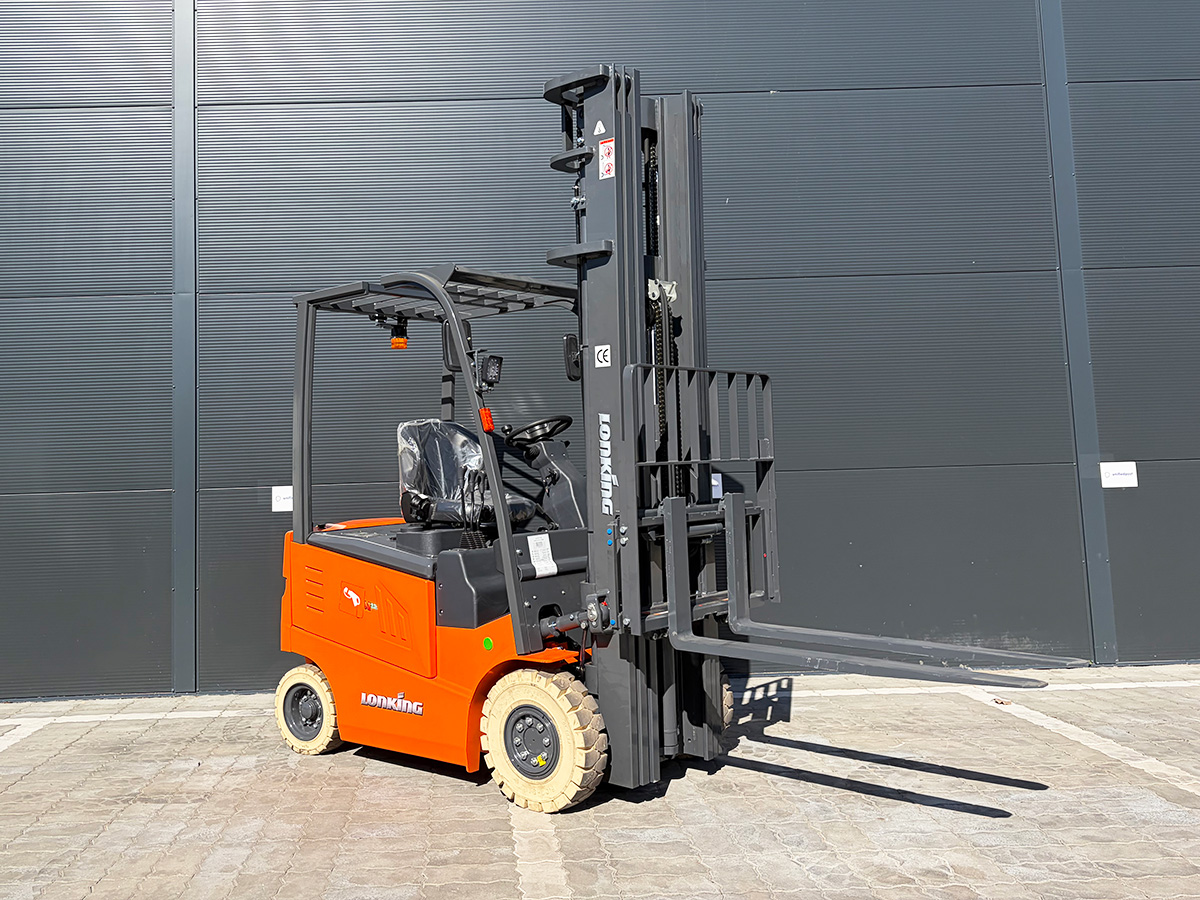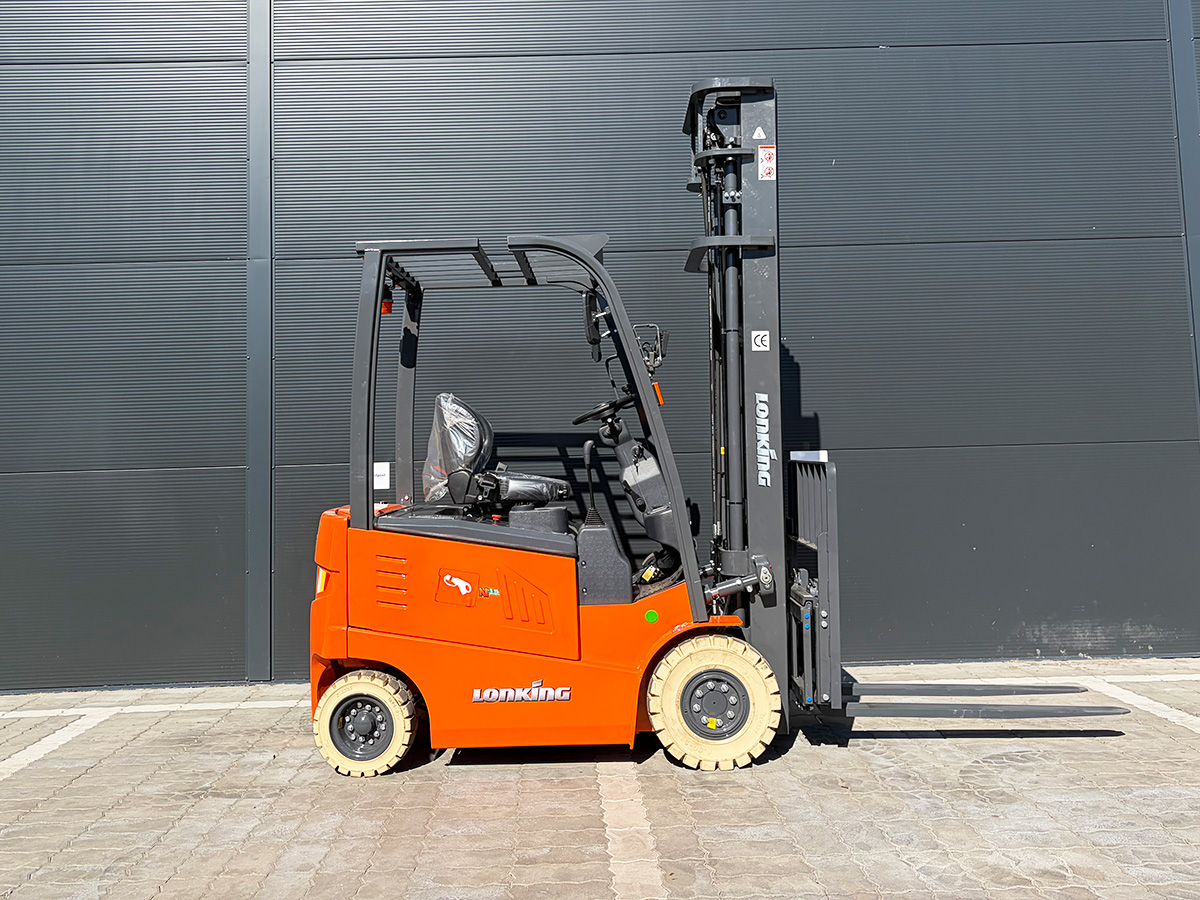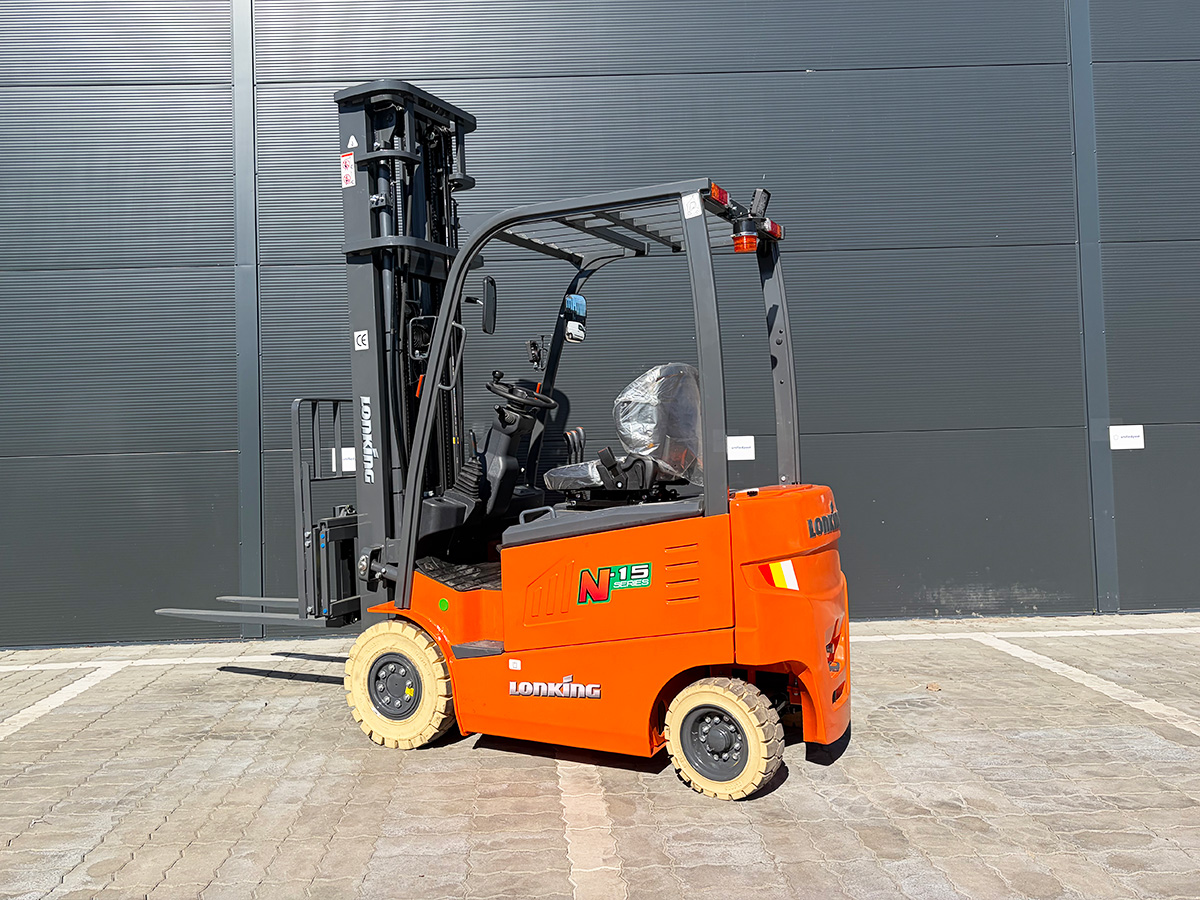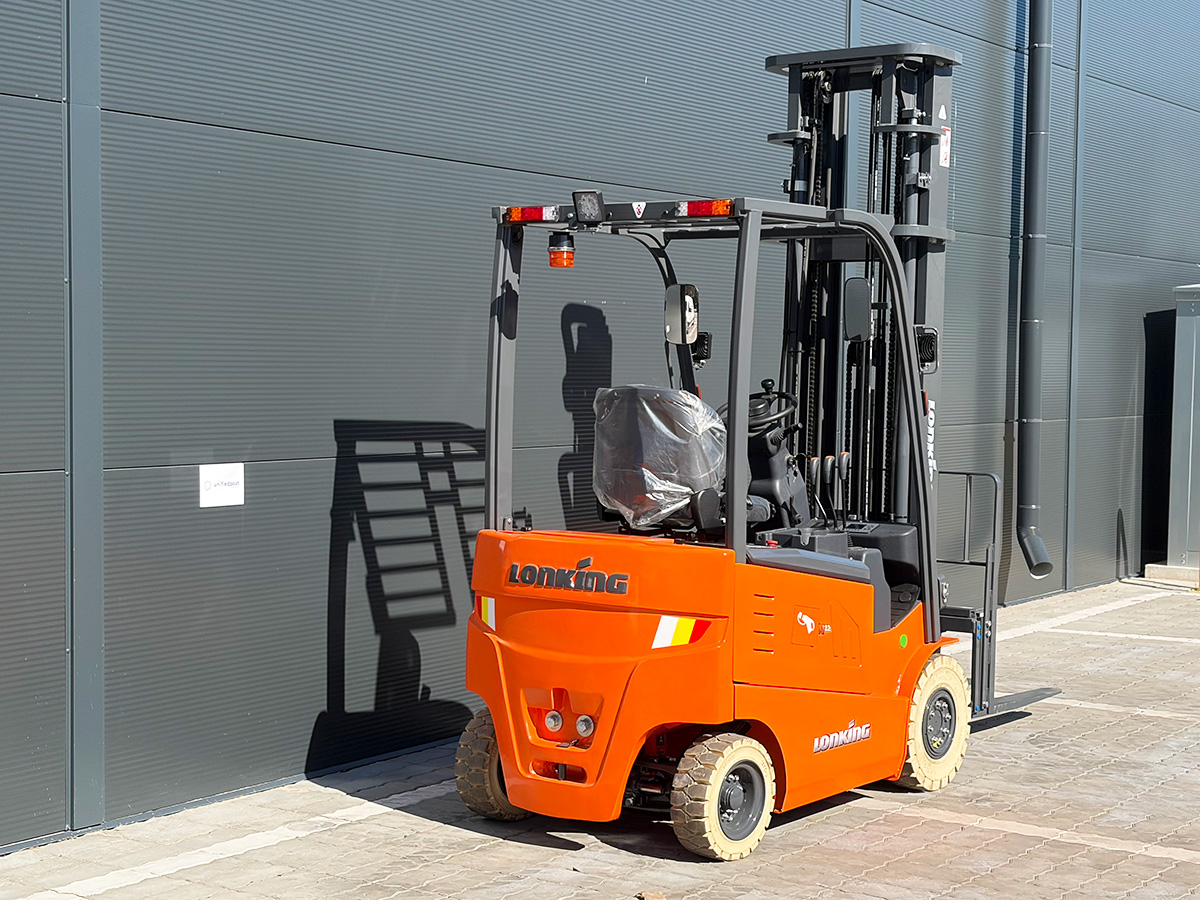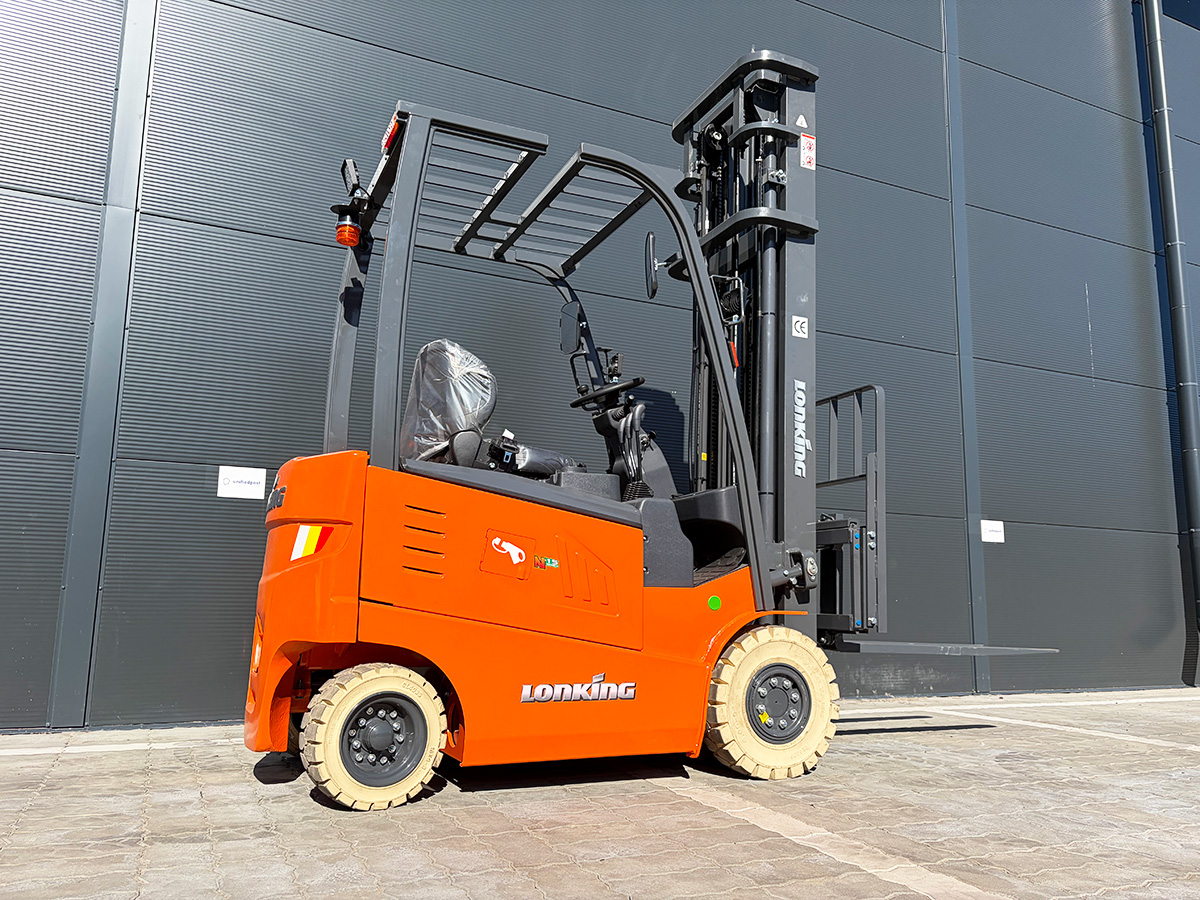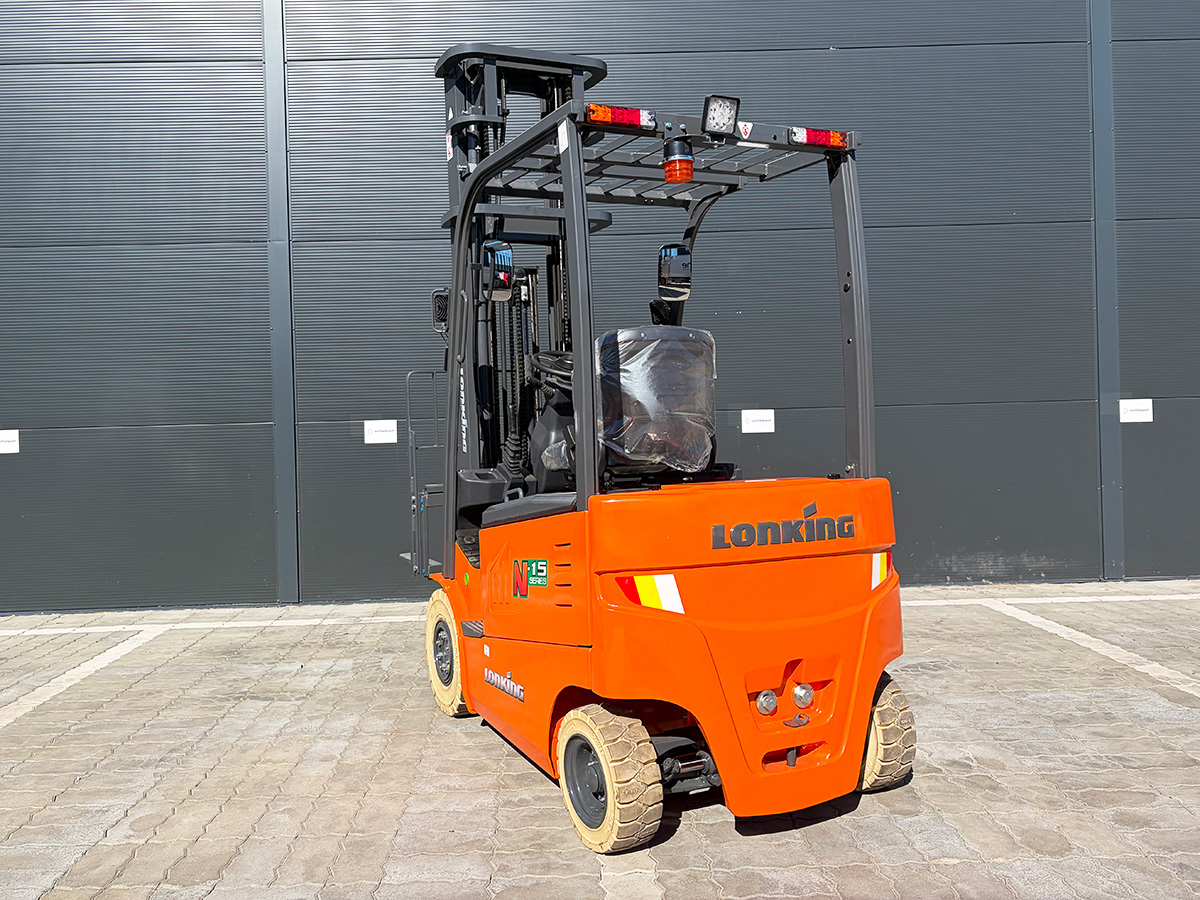
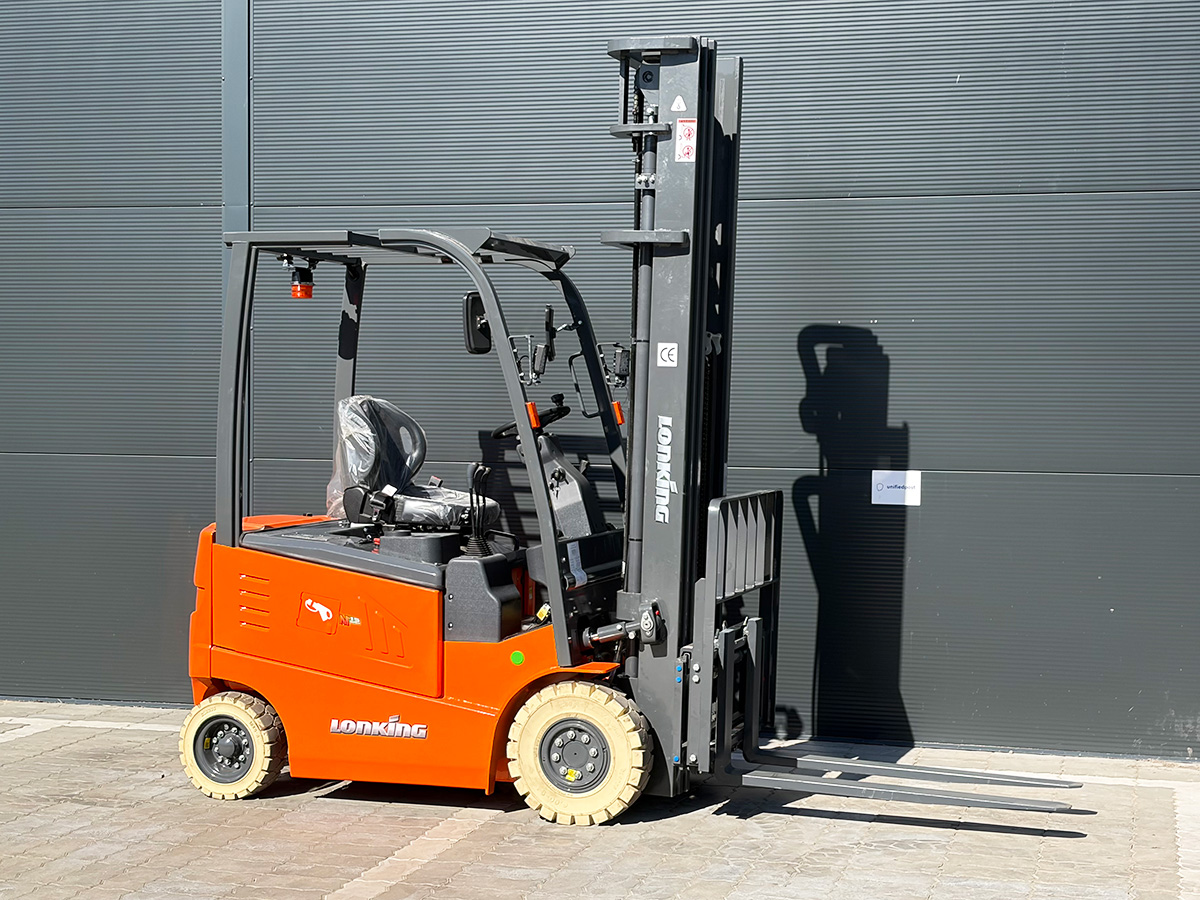
4-wheel counterbalanced forklifts with capacity up to 1500 / 1800 / 2000 / 2500 / 3000 / 3500 / 4000 / 5000 kg

If your warehouse forklift operates multiple shifts per day, but fuel bills and maintenance costs keep growing – battery forklifts are a solution increasingly chosen by Latvia’s logistics companies. Electric drive means an environment free from exhaust emissions, with low noise levels and 20–50% reduced operating costs compared to diesel alternatives. VVN offers Lonking N-series models – from CPD15N (1500 kg) to CPD50N (5000 kg) – with full CE certification and forklift servicing throughout Latvia. On this page, you’ll find everything you need to choose the technically and financially optimal solution for your warehouse.

What is a Battery Forklift and How Does it Work?

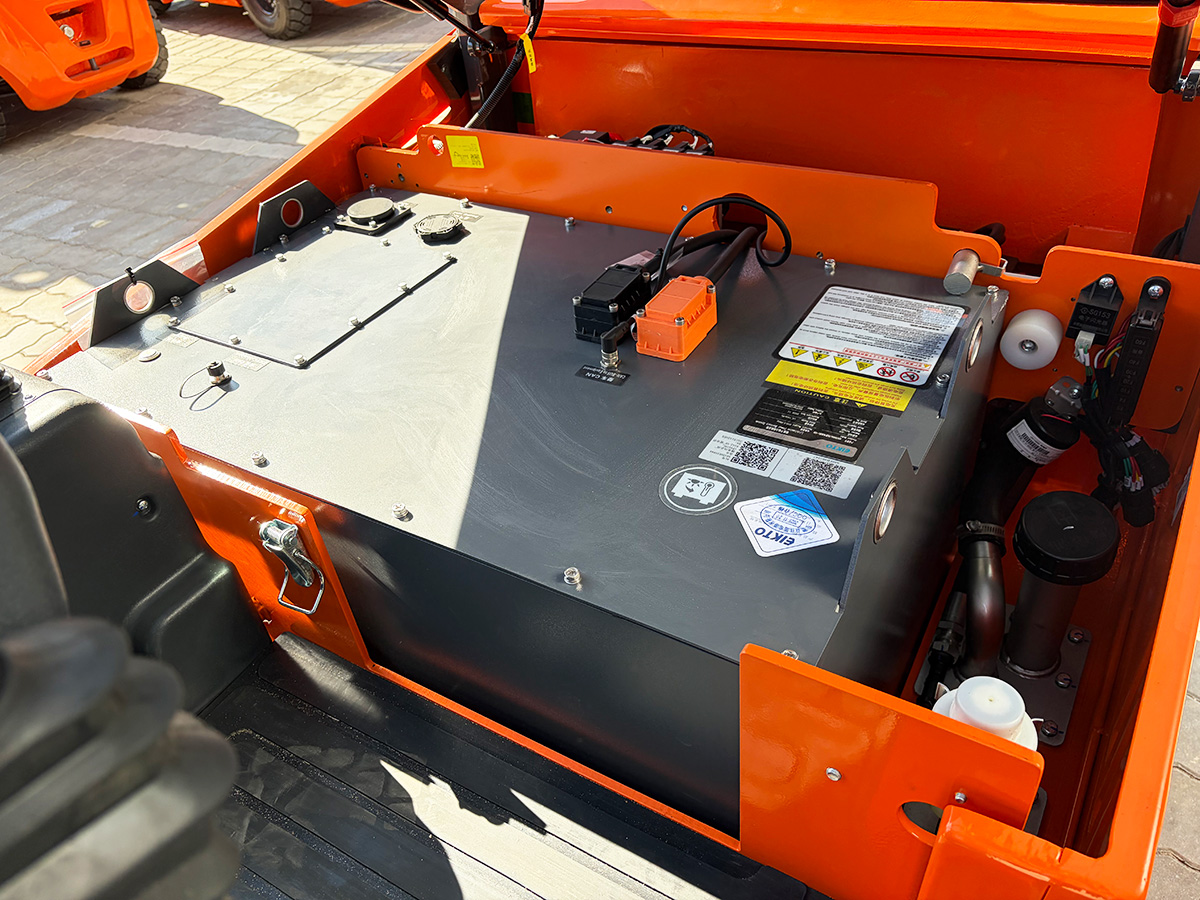
A battery forklift – or electric pallet jack – is a type of material handling equipment that obtains energy from a traction battery, not an internal combustion engine. An electric motor provides both drive wheel rotation and hydraulic system operation for load lifting and lowering operations. Precise control electronics regulate current flow and ensure consistent power throughout the entire work shift.

Price from 11’350 eur + VAT
You get a better offer?

Main components include:

Traction battery (lead-acid, lithium-ion, or gel type) – the primary energy source
Drive and lifting electric motors – for movement and load lifting
Hydraulic system (pump, cylinders, valves) – for precise pallet control
Mast and forks – for load fixation and lifting up to 7 m height
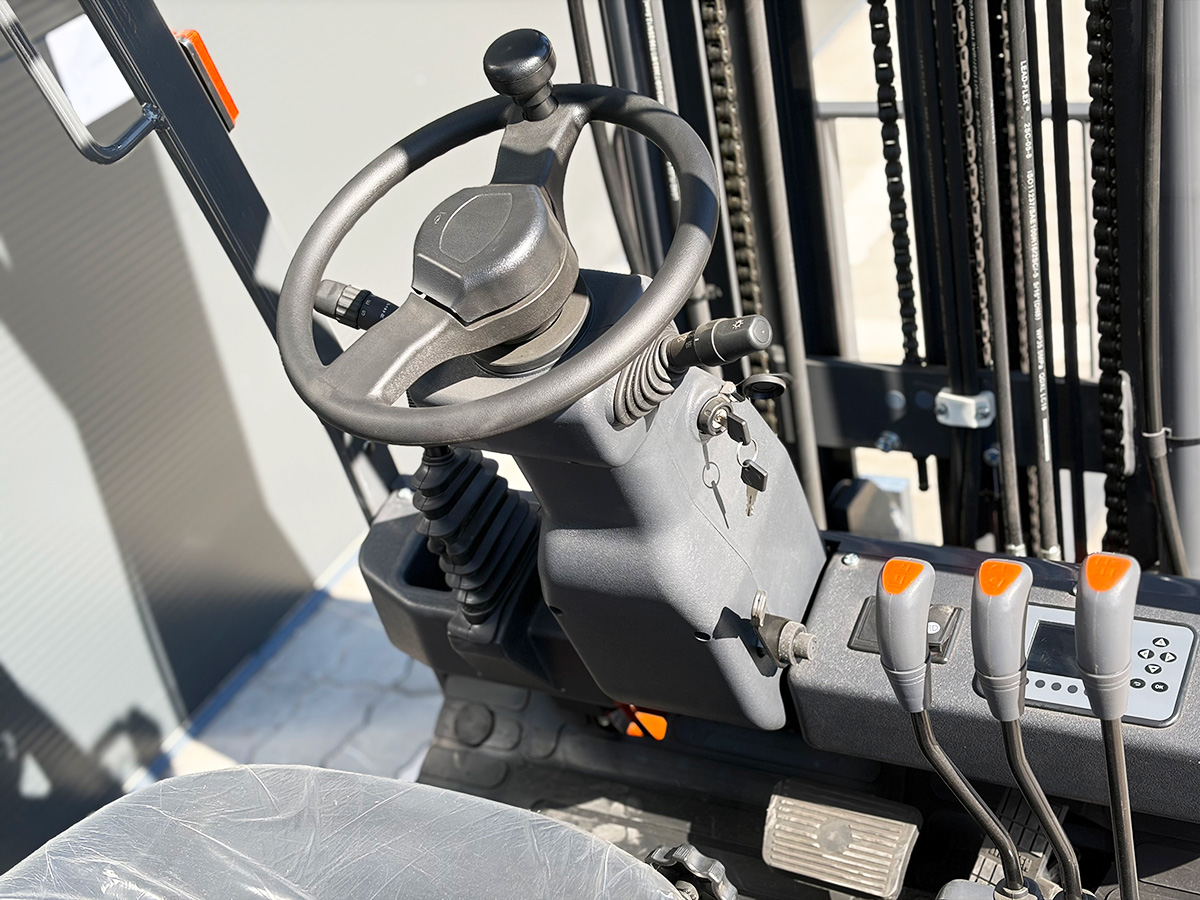
Control joystick with safety sensors – for operator control and protection

Compared to diesel pallet trucks, battery forklifts produce zero exhaust emissions, create approximately 10–15 dB lower noise levels, and ensure lower overall operating costs.

Modern warehouse equipment with electric drive – especially with lithium-ion batteries – allows for opportunity charging during break times, so multiple-shift operations no longer require a separate backup battery. This flexibility makes electric forklifts an optimal choice in the food industry, pharmaceuticals, and modern e-commerce fulfillment centers.

Types of Battery Forklifts and Lifting Capacity Range

Three-Wheel Battery Forklifts

Three-wheel construction provides an extremely compact turning radius – typically just 1.4–1.6 m – making these models ideal for narrow aisles and high shelving corridors. Lifting capacity in this category typically reaches 1500–2000 kg, and these are exactly what e-commerce fulfillment centers, pharmaceutical companies, and retail warehouses choose, where space is expensive and maneuverability is critical. The small turning radius allows the forklift operator to work efficiently in aisles just 2.5–2.8 m wide.

Four-Wheel Battery Forklifts

Four-wheel counterbalanced battery forklifts offer higher stability for heavier loads and a larger lifting capacity range – 2000–5000 kg – making them the most suitable choice for manufacturing facilities, metalworking and chemical warehouses, as well as mixed indoor/outdoor operation on concrete or asphalt surfaces. The Lonking CPD N-series fits precisely in this category and offers everything from the compact CPD15N to the powerful CPD50N. Beyond stability, four-wheel models also allow you to choose higher masts – up to 7 m – which is necessary for high-shelf warehouses.

Lithium-Ion vs. Lead-Acid Battery Forklifts Comparison

Parameter Lithium-ion (Li-ion) Lead-acid (Pb)
Purchase price 30–40% higher Lower initial cost
Charging time 1–2 h (up to 80% capacity) 8–10 h (full charge)
Service life 2000–3000 cycles (∼10–12 yr.) 800–1200 cycles (∼4–7 yr.)
Operating costs Lower (no maintenance) Higher (electrolyte, balancing)
Suitability 2–3 shift work, cold storage Single-shift work

Forklift prices in Latvia with lithium-ion batteries are higher, but in two-shift or three-shift operations, the additional investment pays for itself within 2–3 years – thanks to faster charging, minimal maintenance, and significantly longer battery life.

Why Do Latvian Companies Choose Battery Forklifts?

  1. Zero Emissions Indoors. Electric forklifts produce no carbon monoxide or nitrogen oxides, which is a mandatory requirement for food and pharmaceutical warehouses. Latvia’s Labor Inspectorate regularly checks air quality in closed production facilities, and electric forklifts automatically meet these requirements without additional ventilation investments.
  2. Lower Operating Costs. Compared to diesel forklifts, electric pallet trucks deliver 20–50% savings in annual fuel and maintenance costs. For a company with two forklifts, this could mean €8,000–15,000 saved per year – money better invested in equipment modernization or staff development.
  3. Compliance with Latvia’s Occupational Safety Requirements. Government regulations on workplace environmental standards establish strict limit values for harmful substances in work areas – battery forklifts fully comply with these requirements, preventing employers’ administrative liability for air quality violations.
  4. Suitability for Cold Storage Facilities. Lonking N-series operates at temperatures from –25°C to +40°C, making it an ideal solution for freezer warehouses where diesel equipment suffers from congealing fuel and complex cold-start problems.
  5. EU Fund Financing Options. Latvian companies can use LIAA and CFLA green technology support programs to partially subsidize electric forklift purchases – in some cases up to 40% of the purchase price – significantly reducing the initial investment.

How to Choose the Right Battery Forklift for Your Warehouse?

  1. Determine Your Operating Environment
    Assess whether the forklift will operate indoors, outdoors, or in a mixed mode. Check the floor surface – concrete is suitable for all models, but for uneven surfaces, choose sturdy rubber tires with deeper tread. If you’ll be working in a freezer, choose a lithium-ion battery because it maintains stable power even at low temperatures – unlike lead-acid, whose capacity can drop by 20–40%.
  2. Calculate Required Lifting Capacity and Load Center of Gravity
    Determine lifting capacity based on maximum load weight, adding a 20% safety margin. Note that standard lifting capacity is specified at a 500 mm load center – if your pallet is deeper or the load is non-standard, actual lifting capacity decreases and you should choose a more powerful model. Before purchasing a forklift, consult with VVN’s consultant team to avoid incorrect specification selection.
  3. Evaluate Shift Count and Battery Capacity
    For a single 8-hour shift, a lead-acid battery (420–500 Ah) often suffices. For two shifts and beyond, a lithium-ion battery forklift with rapid charging is recommended – it can charge the battery in a 60–90-minute break and thus ensures continuous production flow.
  4. Determine Required Lifting Height and Mast Type
    A standard two-stage mast provides lifting up to 3 m, while a three-stage (triplex) mast provides up to 6–7 m. If your warehouse has low doors or loading gates, choose a “Free-Lift” mast that allows load lifting at the mast’s base position without increasing total height.
  5. Compare Total Cost of Ownership (TCO) Over a 5-Year Period
    Include purchase price, energy costs, forklift servicing, spare parts, and battery replacement. Often a cheaper diesel model costs 30–50% more over a 5-year perspective than an electric one – due to higher fuel and maintenance costs.
  6. Contact VVN Experts for Free Consultation
    Before making your final decision, get VVN specialist’s technical and financial advice – free and without obligation. Our team will help calculate TCO, choose the optimal mast and battery capacity tailored to your warehouse’s specific needs.

CERTIFICATES

SIQ certificate

Directive:

2006/42/EC – Machinery Directive (MD)

2000/14/EC – Noise Directive (NO) 

CE Europe Certificate
The products we offer have all the necessary CE marking certification marks, which ensure compliance of the products in the European Economic Area.

Frequently Asked Questions (FAQ)

How much does a battery forklift cost in Latvia?

A new battery forklift in Latvia starts from €11,350 + VAT for a Lonking N-series base model with 1500 kg lifting capacity. Larger models – such as CPD30N or CPD50N – can reach €18,000–25,000 + VAT depending on mast height, battery technology, and additional options. For an individual quotation, contact VVN – we'll prepare a precise calculation with TCO analysis.

How long does a battery forklift's traction battery last?

A lead-acid traction battery under normal operating conditions (single shift, regular charging) lasts 4–7 years or approximately 800–1200 full charge cycles. A lithium-ion battery achieves 2000–3000 cycles – equivalent to 8–12 years of service life. Battery longevity is affected by charging depth: avoid full discharge and charge regularly to maximize service life.

What's the difference between lithium-ion and lead-acid battery forklifts?

The main difference is charging speed and service life. Lithium-ion forklifts charge in 1–2 hours (compared to 8–10 hours for lead-acid), last 2–3 times longer, and don't require electrolyte checks or balancing. The initial price is 30–40% higher, but in two-shift operations, it pays for itself within 2–3 years. Lead-acid remains economical for single-shift operations with stable charging schedules.

Can a battery forklift operate in a freezer or cold environment?

Yes - Lonking CPD N-series is suitable for operation at temperatures from –25°C to +40°C. However, at low temperatures, lead-acid battery power drops by 20–40%, so freezers are recommended to use lithium-ion batteries that maintain stable power even in cold. Additionally, equip the forklift with cold-environment electronics protection and insulated seats for operator comfort.

How often does a battery forklift require maintenance?

Lonking N-series manufacturer recommends the first service after 250 operating hours, then every 500 operating hours or once annually (depending on intensity). During servicing, brake systems, hydraulics, electrical connections, and battery condition are checked. VVN provides certified forklift servicing throughout Latvia with rapid spare parts delivery, thus minimizing downtime in your operations.

What is the warranty period for Lonking forklifts?

VVN provides 12 months manufacturer's warranty from delivery date or up to 2000 operating hours – whichever comes first – for Lonking CPD N-series forklifts. The warranty covers manufacturing defects in mechanical and electrical parts. Battery warranty is set separately – typically 12–18 months for lead-acid and 24 months for lithium-ion batteries. Address warranty claims with VVN's service team.

What power (kW) is needed to charge a battery forklift?

The standard charger for Lonking N-series forklifts consumes 3–7 kW from the grid depending on battery capacity. For a typical 48V / 420 Ah battery, a 3-phase 400V connection and 16A fuse suffice. Fast chargers (HF) can consume up to 10–15 kW but provide full charging in 2–3 hours. Before installation, ensure your warehouse electrical system meets required power – consult an electrician if necessary.

Can battery forklifts be used outdoors?

Battery forklifts can operate outdoors if the surface is smooth (concrete or asphalt) and there's no intensive precipitation or prolonged moisture exposure. Lonking N-series meets IP54 protection class, providing basic protection against dust and water spray. However, for prolonged outdoor operation on uneven surfaces or in severe weather conditions, diesel or LPG forklifts designed specifically for such use are recommended.

Šajā tīmekļa vietnē sīkdatnes tiek izmantotas, lai uzlabotu jūsu pieredzi. Noklikšķinot uz "Es piekrītu", Jūs piekrītat mūsu sīkdatņu politikai. View more
Cookies settings
Es piekrītu
Sīkdatņu politika
Privacy & Cookies policy
Cookie name Active

Kas mēs esam

Mūsu mājas lapas adrese ir: https://vvn.lv.

Komentāri

Kad apmeklētāji atstāj komentārus vietnē, mēs apkopojam komentāru veidlapā redzamos datus, kā arī apmeklētāja IP adresi un pārlūkprogrammas lietotāja aģenta virkni, lai palīdzētu atklāt surogātpastu. Anonimizēta virkne, kas izveidota no jūsu e-pasta adreses (saukta arī par hash), var tikt nodrošināta pakalpojumam Gravatar, lai redzētu, vai jūs to izmantojat. Gravatar pakalpojuma privātuma politika ir pieejama šeit: https://automattic.com/privacy/. Pēc jūsu komentāra apstiprināšanas jūsu profila attēls ir publiski redzams jūsu komentāra kontekstā.

Plašsaziņas līdzekļi

Ja augšupielādējat attēlus vietnē, jums nevajadzētu augšupielādēt attēlus ar iekļautiem atrašanās vietas datiem (EXIF GPS). Vietnes apmeklētāji var lejupielādēt un iegūt jebkādus atrašanās vietas datus no vietnē esošajiem attēliem.

Sīkdatnes

Ja atstājat komentāru mūsu vietnē, varat izvēlēties saglabāt savu vārdu, e-pasta adresi un vietni sīkfailos. Tie ir paredzēti jūsu ērtībām, lai jums nebūtu vēlreiz jāievada sava informācija, kad atstājat citu komentāru. Šīs sīkdatnes kalpos vienu gadu. Ja apmeklējat mūsu pieteikšanās lapu, mēs iestatīsim pagaidu sīkfailu, lai noteiktu, vai jūsu pārlūkprogramma pieņem sīkfailus. Šajā sīkdatnē nav personas datu, un tā tiek atmesta, kad aizverat pārlūkprogrammu. Kad jūs piesakāties, mēs arī iestatīsim vairākus sīkfailus, lai saglabātu jūsu pieteikšanās informāciju un ekrāna displeja izvēles. Pieteikšanās sīkfaili darbojas divas dienas, bet ekrāna opciju sīkfaili darbojas gadu. Ja atlasīsit "Atcerēties mani", jūsu pieteikšanās tiks saglabāta divas nedēļas. Ja jūs izrakstāties no sava konta, pieteikšanās sīkfaili tiks noņemti. Ja rediģējat vai publicējat rakstu, jūsu pārlūkprogrammā tiks saglabāts papildu sīkfails. Šajā sīkfailā nav ietverti personas dati, un tas vienkārši norāda tikko rediģētā raksta ziņas ID. Tas beidzas pēc 1 dienas.

Iegultais saturs no citām vietnēm

Šīs vietnes rakstos var būt iegults saturs (piemēram, videoklipi, attēli, raksti utt.). Iegultais saturs no citām vietnēm darbojas tieši tāpat kā tad, ja apmeklētājs būtu apmeklējis citu vietni. Šīs vietnes var vākt datus par jums, izmantot sīkfailus, iegult papildu trešās puses izsekošanu un pārraudzīt jūsu mijiedarbību ar šo iegulto saturu, tostarp izsekot jūsu mijiedarbībai ar iegulto saturu, ja jums ir konts un esat pieteicies šajā vietnē.

Ar ko mēs kopīgojam jūsu datus

Ja pieprasāt paroles atiestatīšanu, jūsu IP adrese tiks iekļauta atiestatīšanas e-pastā.

Cik ilgi mēs saglabājam jūsu datus

Ja atstājat komentāru, komentārs un tā metadati tiek saglabāti uz nenoteiktu laiku. Tas ir tāpēc, lai mēs varētu automātiski atpazīt un apstiprināt visus turpmākos komentārus, nevis turēt tos regulēšanas rindā. Lietotājiem, kas reģistrējas mūsu vietnē (ja tādi ir), mēs arī saglabājam viņu sniegto personisko informāciju savā lietotāja profilā. Visi lietotāji jebkurā laikā var redzēt, rediģēt vai dzēst savu personisko informāciju (izņemot to, ka viņi nevar mainīt savu lietotājvārdu). Vietņu administratori var arī redzēt un rediģēt šo informāciju.

Kādas tiesības jums ir uz saviem datiem

Ja jums ir konts šajā vietnē vai esat atstājis komentārus, varat pieprasīt eksportētu failu ar mūsu rīcībā esošajiem personas datiem par jums, tostarp visiem datiem, ko esat mums sniedzis. Varat arī pieprasīt, lai mēs dzēstu visus mūsu rīcībā esošos personas datus par jums. Tas neietver nekādus datus, kas mums ir jāuzglabā administratīvos, juridiskos vai drošības nolūkos.

Kur tiek nosūtīti jūsu dati

Apmeklētāju komentārus var pārbaudīt, izmantojot automatizētu surogātpasta noteikšanas pakalpojumu.
Save settings
Cookies settings

CONTACT US

SEND US AN OFFER YOU GOT, WE WILL BEAT IT

IESŪTIET PIEDĀVĀJUMU, MĒS PĀRSPĒSIM

SAZINĀTIES AR MUMS