
The six-wheel diesel forklift is a heavy-duty material handling machine designed for environments where a standard four-wheel model reaches its limits – on uneven terrain, soft ground, in ports, on construction sites, and in the outdoor storage areas of large logistics centres. With a load capacity of 3,000 to 5,000 kg, a powerful diesel engine, and an enclosed ergonomic cab, this forklift delivers not only high productivity but also operator comfort and safety throughout an entire work shift. It is the right tool for businesses where a one-hour standstill translates into real financial losses – and where compromise between power and safety is not an option.

You get a better offer?
Price from 12’800 eur + VAT
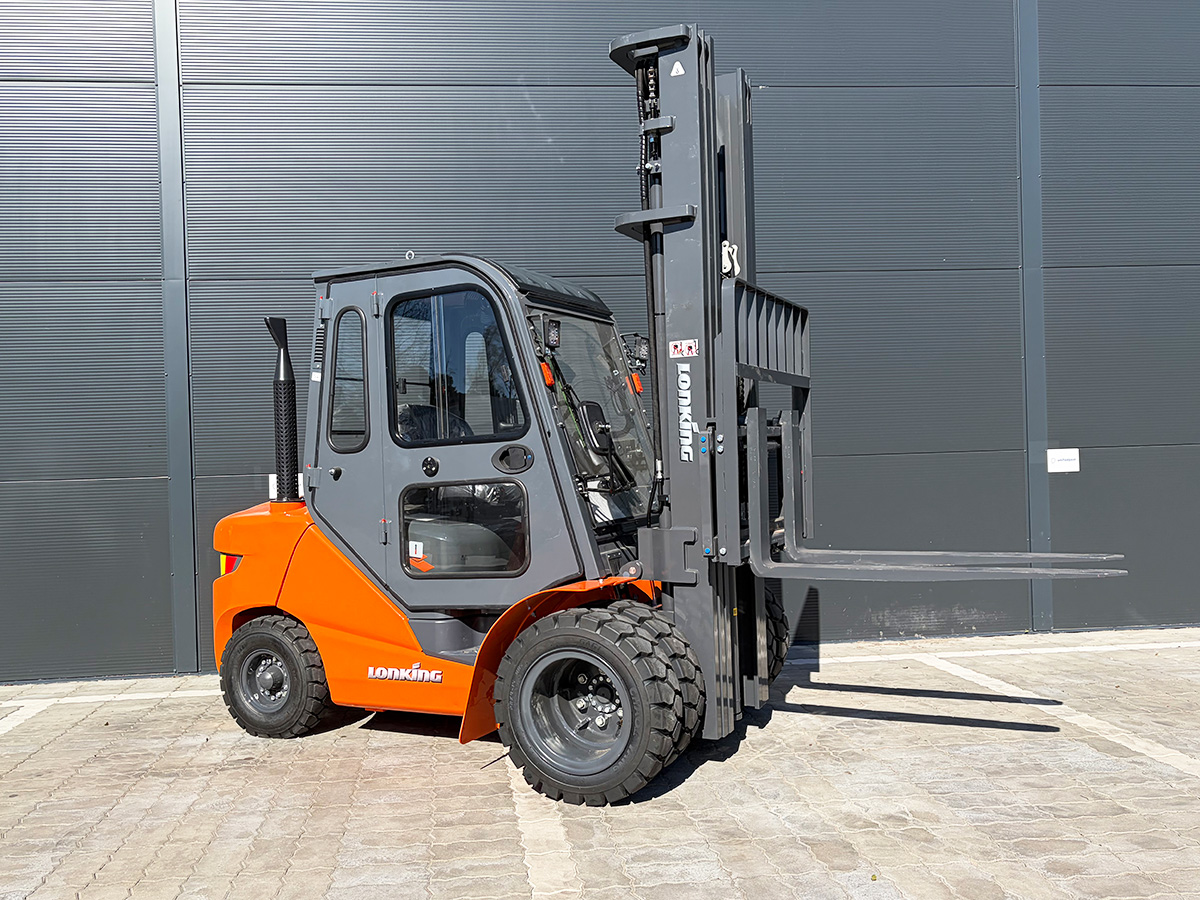
The key difference between a four-wheel and a six-wheel forklift is not merely the number of wheels – it is a fundamentally different approach to stability. A standard 4-wheel forklift rests on four contact points, and at full load on an uneven surface it can reach a critical shift in its centre of gravity. Six-wheel machines distribute the load across two additional contact points, which significantly widens the stability triangle and reduces the risk of tipping.
In practice, this means that stability improves by 20–35 % compared to a four-wheel counterpart – especially when operating at full rated capacity on gravel, wet concrete, or soft soil. This is a critical safety factor at port terminals and during seasonal agricultural operations, where the ground surface often bears tractor tracks or slippery gravel.
The additional pair of wheels also contributes to fuel efficiency: engine torque is spread across a larger contact area, reducing tyre wear and fuel consumption under heavy loads. A heavy-load forklift in a six-wheel configuration is the optimum choice for any business that regularly handles loads of 3 tonnes or more outside well-prepared warehouse floors.
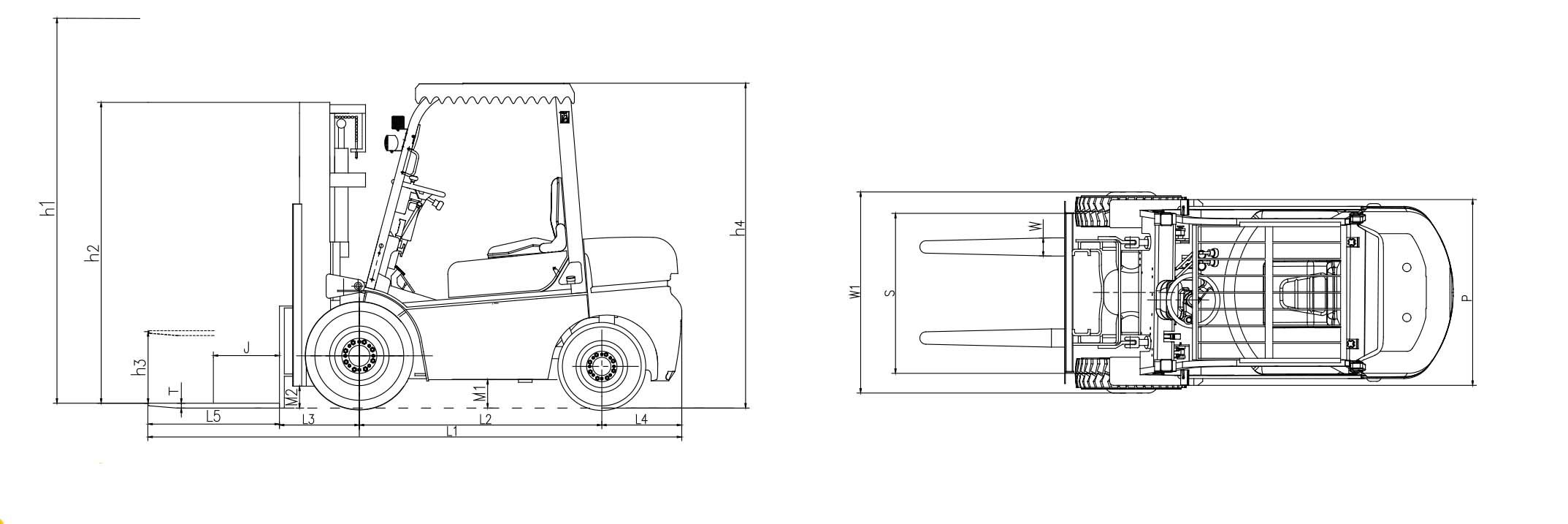
Parameter | Value |
Load Capacity | 3,000 / 4,000 / 5,000 kg (at 600 mm load centre) |
Engine Type | 4-cylinder diesel engine, 63–88 kW (Isuzu / Perkins / Mitsubishi) |
Number of Wheels | 6 (dual rear wheels) |
Maximum Lift Height | 3,000–6,000 mm (depending on mast configuration) |
Mast Type | Duplex (2-stage) or Triplex (3-stage) – optional |
Free Lift | 150–200 mm |
Cab Equipment | ROPS/FOPS protective structure, heating, LED work lights, reverse warning signal, ergonomic seat with seat belt |
Total Weight (operating) | 5,800–8,500 kg |
Travel Speed (unloaded) | 22–25 km/h |
Fuel Consumption | 3.8–5.5 L/h (depending on load) |
Fuel Tank | 80–120 L (8–10 h continuous operation) |
Lift Speed (loaded) | 0.40–0.52 m/s |
Maximum Gradient | 20–25 % |
Wheelbase | 1,850–2,100 mm |
Emission Standard | Stage V / Tier 4 Final |
Parameters are indicative for standard-class models – precise specifications are prepared upon request.
The six-wheel diesel forklift is not a universal solution for every task – it is a specialised machine for specific working environments where its advantages are expressed to the fullest extent.
Outdoor Warehouse Zones and Logistics Centres
In the outdoor storage areas of large e-commerce and distribution centres, gravel or asphalt surfaces are often uneven or waterlogged after rain. An outdoor forklift with a six-wheel configuration maintains full load capacity and stability in such conditions, where a four-wheel model would operate under restrictions. For example, at container terminals handling 200–400 pallets per day from trucks, the continuous work rhythm demands a machine that operates at full power regardless of weather conditions.
Construction and Infrastructure Projects
On a construction site, there is no level concrete floor – only dirt roads, ramps, loose sand, and periodically flooded access points. A diesel forklift with a 3–5 t capacity is ideally suited for transporting concrete blocks, metal structures, palletised plasterboard sheets, and asphalt slabs. Six-wheel stability on a ramp with a gradient of up to 20° allows for safer operation than any four-wheel equivalent.
Port Terminals and Transhipment Points
Port infrastructure demands maximum machine endurance: equipment runs in two to three shifts, loads are heavy, and the surface is frequently wet concrete or metal grating. This is precisely where the six-wheel configuration and its enhanced stability reserve become not merely a convenience but a safety requirement. The diesel engine ensures uninterrupted operation without charging breaks – which is critically important at ports operating to strict berth schedules.
Forestry and Agriculture
In forestry operations and large farm holdings, the forklift frequently travels on field or forest tracks with unstable surfaces. Six-wheel equipment with wide pneumatic tyres provides adequate grip even in wet ground conditions – a critical factor during the autumn and spring seasons. The high-capacity rating allows timber stacks, grain sacks, and palletised loads to be handled with equal efficiency.
An enclosed cab is not merely an add-on – it is an essential guarantee of productivity and operator health under intensive working conditions. An experienced operator who spends an entire day in heat, cold, or strong wind without protection fatigues faster, makes more errors, and suffers from long-term health issues. An enclosed ergonomic cab eliminates these risks and directly improves work quality.
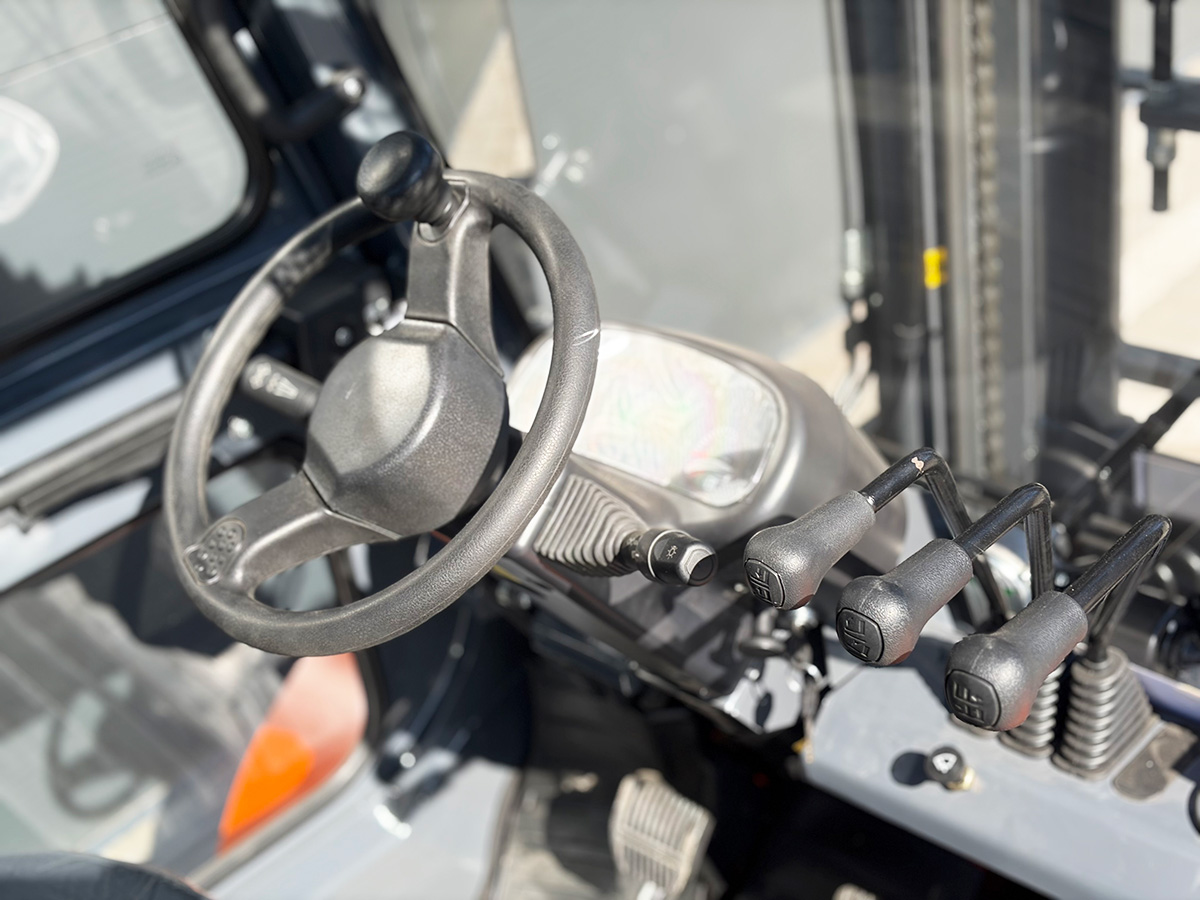
The cab of our six-wheel diesel forklift is certified to ROPS (Roll-Over Protection Structure) and FOPS (Falling Object Protection Structure) standards – providing protection both in the event of a rollover and against objects falling from above. The heating system ensures a comfortable working temperature even at −20 °C. An ergonomic, suspension-mounted seat with lumbar support and an adjustable steering column reduce operator fatigue during long shifts. Wide panoramic windows with good visibility and an optional reversing camera provide a comprehensive view of the working area.
A comfortable operator does not merely feel better – they work faster, more accurately, and with a lower risk of accidents. Studies show that an ergonomic cab reduces operator fatigue by 30–40 %, which has a direct impact on business productivity.
Diesel forklift maintenance is simpler and more affordable than many assume – provided it is carried out regularly and on schedule. A properly maintained six-wheel diesel forklift will deliver 15,000–20,000 operating hours, which corresponds to 12–15 years of active service under standard workloads.
Maintenance intervals:
Long-term diesel operation is more cost-effective than its electric equivalent: there are no battery replacement costs (which arise on electric forklifts after 4–7 years and can amount to 20–30 % of the machine’s value), and no expenditure on charging infrastructure. In a TCO (Total Cost of Ownership) analysis, the six-wheel diesel option is on average 15–25 % more cost-effective than the electric version when the machine operates outdoors for more than 60 % of its working time. A forklift maintenance package with a fixed annual fee is available from VVN – so you know your costs in advance.

Directive:
2006/42/EC – Machinery Directive (MD)
2000/14/EC – Noise Directive (NO)

The products we offer have all the necessary CE marking certification marks, which ensure compliance of the products in the European Economic Area.
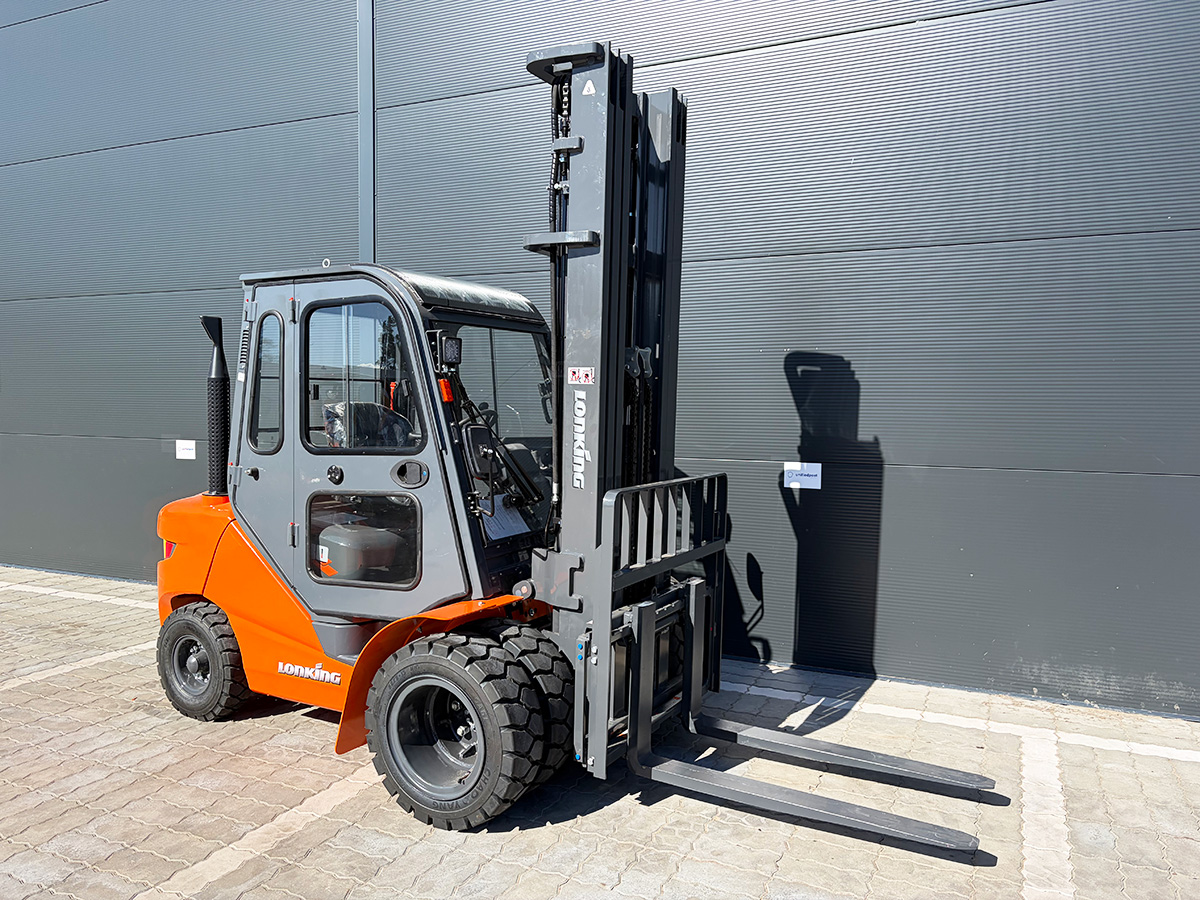
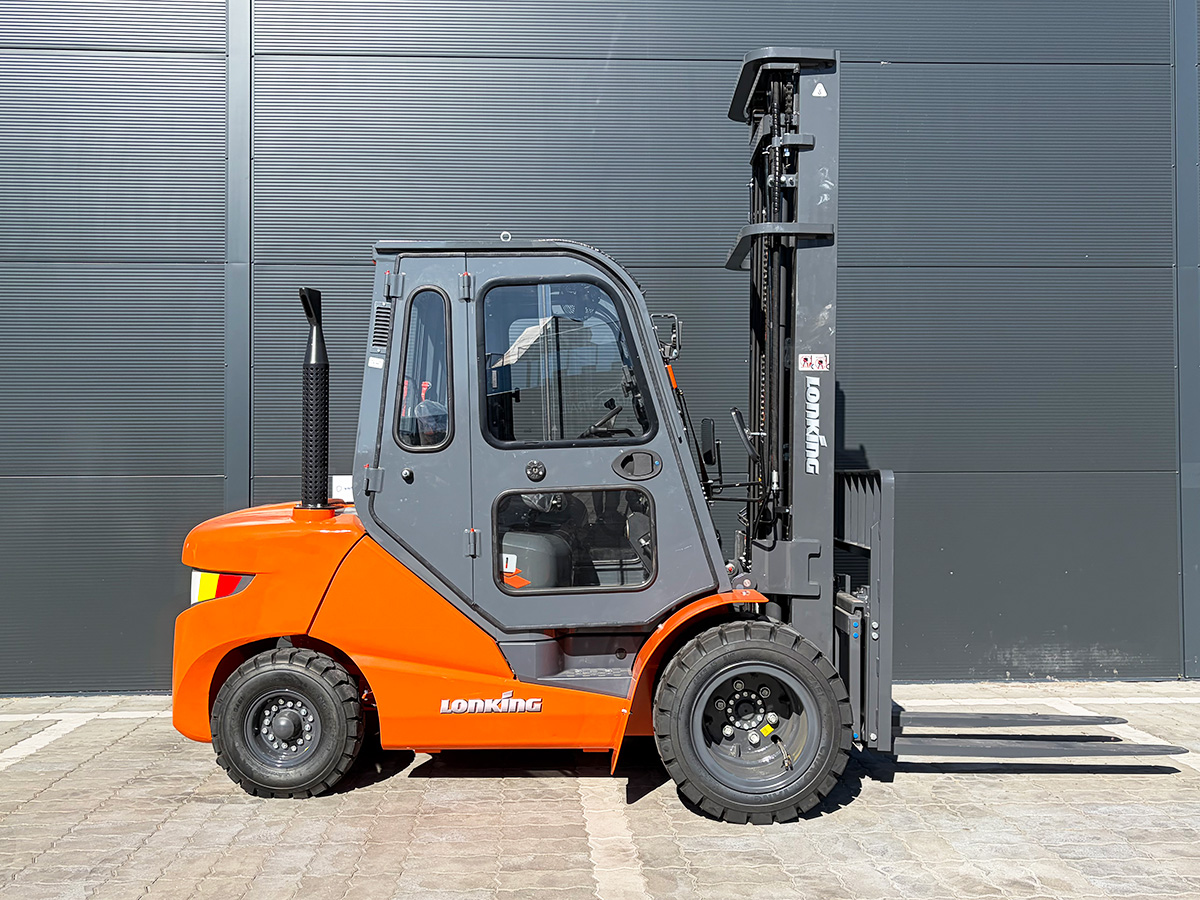
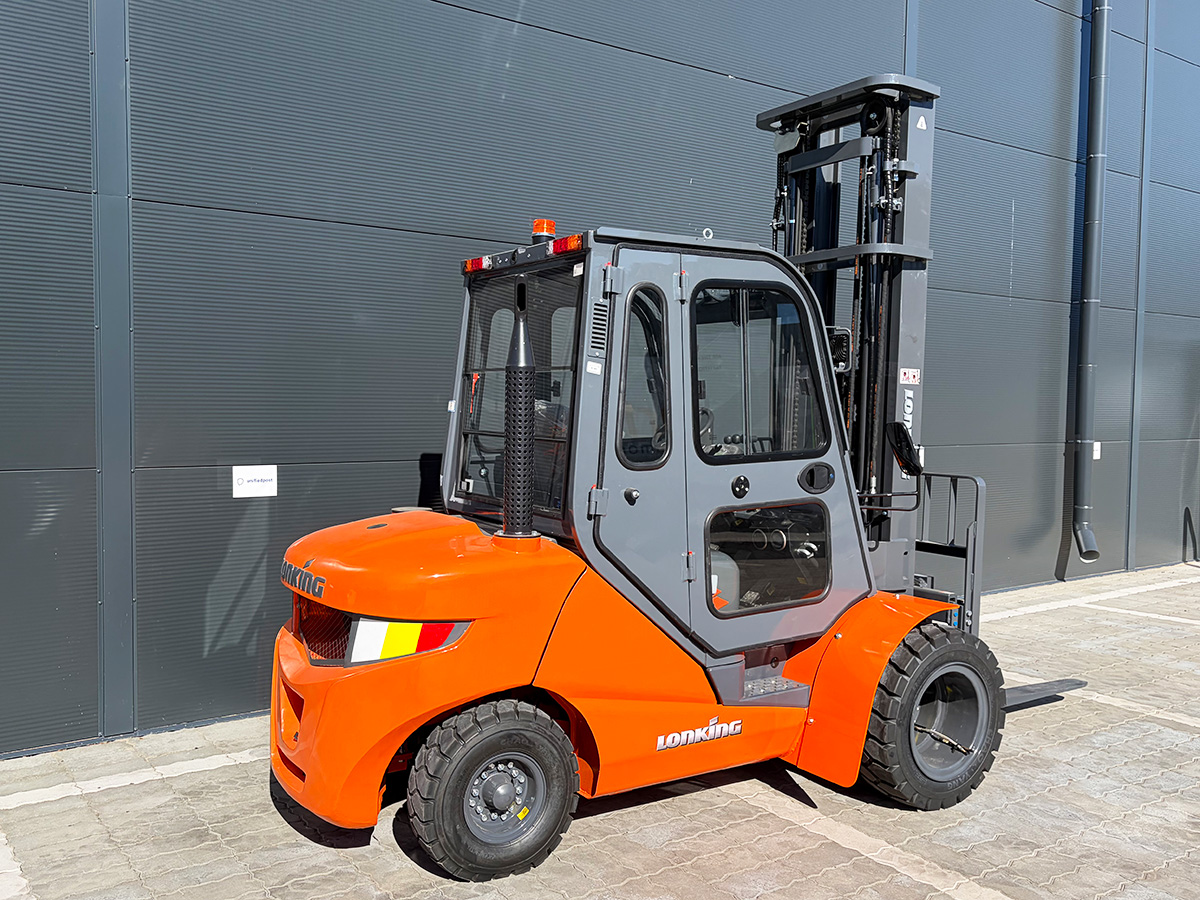
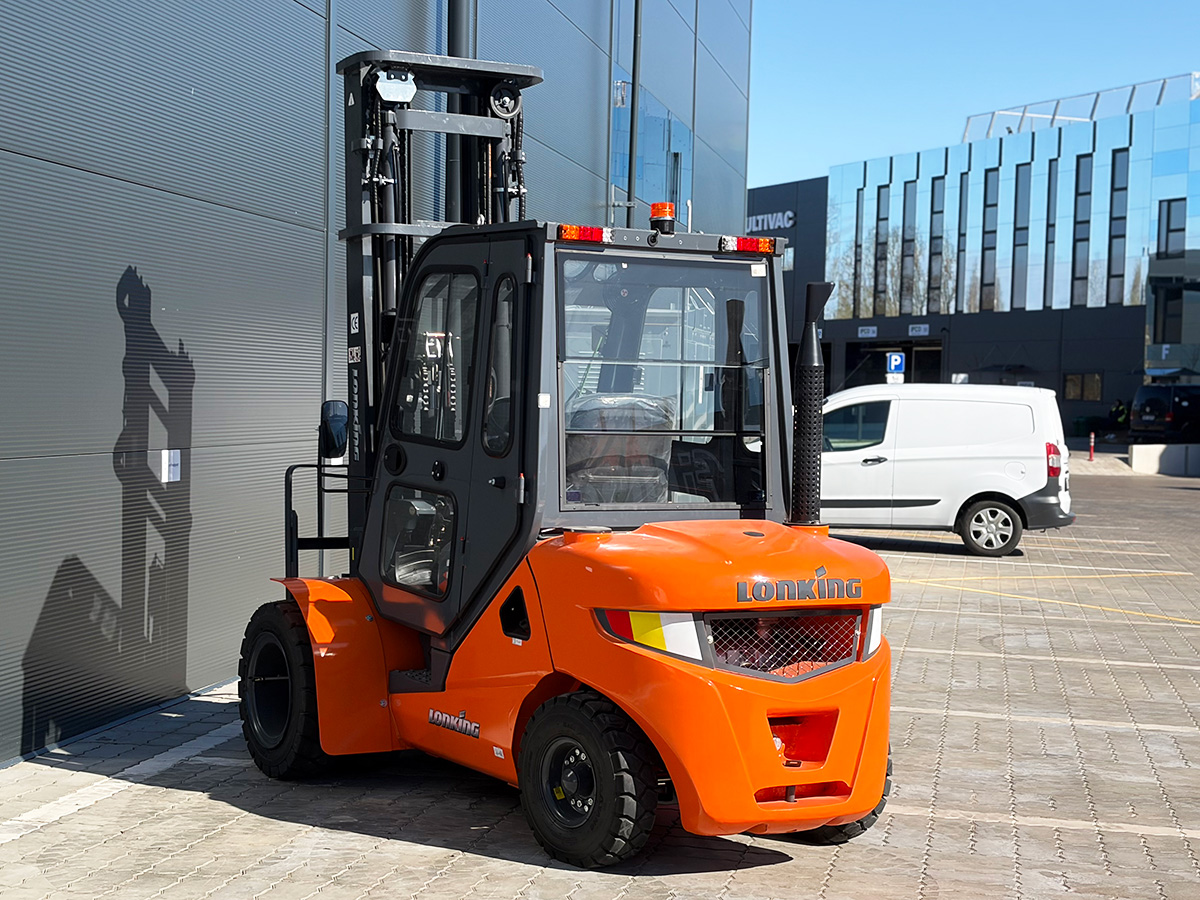
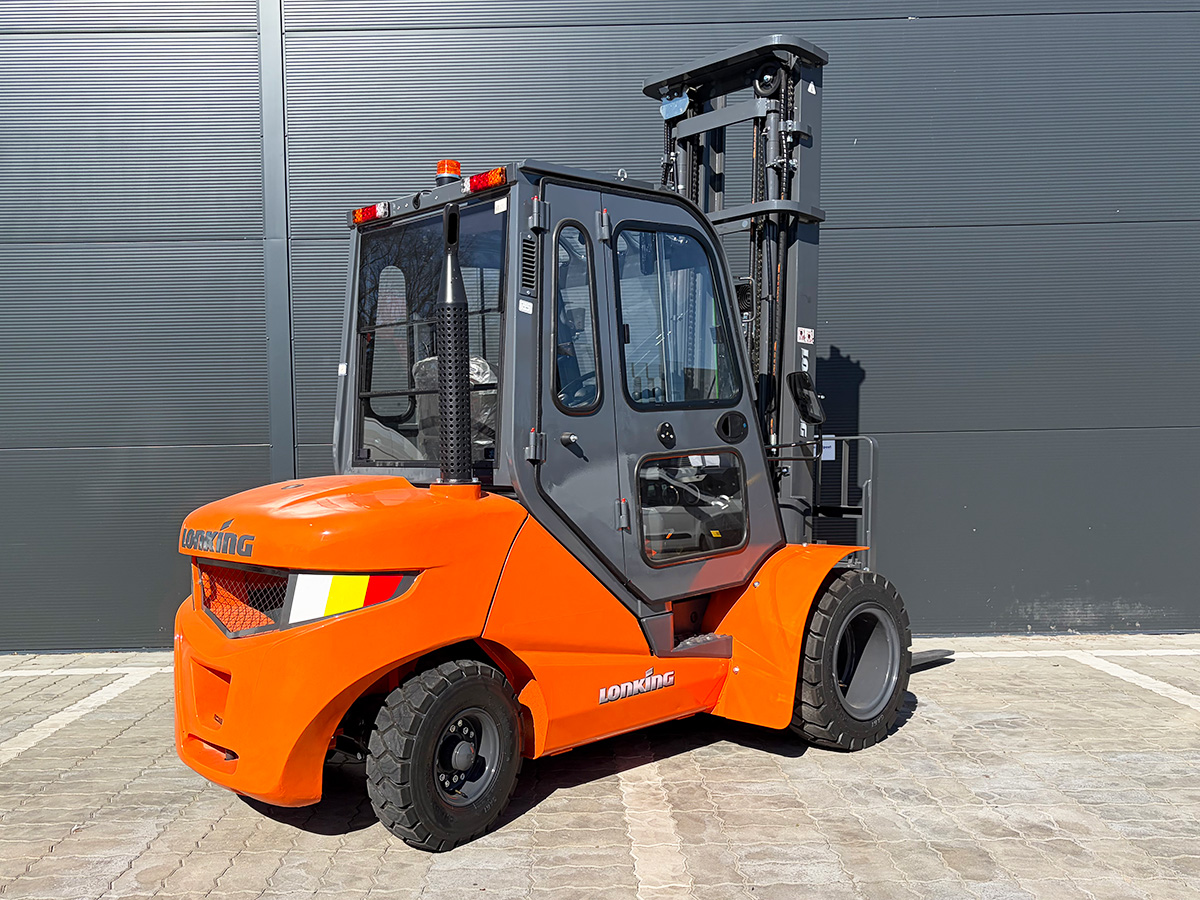
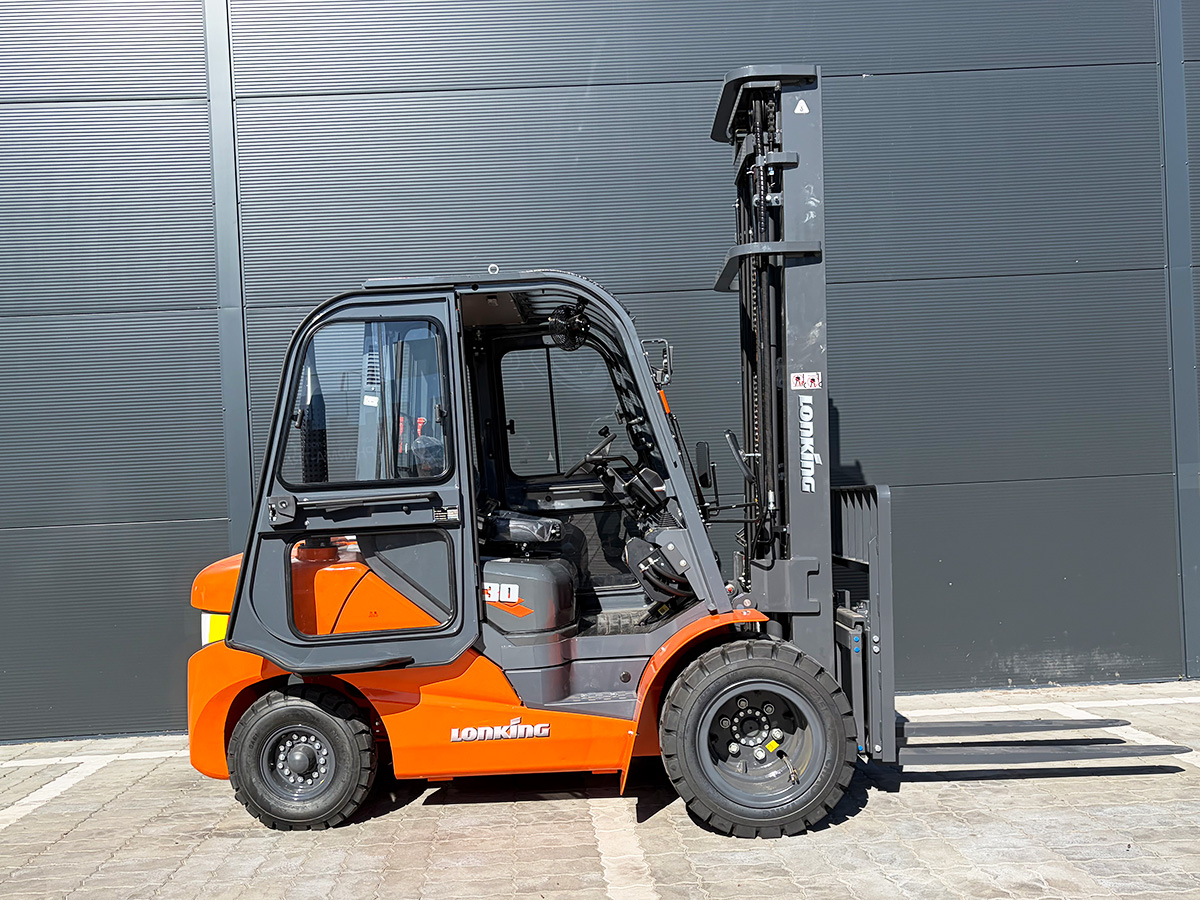
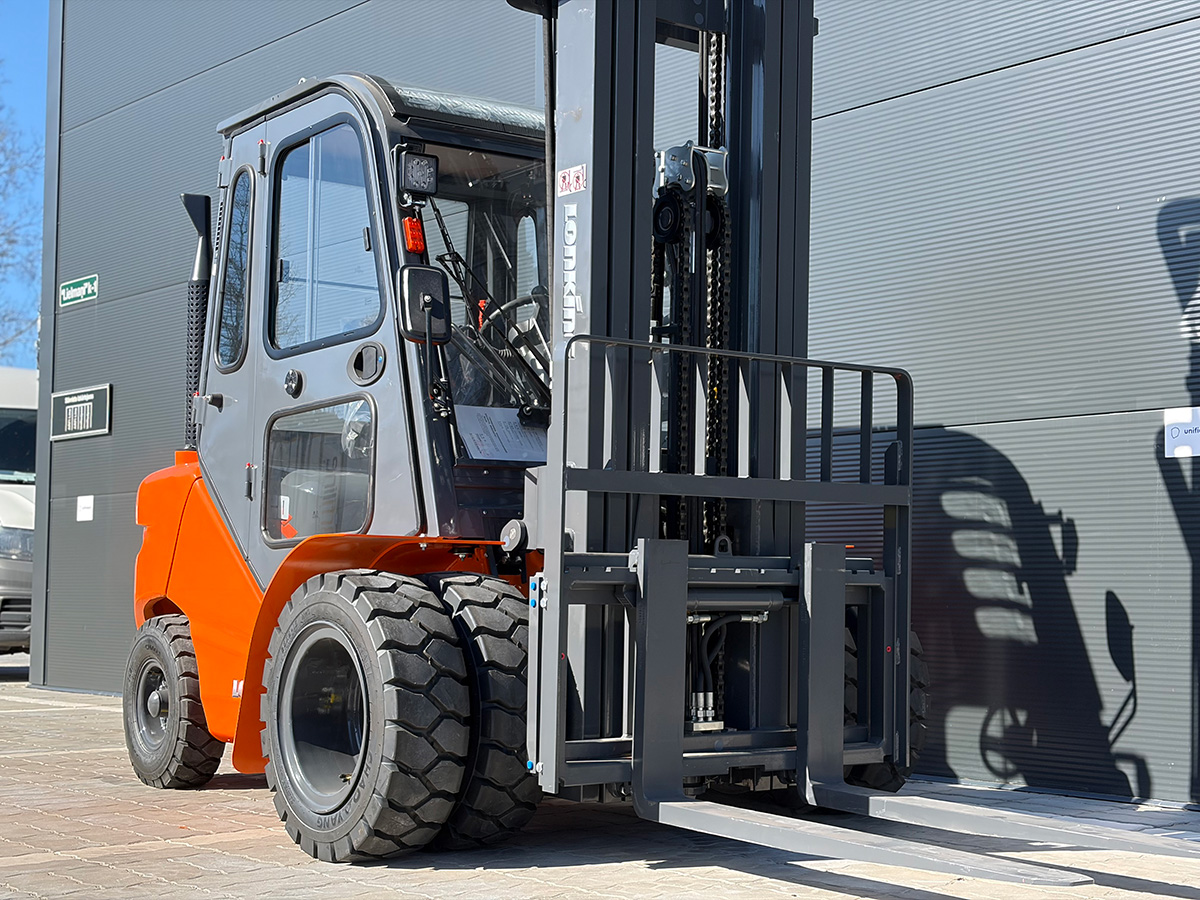
A six-wheel diesel forklift is a counterbalance forklift whose rear axle is fitted with dual wheels on each side, forming a six-wheel configuration. This design significantly improves stability and weight distribution, particularly when handling heavy loads on uneven or soft surfaces. The diesel engine delivers high torque and enables outdoor operation without restrictions related to power supply infrastructure.
The primary difference lies in stability and weight distribution. A four-wheel forklift has four contact points, which is adequate on a smooth concrete floor. A six-wheel model has six contact points - widening the stability zone and reducing ground pressure per individual wheel on soft or uneven surfaces. At the same rated capacity, a six-wheel forklift can operate safely in conditions where a four-wheel counterpart would already have reached its stability limit.
A six-wheel configuration is recommended when: (1) work takes place outdoors on gravel, sand, or earth surfaces; (2) loads exceeding 3,000 kg are handled regularly; (3) the working area includes ramps or uneven terrain; (4) weather conditions - moisture, cold - create an elevated risk of slipping; (5) operations are conducted at a port, terminal, or forestry site. If the majority of work is carried out inside a well-prepared warehouse with a smooth floor, a four-wheel model may be sufficient and more economical.
The standard maintenance intervals are: 250-hour service - oil level checks and lubrication, tyre and lighting inspection; 500-hour service - engine oil and filter replacement, brake and hydraulic inspection; 1,000-hour service - hydraulic oil and fuel filter replacement, transmission check, full safety systems diagnostic. Under normal single-shift operation, the 500-hour service falls approximately every six months. Regular forklift maintenance extends service life and reduces the cost of unplanned downtime.
Six-wheel diesel forklifts in standard configuration are available in capacity classes from 3,000 to 5,000 kg (at a 600 mm load centre). Heavier models - 6,000–8,000 kg - are available as specialist solutions for port and industrial use. When selecting a capacity class, note that the actual safe working load decreases if forks are extended or the load is raised above 1 metre - our specialist will help calculate the optimum class for your specific requirements.
| Cookie name | Active |
|---|
Uzraksti mums.
