
Choosing the right excavator for a road or utility infrastructure project can make the difference between smooth, cost-effective execution and an expensive process full of delays.
Hydraulic excavators are versatile machines, but their technical characteristics, dimensions, and equipment vary significantly depending on the model and manufacturer.
This article explains the key selection criteria, different use scenarios, and why machines such as the CDM6016 and CDM6035 from VVN are becoming increasingly popular among construction companies in the Baltic region.
Road and utility construction includes very different types of work, from digging narrow trenches for water supply or sewage pipes to shaping roadbeds and building drainage systems.
Each of these tasks places different demands on excavator power, size, hydraulic performance, and attachment compatibility.
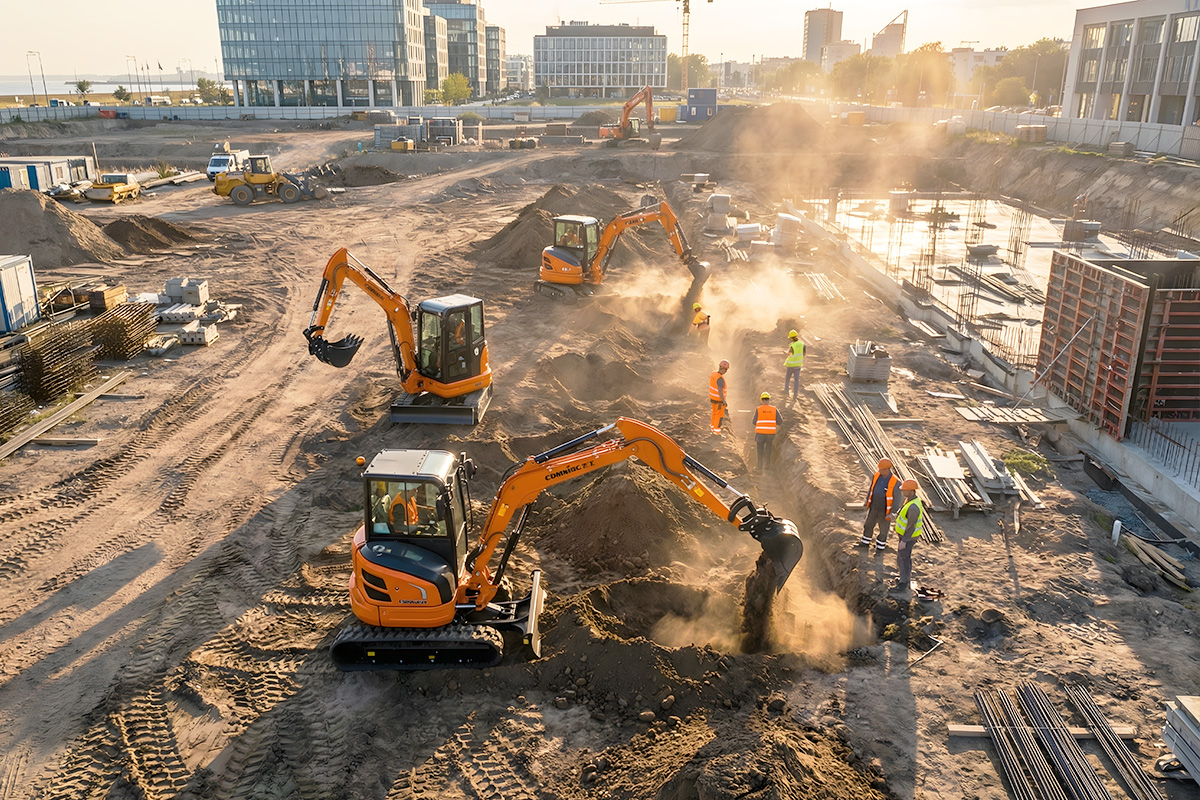
A poorly chosen excavator not only reduces work efficiency, but can also lead to additional costs through excessive fuel consumption, slow progress, site damage, or even the inability to physically access the work area.
That is why, before starting any project, it is essential to evaluate several factors carefully: site access, soil type, digging depth, required extra functions, and budget.
In Latvia and across the Baltics, demand is growing for compact yet powerful machines that can work both in densely built urban streets and in rural areas with unstable ground conditions.
In this context, CDM excavators offered by VVN hold a strong position in the market by combining affordable pricing with quality that meets European and international standards.
Hydraulic excavators can be divided into several categories according to weight and working capacity.
Each category has its own ideal application.
This article focuses mainly on the first two categories because they make up the largest share of demand in Latvia for road and utility network projects.
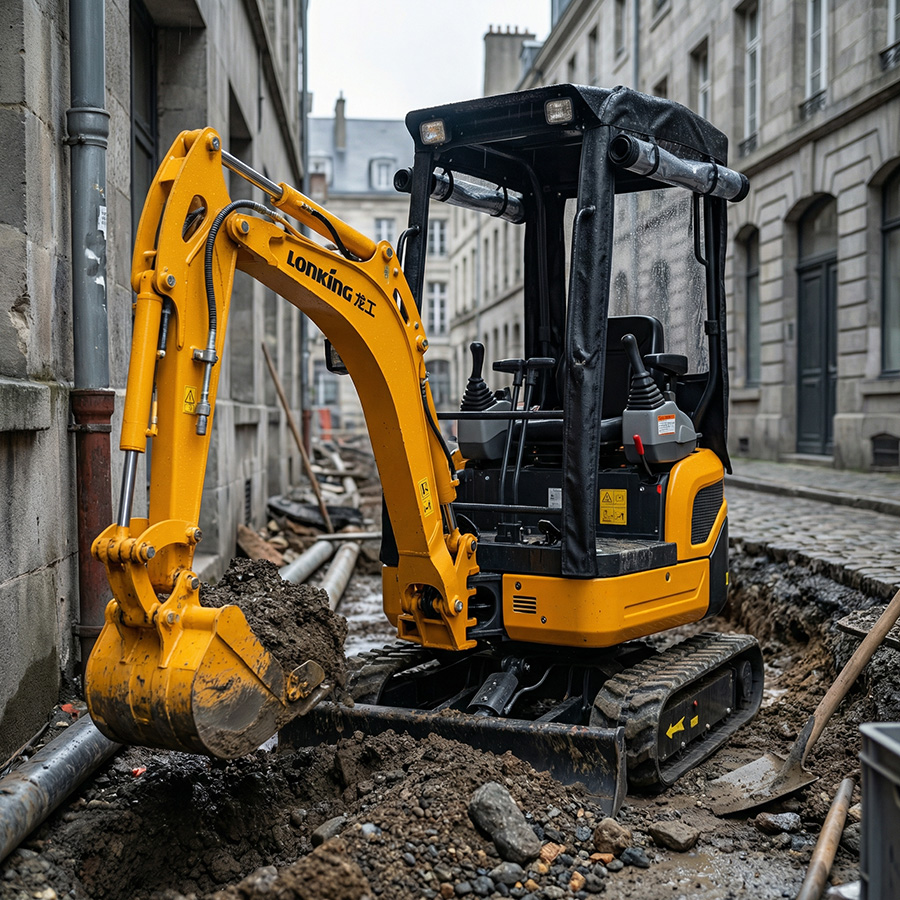
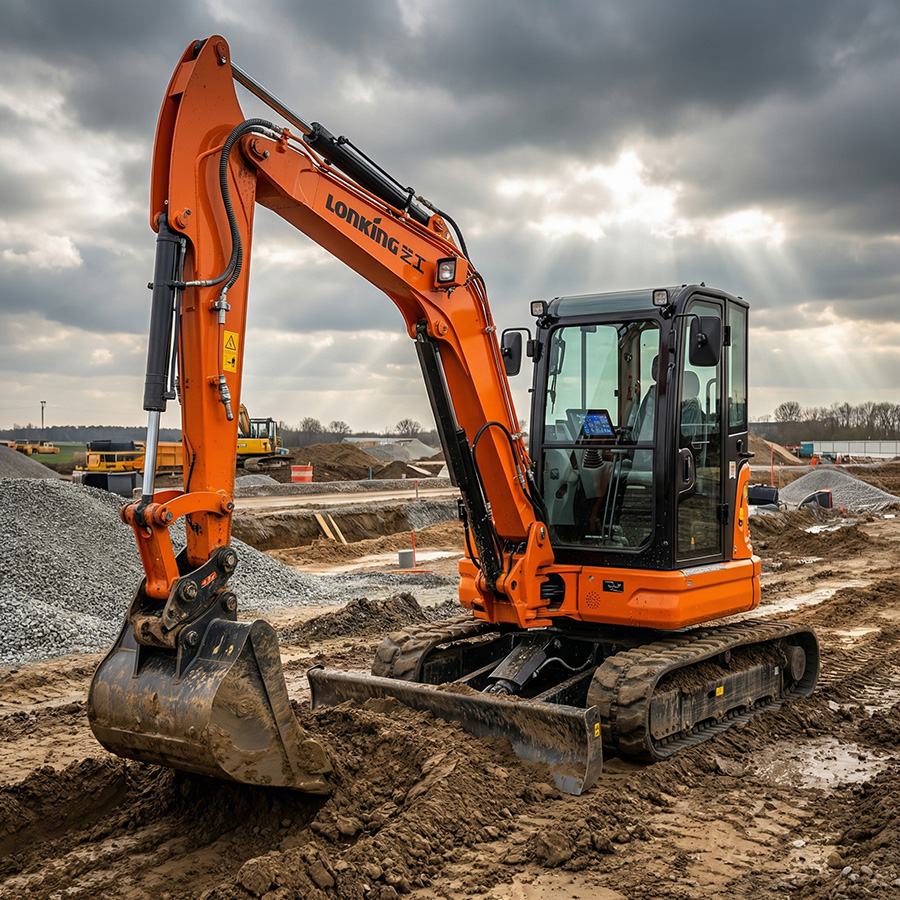
| Parameter | CDM6016 | CDM6035 |
| Operating weight | ~1.6 t | ~3.5 t |
| Digging depth | ~2.0 m | ~3.3 m |
| Ideal worksite | Narrow urban streets | Rural areas and medium-width streets |
| Transport | Standard trailer | Heavier trailer |
| Attachment capability | Limited | Full compact-class capability |
| Fuel consumption | Very low | Moderate |
| Price | Lower | Slightly higher |
| Main application | Utility cables, narrow trenches | Roadbeds, district heating networks |
One of the most overlooked factors in excavator selection is the geotechnical nature of the soil.
Both machines perform well in sandy soil, but loose sand creates unstable trench walls, so trench support systems are often needed.
In such cases, the CDM6035 has an advantage because its hydraulic system can work with heavier trench-support attachments.
Clay soil is sticky, clings to the bucket, and increases load on the hydraulic system.
Here, the CDM6035 is clearly the stronger option because of its higher hydraulic pressure and wider tracks.
The CDM6016 can still work in these conditions, but with lower productivity and higher wear.
This is one of the most demanding scenarios.
Compacted soil or old concrete road base requires a hydraulic breaker or reinforced digging tools.
Among the two models discussed, the CDM6035 is the only truly practical option for such work.
Both models can use breaking attachments in rocky ground, but performance depends strongly on hydraulic capacity.
The CDM6035 is more productive, while the CDM6016 can still handle smaller stones where access is limited.
A hydraulic excavator is so versatile because it can use a wide range of attachments.
Changing the bucket to another tool can completely change the machine’s role on site.
Latvia’s climate places special demands on machine operation and maintenance.
Frozen ground increases the load on the hydraulic system and makes excavation more difficult.
It is important to use winter hydraulic oil, allow warm-up time, check track tension, and make sure seals and covers are intact.
Wet, unstable soil increases the risk of bogging down.
The CDM6035 is more stable due to wider tracks, while the lighter CDM6016 benefits from lower ground pressure.
Dry summer conditions are best for excavation work because the soil is more stable and workdays are longer.
Heavier jobs should ideally be scheduled from May to September.
When buying or renting an excavator, it is important to consider not only the purchase price but also total operating costs over time.
Key cost factors include:
Over the long term, the CDM6035 usually pays off faster on medium-scale projects because its higher productivity offsets its higher operating costs.
The CDM6016 is often the better option for companies focused on urban utility work or private clients.
VVN is described as one of Latvia’s leading suppliers of professional construction and road-building equipment, including CDM hydraulic excavators.
Its advantages include local service, technical consultations, after-sales support, and an up-to-date product range.
If the work takes place in narrow city streets or trenches for utility cables or water supply lines, choose the CDM6016.
If the project requires deeper trenches, larger work volumes, or heavier attachments, the CDM6035 is the more cost-effective investment.


| Cookie name | Active |
|---|
Uzraksti mums.