
The retail and warehousing sector has changed faster over the past decade than ever before. Customer habits that once seemed permanent – queuing at the till, shelves rearranged only once a week, an assistant manually checking every price – now look like relics of the past. Digitalisation, labour shortages and ever-growing customer demand for speed and convenience have pushed companies to find new ways of operating more efficiently without losing service quality.
These challenges are felt especially strongly in the Latvian and Baltic retail market. On one hand, attracting qualified staff is becoming harder and more expensive – a shortage of sales assistants, cashiers and warehouse workers has become an everyday reality for many businesses. On the other hand, customers expect ever faster and more convenient service: long queues at the till or out-of-date pricing information can be reason enough for a shopper to choose a competitor instead. Add to this the pressure created by e-commerce – where an order can be placed in just a few clicks – and it becomes clear why physical shops and warehouses need to find new solutions to stay competitive.
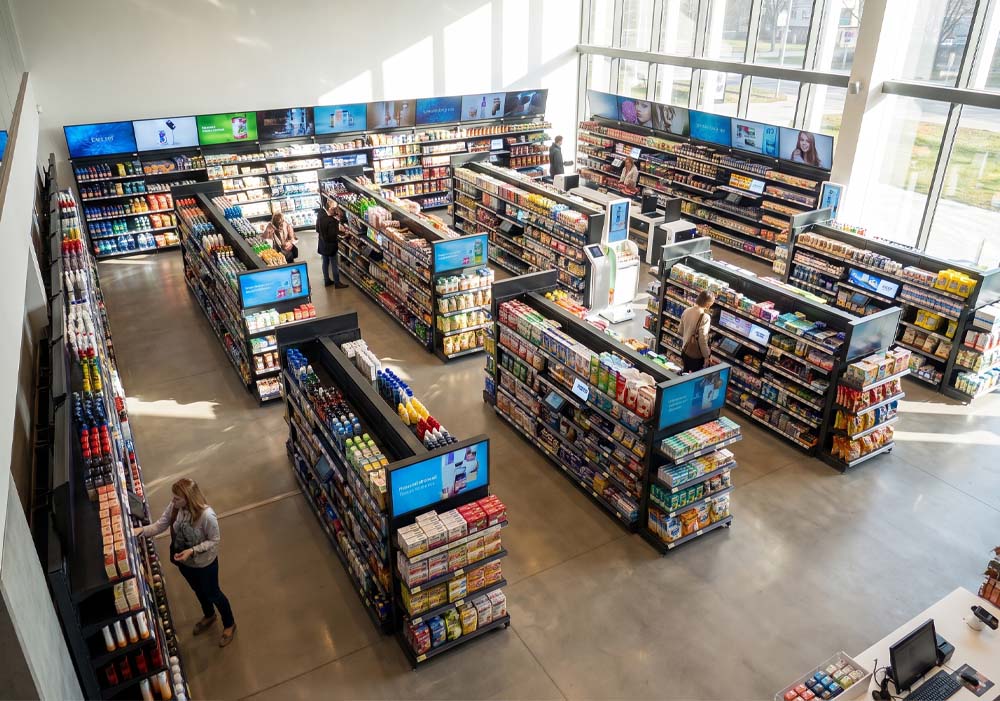
This is where technology comes in. Modern retail equipment is no longer just shelving and trolleys for moving goods: it has become a strategic tool that allows companies to cut costs, speed up processes and improve the customer experience all at once. VVN (Viss Veikaliem un Noliktavām) has been working for years at exactly this intersection – between classic retail equipment and its modern, technologically advanced versions, helping companies across the Baltic and Scandinavian region move on to the next stage of development.
Interestingly, many business owners still see technological modernisation as an expensive luxury available only to large retail chains with unlimited budgets. The reality is different: modern retail equipment has become more accessible, flexible and easier to integrate than ever before, and even a small or medium-sized business can gain real benefit from just one carefully chosen solution. The question is no longer “whether to modernise”, but “where to start and how to do it wisely”.
In this article we look at three solutions currently reshaping the face of retail: smart shop shelving, mobile self-checkout tills and vending machines. Each addresses its own specific problem, but together they form the foundation of a modern, flexible, customer-focused business. If you are a shop owner or business manager looking for ways to make your business more efficient and improve customer satisfaction, this article will help you understand which solution – or combination of solutions – is best suited to your business.
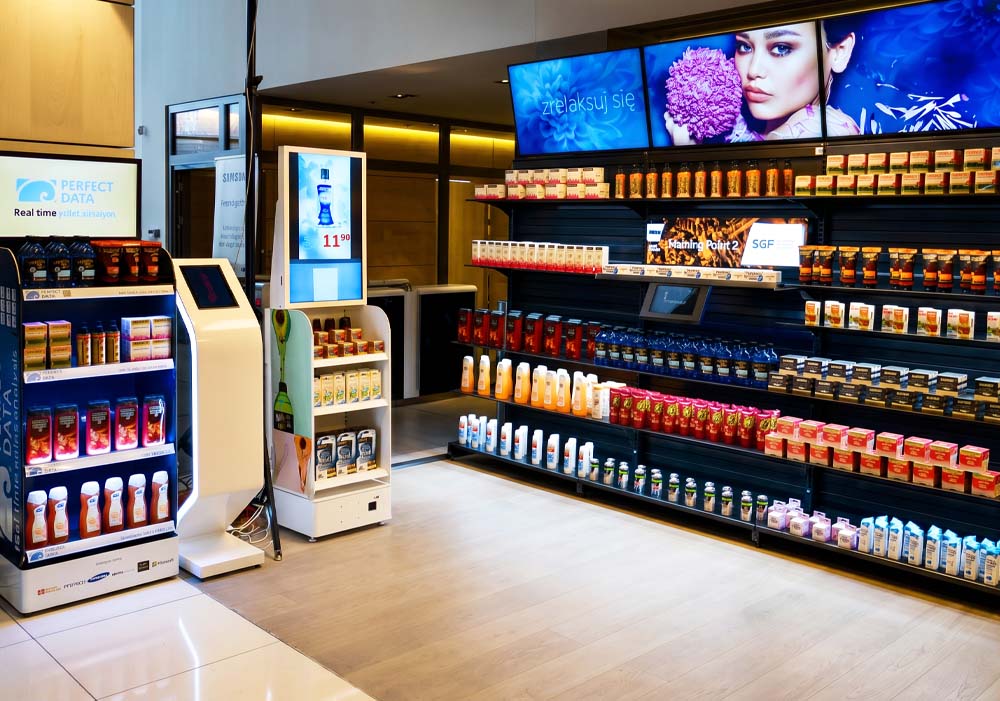
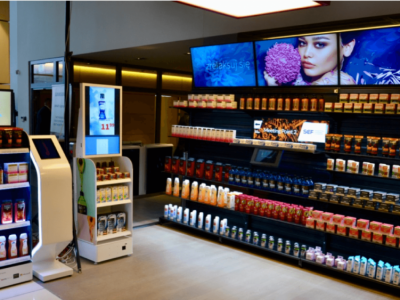
A traditional shop shelf is a static object – goods are simply placed on it, while all the tracking is done by shop staff. Smart shelving changes this paradigm by integrating sensors, weight sensors, electronic price labels and sometimes even cameras directly into the shelf structure. As a result, the shelf becomes a real-time source of information – it “knows” how much stock is on it, how quickly it is being sold, and when it needs replenishing.
In practice, this means the shelf’s sensors continuously track the quantity of stock and, once a set minimum is reached, automatically send a signal to warehouse or shop staff that replenishment is needed.
Electronic price labels, in turn, allow prices to be changed centrally and instantly across the entire shop, or even across an entire retail chain, without the need to manually replace thousands of paper labels. If a company uses dynamic pricing (for example, discounts at certain times of day or in response to competitors’ prices), this feature becomes a significant competitive advantage.
One of the biggest problems in retail is the so-called “empty shelf problem” – a situation where a popular product sells out but no one notices in time, and the customer leaves empty-handed, possibly heading to a competitor. Retail research consistently shows that empty shelves are one of the most common causes of lost revenue: the customer simply cannot buy what is not on the shelf, even though the product may well be sitting in the warehouse. Smart shelving solves this problem by providing near real-time visibility of stock levels, allowing staff to act before a shelf runs empty.
The second problem this solution addresses is time-consuming, error-prone manual work – changing price labels, taking stock, moving goods around. Electronic price labels and automated stock monitoring free up staff time that can be redirected to tasks that genuinely require a human presence – advising customers, selling, and keeping the shop looking its best.
For a business, smart shelving means more accurate stock management, fewer stockouts and, as a result, higher turnover. It also reduces the risk of human error in pricing – a situation where the price shown on the shelf differs from the price programmed into the till system can cause both customer dissatisfaction and legal risk. In addition, the data collected by smart shelves provides valuable insight into shopper behaviour – which products sell fastest, which areas of the shop see the highest activity – and this information can be used when planning product placement and marketing activities.
For customers, the benefit is direct: shelves are fuller, prices are accurate and up to date, and the shopping experience becomes smoother, with no unpleasant surprises at the till. Today’s shoppers place a high value on reliability – when a shop consistently delivers on what it promises, trust in the brand grows.
To better understand the difference, imagine two similar grocery shops on the same street. In one, an assistant checks the shelves once per shift and changes price labels manually; in the other, sensors immediately flag an approaching stockout, and prices update centrally within seconds. Over time, the second shop not only saves dozens of working hours a month but also sells more, because customers less often run into a situation where the product they want simply isn’t there.
Smart shop shelving is particularly useful for high-volume grocery retailers, where stock turnover is fast and any delay in replenishment directly affects revenue. This solution is also an excellent fit for retail chains with multiple locations, since centralised price and stock management significantly reduces the administrative burden. Electronics, homeware and building-materials shops, where the product range is wide and constantly changing, can also gain substantial benefit from automated stock monitoring.
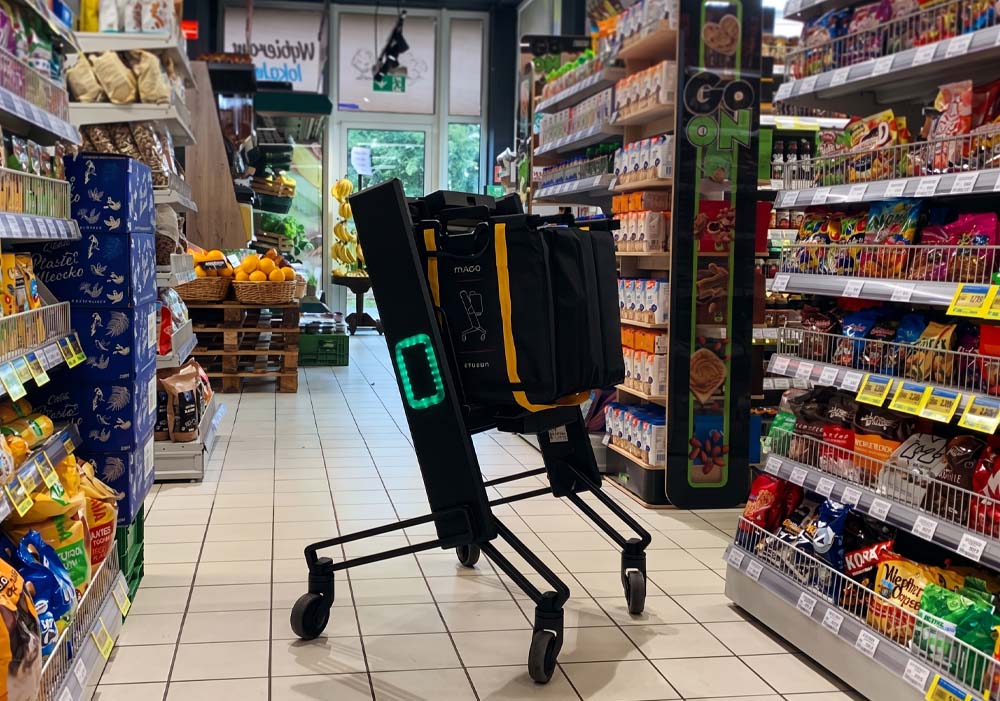
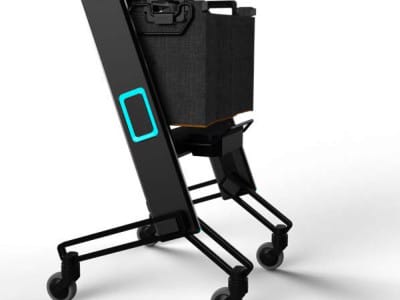
Mobile self-checkout tills are compact, portable terminals that let customers scan, pay for and pack their own purchases – often without stopping at a traditional checkout area at all. Unlike fixed self-checkout units, which require a permanent location and larger infrastructure investment, mobile solutions are flexible: they can be positioned anywhere in the shop, moved to match seasonal demand, or even used in pop-up shops and at events.
In practice, the process works like this: the customer scans items with a handheld scanner or mobile app while moving around the shop, places them in a bag, and, once shopping is finished, pays at the mobile terminal or via their own smartphone.
The system can also be integrated with weighing functionality and security features that keep the process accurate and trustworthy for both customer and shop.
Long queues at the till are one of the most commonly cited reasons customers abandon a purchase or choose to shop elsewhere in future. Especially during seasonal peaks – before holidays, at weekends, during sales – traditional tills simply cannot cope with the flow of customers, and both the customer experience and the shop’s reputation suffer as a result. Mobile self-checkout tills solve this problem by spreading the payment flow across the whole shop floor instead of concentrating it at a single physical point.
The second problem is staff shortages and the costs that come with them. If every till needs its own member of staff, a shop’s operating costs rise quickly, especially for smaller businesses or those running multiple shifts. Mobile tills allow the number of staff needed in the checkout area to be reduced, while redeploying employees to roles where their presence adds more value – advising customers, providing service, and arranging merchandise.
For a business, mobile self-checkout tills mean lower labour costs, more flexible use of space, and the ability to serve more customers at once without additional investment in fixed infrastructure. Because these terminals are easy to move, they are especially useful in situations of seasonal demand or where the shop layout changes frequently.
For customers, the main benefit is time saved and control over their own shopping experience – many shoppers, particularly younger generations, prefer self-checkout solutions precisely because they avoid waiting and save time. Consumer behaviour research repeatedly shows that speed and convenience are among the key factors influencing customer loyalty to a particular shop.
Picture a Friday evening before a holiday, when a shop has twice as many visitors as usual. With traditional tills, the queue can stretch halfway across the shop, causing frustration and even leading some customers to abandon their basket and leave without buying anything. With mobile self-checkout tills, the flow is split across several points at once – customers pay faster, the shop serves more people per unit of time, and the queue that would otherwise cause dissatisfaction practically disappears.
This solution is particularly valuable for medium and large grocery shops, where customer flow is high and queues at the till are a frequent problem. Mobile self-checkout tills are also an excellent fit for shops with variable or seasonal visitor numbers – for example, retail outlets operating during the tourist season, hypermarkets along main roads, or temporary retail points at fairs and events. Fashion and homeware shops, where customers often buy only a small number of items, can also use this technology to speed up service without major investment in fixed infrastructure.
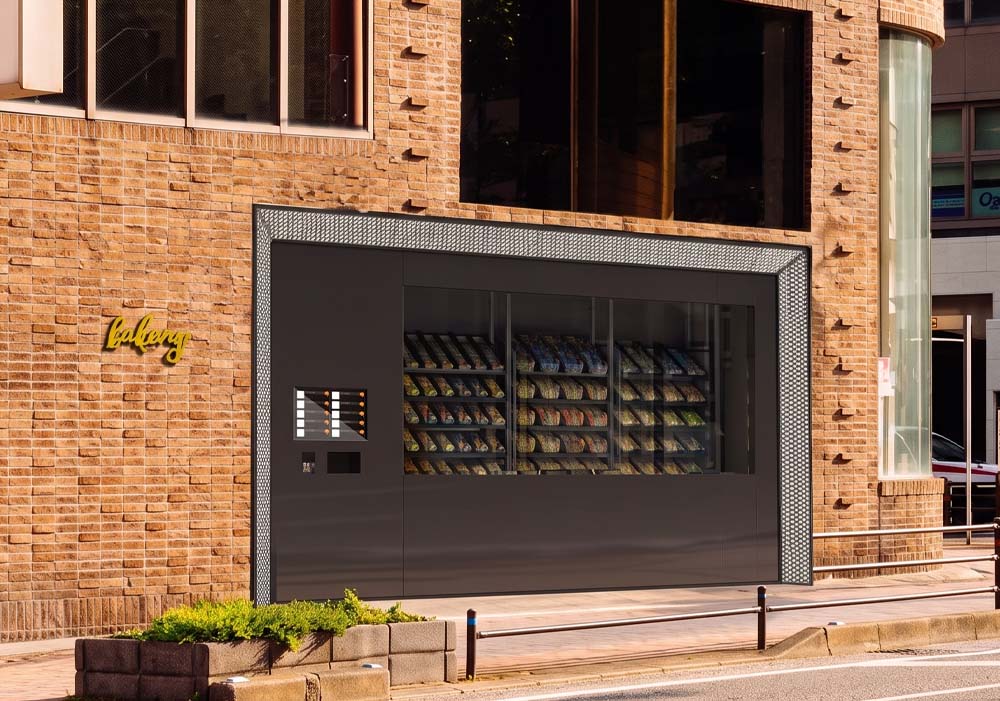
Modern vending machines have moved far beyond the classic idea of a device that only dispenses snacks and drinks. Today’s machines can be equipped with touchscreens, contactless payment systems, remote stock monitoring, and even AI-based recommendation tools that suggest additional products to customers based on their previous purchases. They can sell a very wide range of products – from food and drinks to electronic accessories, hygiene products, and even workplace safety equipment at production sites.
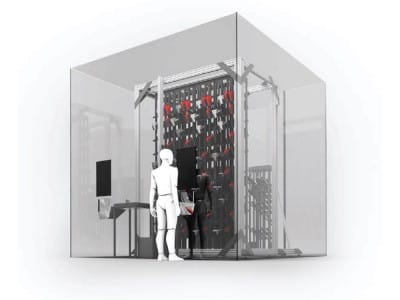
The machine’s operation is based on a simple but effective principle: the product is stored in an internal compartment, the customer selects and pays for the desired item via a screen or button interface, and a mechanism dispenses it automatically. More advanced models also integrate with remote monitoring systems that let a supplier or company see stock levels in each machine in real time, plan restocking routes, and quickly identify technical issues before they affect sales.
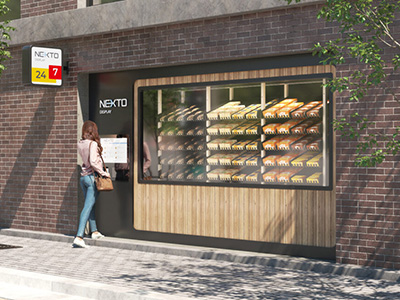
First and foremost, vending machines solve the problem of availability. In many locations – office buildings, production sites, educational institutions, public transport hubs, hotels – it isn’t economically viable to open a full shop, yet demand for quickly accessible products still exists. Vending machines fill this gap, making products available 24 hours a day, seven days a week, without the need for permanent staff on site.
Secondly, they solve the problem of labour costs in locations where maintaining a traditional staffed retail point simply wouldn’t be profitable. Servicing a vending machine requires far fewer human resources – typically just periodic restocking and maintenance – compared with a full-time employee working every day.
For a business installing vending machines, this means an additional revenue stream with relatively low fixed costs and minimal need for a physical presence on site. Vending machines make it possible to reach customers in places and at times that would otherwise be impossible – for example, at night, at weekends, or in more remote areas. Remote monitoring also means a company can optimise logistics, restocking only when genuinely necessary rather than on a fixed schedule, saving both time and fuel costs.
For customers, the main benefit is convenience and availability at any time of day or night, without having to travel to the nearest shop, which might be closed or far away. Modern machines with contactless payment also make the process fast and simple, with no need for cash or complicated steps.
Consider, for example, a production site running two shifts, where night-shift workers have no retail point available to them after 10 p.m. Without a solution, workers either have to travel to a more distant shop before their shift or simply go without the option to buy a snack or drink during their break. With a well-placed, regularly restocked vending machine, this problem disappears entirely – employees can buy what they need at any hour, and the employer gains a happier, more motivated team without the extra cost of running a full canteen.
Vending machines are an excellent solution for managers of office buildings and manufacturing businesses who want to give employees convenient access to snacks and drinks without the cost of running a full canteen. They are also useful for educational institutions, healthcare facilities, hotels and sports clubs, where customer flow is constant but uneven throughout the day. In addition, vending machines work well in specialised retail niches – for example, dispensing workplace safety equipment at production sites or selling spare parts at car repair shops, where fast access to a specific product range is needed without a permanent sales assistant on site.
Having looked at three different solutions with different features and applications, the natural question is: which one is right for your business? There is rarely a single, clear-cut answer, but there are several practical criteria that can help you make a well-considered decision.
Assess your customer flow and its nature. If your shop regularly experiences queues at the till, especially during peak hours, mobile self-checkout tills may be the fastest way to improve the situation without major structural changes. If, on the other hand, the main problem is empty shelves and the complexity of stock management, start with smart shelving solutions.
Analyse where and when your customers want to buy products. If you have customers or employees in locations without permanent access to a shop – an office, a production site, a hotel – or who need access to products outside normal working hours, vending machines can open up a new revenue stream with a relatively small initial investment.
Take the scale of your business and your growth plans into account. Small and medium-sized businesses often benefit from starting with a single, carefully chosen solution and gradually expanding its use, rather than investing in all three directions at once. Large chains with multiple locations, by contrast, often benefit more from a comprehensive approach, where smart shelving, self-checkout tills and vending machines work together to create a single, technologically advanced customer experience across every location.
Calculate the long-term return on investment, not just the initial cost. Technological solutions often require a larger upfront investment than traditional equipment, but savings on labour costs, reduced losses from empty shelves, and increased customer satisfaction typically pay for themselves within a relatively short time. It’s advisable to request a consultation that includes specific calculations based on the particulars of your business, rather than relying solely on general assumptions.
Don’t over- or underestimate your technological readiness. When introducing new equipment, it’s also important to prepare staff and customers for the change – clear communication about how the new system works significantly reduces resistance and speeds up the transition to the new solution.
Finally, the best way to make the right decision is to consult industry specialists who can assess your specific situation, floor layout, customer flow and business goals, and recommend a solution – or combination of solutions – that genuinely matches your needs, rather than a one-size-fits-all approach.
In practice, the most effective path often turns out to be a gradual rollout: start by choosing one solution for the area of the shop or warehouse where the problem is most acute, evaluate the results over the first few months, and only then decide on expanding to other areas or locations. This approach reduces risk, allows for a more accurate calculation of the real return on investment, and lets the solution be adapted based on actual data rather than forecasts alone.
The retail and warehousing sector continues to change at a rapid pace, and companies that adapt to new technologies in good time gain a significant advantage over competitors who stick with outdated solutions. Smart shop shelving, mobile self-checkout tills and vending machines are not just modern devices – they are tools that help solve real business problems: labour shortages, growing customer demands, and the need for more efficient use of resources.
Whether you run a small neighbourhood shop, a large retail chain, or a manufacturing business looking to improve staff convenience, the right choice of retail equipment can become an important pillar of your growth. The most important thing is to start with a clear understanding of your needs and choose a reliable partner that offers not just quality equipment, but professional guidance throughout the entire process.
The VVN team, with years of accumulated experience in retail and warehouse equipment, is ready to help you find exactly the solution that matches your business’s particulars, scale and goals – whether that’s introducing a smart shelving system, integrating mobile self-checkout tills, or installing vending machines in new locations. Don’t put off modernising your business – every day without effective solutions can mean missed opportunities and dissatisfied customers.
Explore the full range of retail and warehouse equipment offered by VVN and get an individual consultation on how these solutions can help your business specifically. Our specialists are ready to assess your needs and recommend the right equipment to make your business more modern, efficient and competitive in the near future.
| Cookie name | Active |
|---|
Uzraksti mums.