
When your business handles loads weighing several tonnes every single day, there is no room for compromise – you need a diesel forklift that works just as hard as your team. The Lonking LG60/80/100DTBIII series has been designed precisely for this purpose: reliable, powerful, and durable industrial equipment for logistics managers, manufacturing business owners, and warehouse supervisors for whom operational continuity matters just as much as raw lifting capacity.
These diesel forklifts are available in Latvia in three models – LG60DTBIII (6,000 kg), LG80DTBIII (8,000 kg) and LG100DTBIII (10,000 kg) – and are CE-certified in compliance with the European Machinery Directive 2006/42/EC. Whether you operate a metal logistics base in Riga, a timber yard in Vidzeme, or a building materials warehouse with an unpaved surface, this equipment is built to handle Latvia’s climate and demanding working conditions. VVN, Latvia’s leading industrial forklift supplier with more than ten years of experience, provides full support: from consultation and equipment selection through to delivery and maintenance anywhere in the country.
You get a better offer?
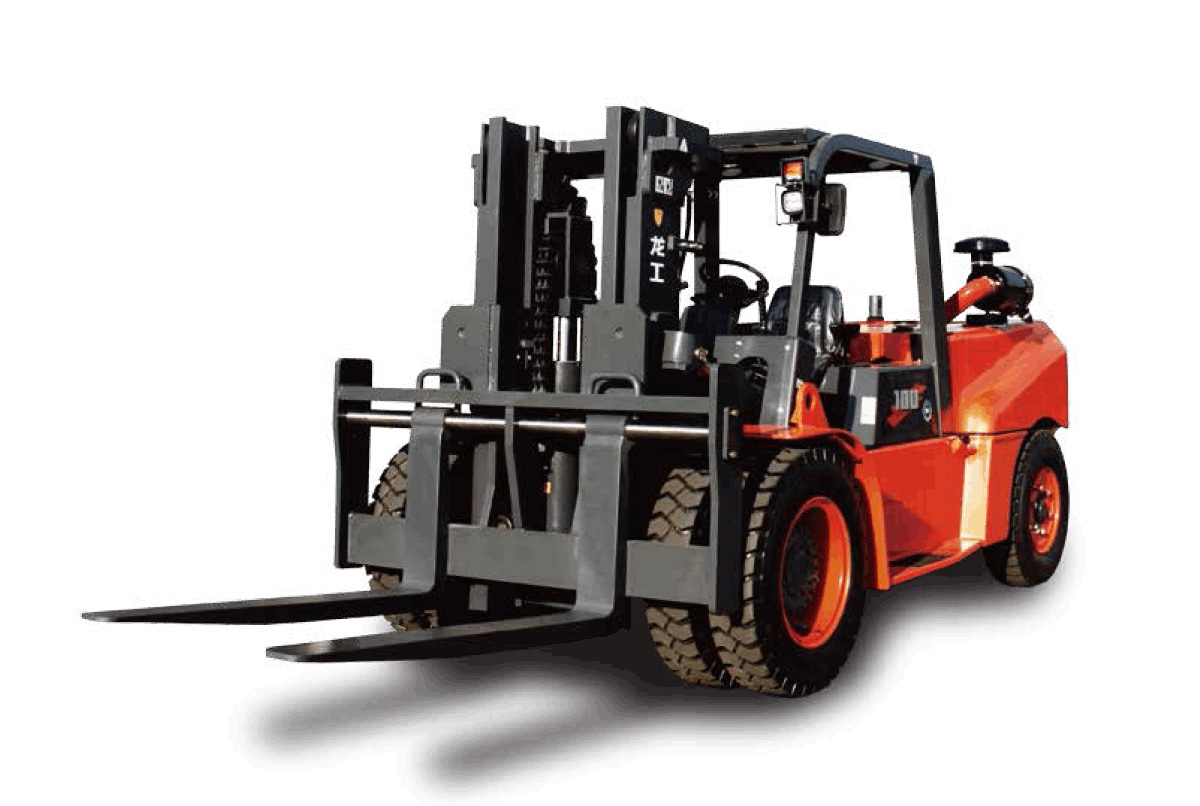
A Vidzeme forestry business processes tens of tonnes of sawn timber, beams, and logs every day. An outdoor yard with gravel surfacing and seasonal mud in spring places high demands on equipment durability. The LG80DTBIII, with its 8,000 kg lifting capacity and pneumatic industrial tyres, allows the operator to lift long timber pallets safely, rotate loads quickly between the drying yard and the warehouse, and load timber lorries in any weather conditions. The result: fewer stoppages, faster loading, and a consistent work rhythm during the peak season.
The port of Riga and its surrounding industrial areas regularly handle steel sheets, structural components, and heavy assemblies weighing up to 6-10 tonnes. The LG100DTBIII, with a lifting capacity of 10,000 kg, enables operators to lift and position massive steel coils with precision, unload containers, and prepare cargo for export. The robust chassis and reliable hydraulic system ensure dependable performance across multiple consecutive shifts, even when load volumes surge sharply.
A large building materials warehouse with mixed flooring – concrete inside and gravel outside – chose the LG60DTBIII as an all-year-round solution. In spring and summer, the forklift accelerates the rotation of paving stones, bricks, and concrete blocks between the yard and the warehouse; in autumn and winter, it helps reorganise stock flexibly. Fuel efficiency and straightforward maintenance keep operating costs under control even under heavy workloads.
Directive:
2006/42/EC – Machinery Directive (MD)
2000/14/EC – Noise Directive (NO)

The products we offer have all the necessary CE marking certification marks, which ensure compliance of the products in the European Economic Area.
In the heavy-duty segment, diesel forklifts remain one of the most popular choices in manufacturing, port logistics, and building materials handling, as they combine high lifting capacity, excellent durability, and uninterrupted operation without lengthy recharging breaks. For businesses that need to move heavy loads every day, the key priorities are predictable performance and consistent power throughout the entire shift.
This is precisely why a diesel forklift often proves to be the most dependable investment in environments where work takes place outdoors, on uneven surfaces, or in changeable weather conditions. In Latvia, this means the ability to operate in rain, frost, wind, and during a demanding peak season without any drop in productivity. If your business needs a reliable solution for heavy loads, VVN offers Lonking diesel forklifts that can be configured to suit specific working conditions and sites.
A diesel forklift is industrial lifting and handling equipment designed for use outdoors or in well-ventilated working environments. It is widely used in warehouses, ports, timber yards, metalworking facilities, and building materials depots where high lifting capacity, durability, and the ability to operate for extended periods without recharging breaks are essential.
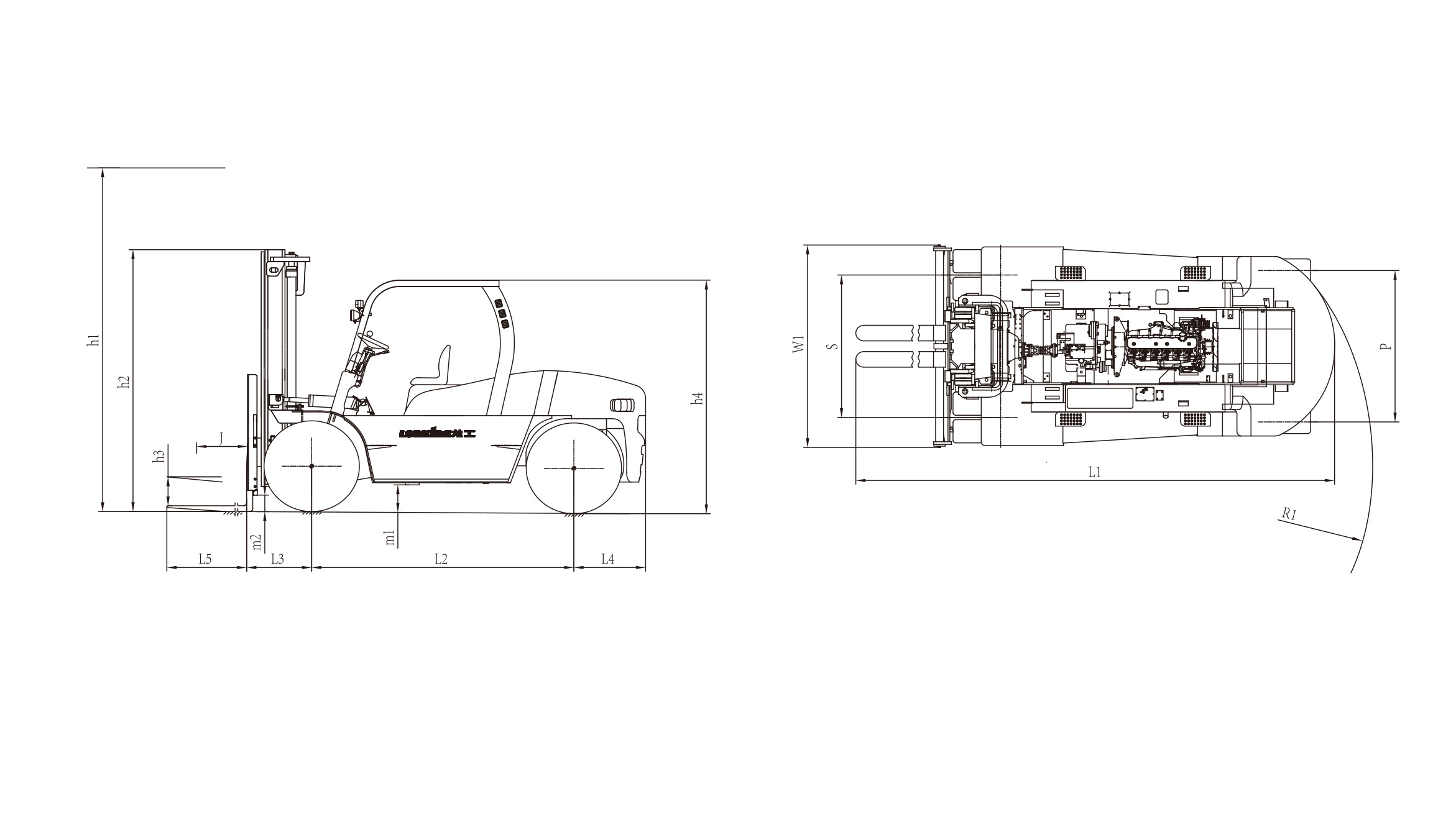
The LG60/80/100DTBIII series comprises three models with lifting capacities of 6,000 kg, 8,000 kg, and 10,000 kg respectively. This allows you to select the model best suited to your specific loads and work intensity. When making your choice, it is important to consider not only the weight of the load but also its dimensions, centre of gravity, and the required mast lifting height.
Yes, but only where adequate ventilation is in place and occupational health and safety requirements are met. A diesel engine produces exhaust fumes, so in enclosed or poorly ventilated spaces an electric forklift may be more appropriate. In mixed working environments where the forklift frequently moves between indoor areas and outdoor yards, however, a diesel model is often the more practical choice.
Diesel forklifts generally deliver greater power, higher lifting capacity, and better suitability for outdoor work, whereas electric models are quieter and produce no direct emissions. If your business requires continuous operation in the heavy-load segment and downtime for battery charging is unacceptable, a diesel forklift is frequently the more efficient option.
Maintenance involves regular checks of engine oil, filters, hydraulics, tyres, brakes, and the cooling system. Timely servicing reduces the risk of unplanned downtime and keeps the equipment in a safe working condition. In businesses with high-intensity operations, it is advisable to schedule service intervals in advance so that the forklift is ready for use during peak periods.
Yes, the Lonking diesel forklifts in the LG60/80/100DTBIII series are CE-certified. This confirms compliance with European safety, health, and environmental requirements - which is significant for businesses in Latvia both from an operational safety perspective and in terms of regulatory documentation.
Yes, VVN delivers diesel forklifts throughout Latvia, including Riga, Daugavpils, Liepāja, Jelgava, Valmiera, and other locations. This allows businesses to receive their equipment promptly regardless of their location, while retaining the benefit of local communication and consultations in Latvian.
The optimal mast lifting height depends on the racking height, the type of load, and the physical constraints of the working space. If loads are stored on high racking or non-standard premises need to be served, the lifting range must be carefully assessed. The most practical approach is to select a mast with a modest margin above the maximum everyday working height.
| Cookie name | Active |
|---|
Uzraksti mums.
