
Any company that stores goods, materials, or documents will eventually face the same challenge: how to organise storage space so that it functions effectively today without hindering growth tomorrow. Warehouse equipment is often purchased once and used for many years, which means a poor choice can prove costly – both financially and in lost time.
In recent years, a growing number of companies in Latvia, the Baltic states, and Scandinavia have been choosing galvanised metal shelving systems as the foundation of their warehouse infrastructure. There are several reasons for this. First, metal is far more durable than wood and easier to maintain than plastic. Second, the galvanisation process provides additional protection against corrosion and moisture, which is especially important in the Baltic climate with its temperature fluctuations and high humidity. Third – and this is the primary focus of this article – modern metal shelving systems are designed as modular structures that can be expanded, reduced, or completely reconfigured without replacing all the shelves.
This article takes a detailed look at what modularity means in a warehouse context, which of VVN’s galvanised shelving series are suited to different storage scenarios, and provides an honest assessment of both the strengths and the limitations of these systems.
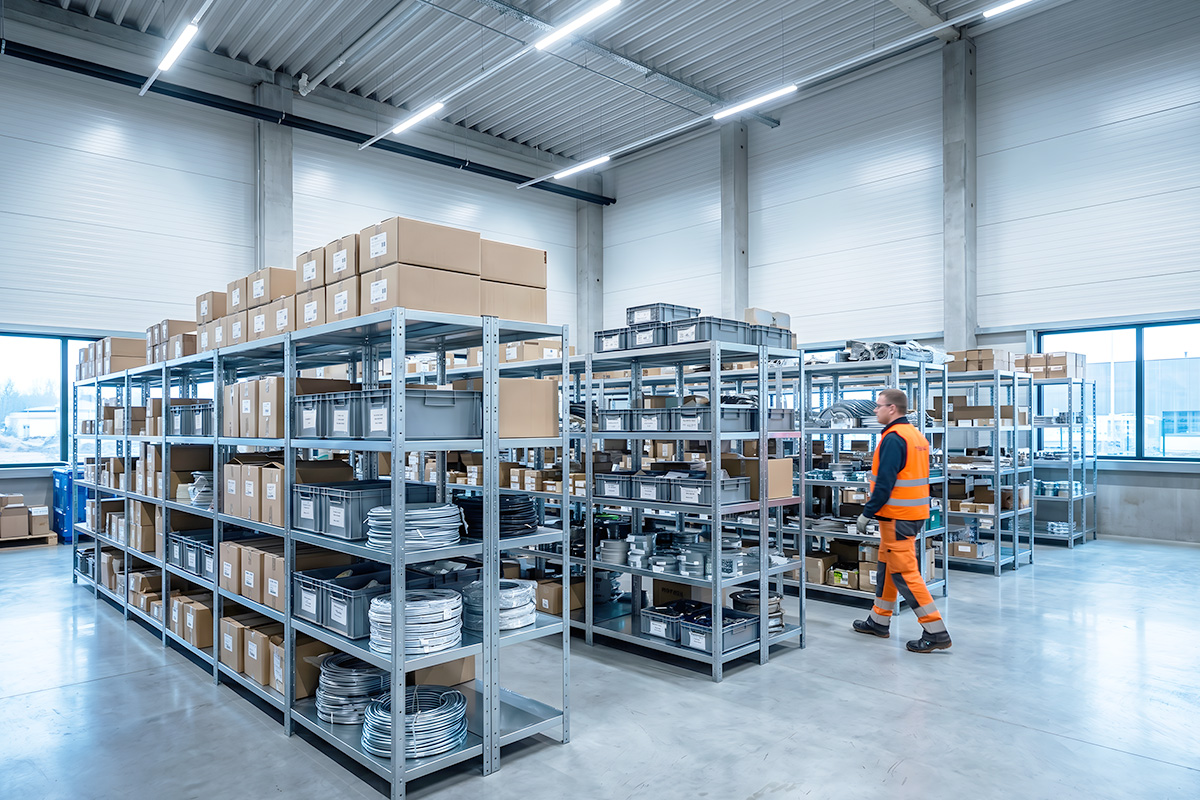
The term ‘galvanised’ means that the metal surface has been treated with a zinc coating, which acts as a protective barrier against moisture, oxygen, and other factors that promote corrosion. Several galvanisation methods exist, but the most common in industrial production are hot-dip galvanisation (the metal is submerged in molten zinc) and electrolytic galvanisation (an electric current deposits zinc onto the metal surface).
What does this mean in practice? Let us examine it in concrete figures and conditions.
A standard painted or lacquered metal shelf begins to rust as soon as any part of its surface – even at the site of a minor scratch – comes into contact with moisture. The rusting process starts locally but spreads over time. On a galvanised surface, the zinc coating provides what is known as a cathodic protection effect: even when a small scratch appears, the zinc protects the underlying material from corrosion. This means that a galvanised shelf is far more resistant to everyday wear and accidental impacts, which are inevitable in production and warehouse environments.
The second practical advantage is ease of cleaning. Galvanised surfaces are smooth, which means that dust, oil, and other contaminants can be wiped off easily with a damp cloth or cleaning agent. This is significant not only from a hygiene standpoint, but also means that shelf maintenance does not require costly labour time.
In VVN’s galvanised shelving systems – whether the modular series for standard needs, the MT series for heavier loads, or the systems with maximum load capacity – galvanisation is the baseline standard, not an optional extra. This ensures that in each of these series you receive the same high level of protection against environmental conditions, regardless of the size or configuration selected.
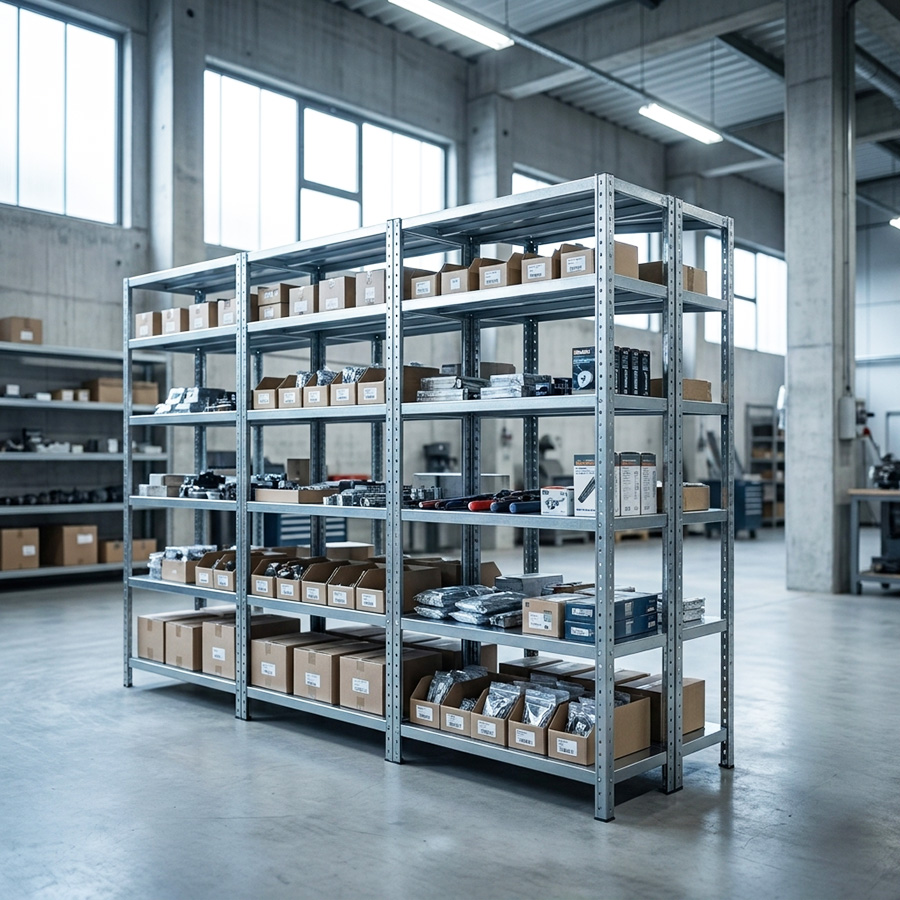
VVN offers three main lines of galvanised metal shelving systems, each with its own strengths and optimal area of application.
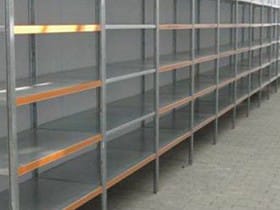
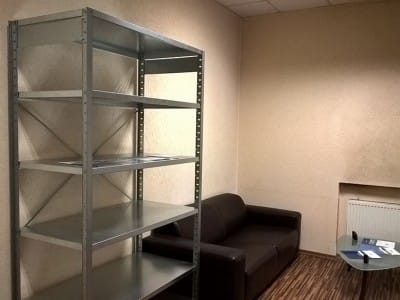
This is VVN’s most flexible and widely used series for everyday needs. It is ideally suited to warehouses, archives, offices, retail premises, car repair workshops, and domestic garages. Uprights are available in heights ranging from 1,600 mm to 3,000 mm (with other heights available on request), and shelves in widths from 800 mm to 1,200 mm and depths from 300 mm to 600 mm.
The load capacity per shelf level is up to 130 kg (in a 1000×500 mm size), while the load capacity per upright reaches 1,000 kg. Prices start at approximately €68 per complete section (H-2000, 1000×500 mm), making this series an affordable and cost-effective solution for small businesses and private users.
Uprights are available in standard heights of 2,000 mm, 2,400 mm, and 3,000 mm, and can be combined with shelves of various widths and depths to create a customised configuration. Cross-braces for additional stability are also available separately, as are levelling feet that protect the floor and prevent the shelving from sliding.
The MT series is designed for businesses and storage facilities where greater load capacity and a more durable structure are required. Each shelf level in this series can bear a load of between 30 kg and 400 kg depending on the configuration, making it suitable for storing significantly heavier materials.
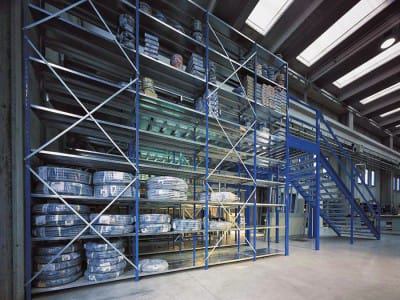
Upright height ranges from 2,000 mm to 7,000 mm, enabling full use of the vertical space in high warehouse halls. Shelf width varies from 1,000 mm to 1,500 mm, with depth from 300 mm to 600 mm. This series also features a comprehensive range of accessories: dividers, side panels, label holders, and wheel kits for mobile repositioning.
This is VVN’s heaviest and most industrial shelving series, with a load capacity of 150 to 250 kg per shelf. It is intended for industrial warehouses where heavy machinery, tools, or materials are stored.
Shelf width is available in four sizes: 750 mm, 900 mm, 1,000 mm, and 1,200 mm; depth ranges from 300 mm to 800 mm – a considerable depth that accommodates oversized goods. Uprights are available in standard heights from 1,000 mm to 2,900 mm, with other heights available on request.
The system includes a comprehensive range of components: upright connectors in five depths (300–700 mm), top braces for structural rigidity, cross-braces, hooks, levelling feet, and other accessories. This is a complete industrial solution designed for demanding operating conditions.
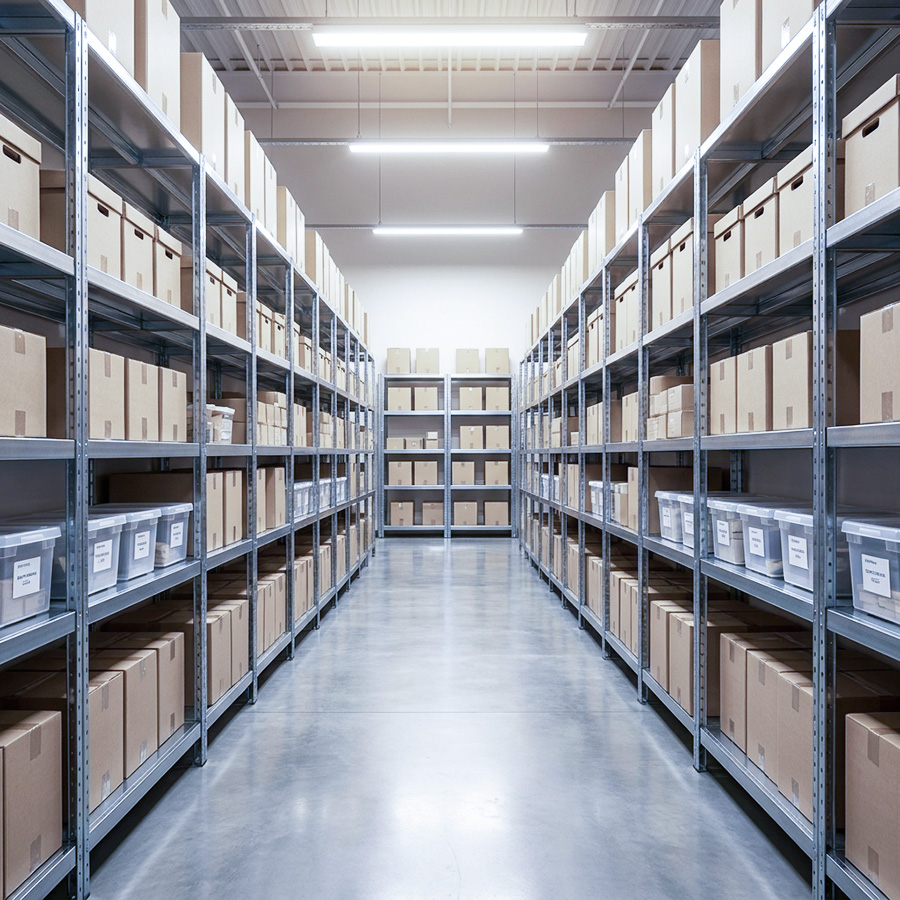
One of the most common mistakes companies make when purchasing warehouse equipment is thinking only about today’s needs. A business may start with a small inventory, but two or three years later the product range has doubled and the existing shelves can no longer provide the required capacity.
This is precisely where modular metal shelving systems offer a significant strategic advantage. Modularity means that each element of the system – upright, shelf, connector, foot – is a separate, compatible unit. This creates at least four important possibilities.
If additional floor space becomes available in the warehouse, there is no need to purchase an entirely new shelving system. It is sufficient to buy additional uprights and shelves and attach new sections to the existing row. Since VVN systems use standardised dimensional series, new sections will match the already-installed elements precisely.
In practice, this means a business can start with two or three sections and expand gradually, purchasing new components only when a genuine need arises. This significantly reduces the initial investment and allows equipment procurement to be planned in line with business growth.
For many businesses, vertical space is an underutilised resource. In a modular system, shelves can be installed all the way to the top of the uprights (up to 3,000 mm as standard, or 7,000 mm in the MT series), making full use of the room height. If shelves are initially installed at only three levels but the free space above allows a fourth level to be added, the adjustment is straightforward – it is simply a matter of adding an extra shelf and, if necessary, a taller upright.
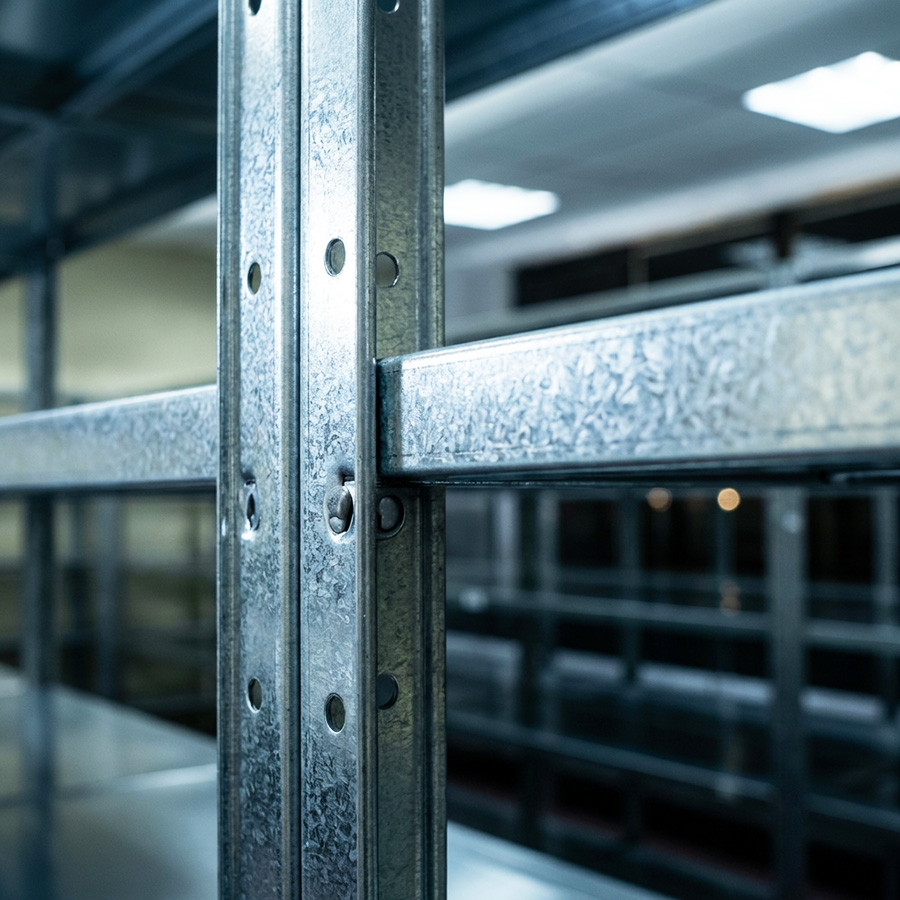
In the best modular shelving systems, shelf surfaces can be positioned at different heights depending on the size of the goods being stored. This means there is no need to purchase new shelves when the dimensions of stored items change – it is simply a matter of repositioning the shelf to a different hole in the upright’s perforation. This capability is invaluable for businesses with a changing product range, such as e-commerce warehouses or companies with seasonal trading patterns.
VVN’s shelving series also allow different systems to be combined within a single warehouse. For example, the MT series or the high-load-capacity system can be used for heavier goods, while the standard modular series can handle smaller items and documents. Since both systems follow the same assembly principles, they can be positioned side by side within a single, logical workflow.
Theory is useful, but real decisions are made in specific contexts. Let us examine five common scenarios, assessing the advantages and limitations of galvanised metal shelving systems in each case.
Situation: A small online retailer or wholesaler with a 150–300 m² warehouse, starting with a limited product range but planning for growth.
Strengths. VVN’s modular galvanised shelving system is ideal for this scenario precisely because of its modular design. It is possible to begin with a minimal configuration – for example, six H-2000 sections, 1000×500 mm – and expand incrementally. Each section can be purchased separately, making capital expenditure gradual and predictable. The galvanised surface ensures longevity even if the warehouse is not regularly heated or has variable humidity levels.
Weaknesses. The standard modular series is designed for goods weighing up to 130 kg per shelf. If the business develops in such a way that the weight of inventory increases significantly – for instance, transitioning from lightweight textiles to machinery or metal components – it may become necessary to replace the system with the MT series or a higher-load-capacity option. This entails additional costs, which are best anticipated at the planning stage.
Recommendation: At the outset, consider what the realistic maximum weight per shelf could be over the next three to five years. If it exceeds 120 kg per level, it is advisable to start with the MT series from the beginning.
Situation: A car repair workshop or mechanical garage storing heavy vehicle parts, tools, oils, batteries, and other substantial items.
Strengths. For this scenario, the MT series or the high-load-capacity system is the ideal choice. A load capacity of up to 400 kg per shelf in the MT series means that even heavy engines, differentials, or toolboxes present no difficulty. The galvanised surface is more chemically resistant to oils, lubricants, and other technical fluids that would gradually damage wooden or lacquered metal shelves. The side panels and dividers available as MT series accessories help prevent items from falling – particularly important in workshops where numerous small components are stored.
Weaknesses. A workshop environment often also involves chemical fumes and intensive moisture from washing equipment. Even galvanised shelves may show dulling or surface oxidation over time if they are regularly exposed to aggressive cleaning agents. It is therefore advisable to avoid acid-based cleaning products and to use neutral detergents instead.
Recommendation: For a busy car repair workshop, the MT series is recommended, with shelves at least 400 mm deep (to accommodate larger-format parts boxes) and side safety panels. VVN offers a professional installation service for this series, which is particularly valuable when fitting tall uprights (over 3,000 mm).
Situation: An institution or company with a large volume of documents and folders requiring a systematic archive space.
Strengths. The standard modular series is well suited to archives, since documents are typically lightweight and the main criteria are shelf depth and height. Shelves 300 mm deep are ideal for storing standard A4 folders, while 400 mm variants will also accommodate larger-format document boxes. Tall uprights (up to 3,000 mm) allow the full vertical dimension of the archive room to be utilised. Unlike wood, metal shelves contain no organic compounds and do not promote mould growth, which is important for valuable documents.
Weaknesses. Aesthetics are often secondary in archive rooms, but some organisations want shelving to look presentable when the archive is located in a publicly accessible area. Galvanised metal produces a light grey tone that is not the most visually appealing solution for a representative environment. In this case, powder-coated shelves could be considered as an alternative – though they offer lower corrosion resistance compared to galvanised systems.
Recommendation: For a standard document archive, choose modular series shelves 300 mm deep and uprights at least 2,400 mm tall to make full use of the vertical space. Adding label holders will significantly speed up document retrieval.
Situation: A seasonal or permanent warehouse without heating – for example, a farm storage facility, a building materials depot, or a transport company loading zone where temperatures can range from −15 °C in winter to +35 °C in summer.
Strengths. This scenario is one in which galvanised metal shelves demonstrate their qualities most effectively. The zinc coating is designed to withstand temperature fluctuations and elevated moisture levels. Unlike wooden shelves, metal does not warp in damp conditions, does not swell, and does not crack in cold temperatures. Unlike lacquered metal shelves, the galvanisation process provides protection even after minor mechanical damage.
Weaknesses. In conditions of extreme humidity – for instance, in cold-storage rooms with condensation – even galvanised shelves may develop ‘white rust’ (zinc oxide) over time. This is primarily an aesthetic defect and does not significantly affect the mechanical strength of the shelves, but it does visibly alter their appearance. If the warehouse is regularly cleaned with high-pressure water washing, it is advisable to ensure that water does not accumulate in connector joints.
Recommendation: In cold or damp spaces, always use levelling feet, which provide a small gap between the shelf base and the floor, thereby preventing constant contact with a damp concrete surface. Such feet are available as a separate component in VVN’s shelving systems.
Situation: A rapidly growing e-commerce company whose product range changes by season – dominated by clothing, electronics, and toys in winter, and by garden products, sporting goods, and outdoor equipment in summer. The shelving system must be able to adapt quickly to changing requirements.
Strengths. This is the scenario in which modular metal shelving is most needed. Adjusting shelf heights to accommodate goods of varying sizes is quick and requires no additional tools – it is simply a matter of moving the shelf to the required hole in the upright’s perforation. Adding extra sections before key seasons (for example, ahead of the Christmas period) and dismantling them in spring allows space usage to be optimised. The MT series wheel kit makes individual sections mobile, which is useful when rearranging loading zones.
Weaknesses. Frequent reconfiguration of shelving systems gradually wears the assembly connections – particularly if done incorrectly or with insufficient force. It is advisable to keep a small stock of spare components (upright feet, connectors) so that worn or damaged elements can be replaced promptly. In addition, repositioning shelves ideally requires at least two people, which must be taken into account in operational planning.
Recommendation: For an e-commerce warehouse with frequent reconfiguration, choose modular series uprights of 2,000 mm or 2,400 mm with 1000×500 mm shelves – this format offers the best balance between flexibility and load capacity. Purchase spare components equivalent to 10–15% of the total system size.
One of the most common errors in decision-making is underestimating load capacity requirements. People often think about the average load on a shelf rather than the maximum. For example, if goods stored on a given shelf typically weigh 50–60 kg in total, but occasionally a large shipment weighing 110 kg is placed there, it is precisely these peak situations that should be used as the reference point.
A practical load capacity assessment algorithm:
The standard modular series (up to 130 kg per shelf) is suitable for retail, archival, office, and light warehouse needs. The MT series (up to 400 kg per shelf) is the right choice for workshops, car repair facilities, warehouses for heavier small items, and any situation where significant weight variation occurs. The high-load-capacity system (150–250 kg per shelf with a more robust structure) is an industrial warehouse solution where maximum stability and longevity are the primary priorities.
It is also important to bear in mind the total load capacity of the upright: in the standard modular series this reaches 1,000 kg. This means that even with maximum load on every shelf level, the system as a whole operates within safe limits – though it is prudent to plan for even weight distribution, with the heaviest goods placed on the lower shelves.
Shelving systems are often evaluated on the basis of key parameters – size, load capacity, price – while accessories that actually determine day-to-day convenience tend to be overlooked. VVN offers several categories of additional components.
Dividers allow a single shelf to be partitioned into separate zones, which is invaluable when goods of different sizes are stored on the same shelf, or when it is necessary to keep goods separate – for example, orders belonging to different clients or categories. Side and rear panels prevent goods from falling and are particularly important in spaces where trolleys or forklifts are in frequent use.
A simple yet extremely practical component. Label holders allow each shelf or compartment to be fitted with a label bearing a category name, product code, or barcode. This significantly speeds up goods retrieval and stocktaking, and reduces the errors that are likely in a disorganised environment.
The levelling feet available in VVN’s systems are not merely a decorative element – they ensure that the base of the upright sits slightly above floor level, reducing direct contact with moisture. Some feet also allow a small adjustment of upright height, which helps to level the shelving on uneven floors.
In high-load-capacity systems, top braces and cross-braces are not simply an optional extra – they are a guarantee of structural stability. The taller the upright and the heavier the load, the more important it is to ensure that the shelving row is firmly connected both horizontally and diagonally. Omitting these elements is a common mistake made by companies looking to reduce costs, but it can compromise workplace safety.
A well-run warehouse is not just about shelves – it is about logistics flow. Before purchasing shelving, it is advisable to draw a warehouse floor plan, marking out loading and unloading zones, pedestrian corridors, and product category areas. Only then should shelves be positioned so that the flow is natural and efficient.
A few specific recommendations:
Galvanised metal shelving systems are not merely storage devices – they are the infrastructure on which your company’s operational efficiency rests. A correctly chosen and properly installed system will serve for decades, adapt to business growth, and reduce the day-to-day burden of logistics management.
VVN’s three shelving series – the standard modular series, the MT series for heavier loads, and the high-load-capacity system – together form a complete ecosystem capable of serving both small domestic garages and large industrial warehouses. In each of these series, the galvanisation process is the baseline quality standard, ensuring durability in conditions where other systems gradually deteriorate over time.
The most important decision before purchase is to make an honest assessment of your requirements: how heavy are the items to be stored, how frequently will the shelf layout be changed, what is the warehouse climate, and what is the projected growth over the coming years? The answers to these questions will determine whether the standard modular series will suffice, or whether an investment in the MT or high-load-capacity solution is warranted.
For individual consultation and a precise quotation tailored to your warehouse size and requirements, contact VVN specialists by telephone or email, or use the enquiry form on the VVN website. Across the Baltic states and Scandinavia, VVN is a trusted partner with extensive experience in the supply and installation of warehouse equipment.
This article was prepared using VVN product information. All prices are quoted exclusive of VAT and are subject to change. For up-to-date information and current offers, please visit the VVN website.
| Cookie name | Active |
|---|
Uzraksti mums.